Our Location
304 North Cardinal St.
Dorchester Center, MA 02124

304 North Cardinal St.
Dorchester Center, MA 02124

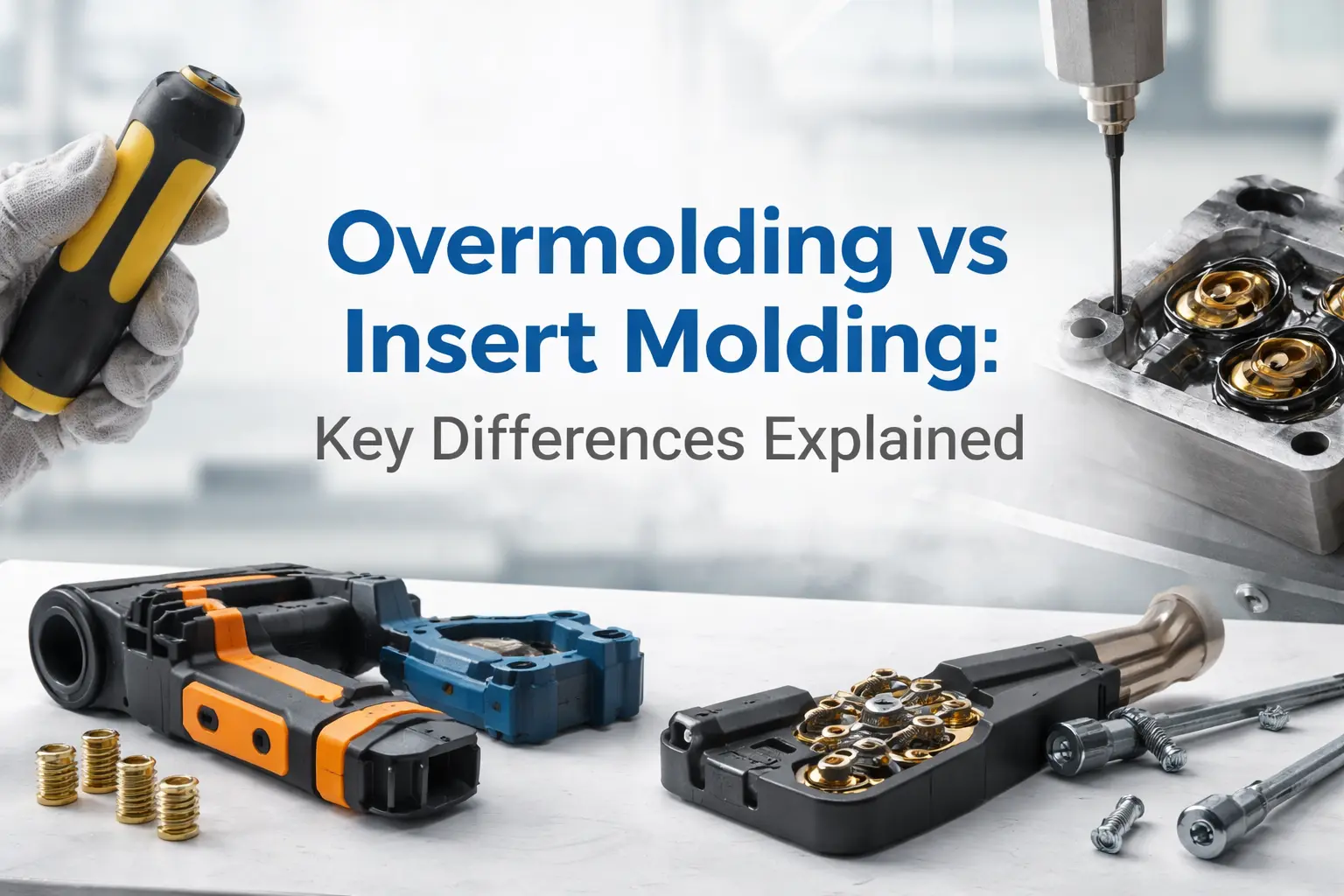
Injection molding has become one of the most widely used manufacturing processes in modern industry due to its ability to produce high-precision, high-volume plastic parts with excellent consistency and cost efficiency. However, as product requirements continue to evolve, single-material plastic components are often no longer sufficient to meet the demands of performance, durability, and user experience. Many industries now require parts that combine multiple functional properties such as rigidity, flexibility, chemical resistance, electrical insulation, and ergonomic comfort within a single integrated structure. This shift has led to the rapid development and adoption of advanced molding technologies such as overmolding and insert molding.
In sectors such as automotive engineering, consumer electronics, medical devices, and industrial equipment, product designers increasingly face the challenge of balancing performance with manufacturability. For example, automotive interior components may need a rigid structural core combined with a soft-touch surface for comfort. Medical devices often require safe, biocompatible surfaces integrated with strong internal structures. Consumer electronics demand compact designs that combine aesthetics, durability, and functional integration. These complex requirements cannot be efficiently achieved through traditional single-shot injection molding alone.
Overmolding and insert molding provide practical solutions by enabling the integration of different materials or components into a single finished part. This significantly reduces the need for secondary assembly processes such as gluing, screwing, or welding, which not only lowers production costs but also improves product reliability by reducing potential failure points. As a result, these technologies are becoming essential tools for engineers and manufacturers aiming to optimize both product performance and production efficiency. Understanding their differences is therefore critical for making informed design and manufacturing decisions.
Overmolding is a specialized injection molding process in which one material is molded over a previously formed base component to create a unified multi-material part. Typically, the base structure is first manufactured using a rigid thermoplastic such as ABS, polycarbonate, or nylon. Once this substrate is completed, a second material—often a softer elastomer such as TPE, TPU, or silicone—is injected over specific areas of the base part. The main purpose of this process is to enhance product functionality by combining different material properties into a single integrated design, improving both performance and user experience.
The overmolding process generally involves two stages of production. In the first stage, the rigid base component is created through standard injection molding and allowed to cool and stabilize. In the second stage, this base part is placed into a second mold cavity or multi-shot molding system, where the second material is injected. The interaction between the two materials is critical, as proper bonding determines the final product quality. Depending on the material combination and mold design, bonding can occur through chemical adhesion or mechanical interlocking. Chemical adhesion happens when the two materials are compatible at a molecular level, allowing partial fusion at the interface. Mechanical interlocking is achieved through specially designed surface features such as grooves, undercuts, or textured areas that physically lock the materials together after cooling.
One of the main advantages of overmolding is its ability to combine functional and aesthetic benefits in a single component. The rigid base provides structural strength, while the overmolded layer adds softness, grip, vibration damping, and sealing performance. This makes it especially suitable for products that involve frequent human contact or require improved ergonomics, such as power tools, medical handles, toothbrushes, wearable devices, and consumer electronics. In addition, overmolding enables designers to create visually appealing products with color contrast and seamless material transitions. However, successful implementation requires careful material selection and precise mold design to ensure long-term durability and prevent delamination or bonding failure.
Insert molding is a manufacturing process in which a pre-formed component, known as an insert, is placed into a mold cavity and then encapsulated with molten plastic during the injection molding cycle. Unlike overmolding, which involves multiple molding steps, insert molding is typically completed in a single injection process. The insert can be made from various materials such as metal, ceramic, or pre-molded plastic parts, and it becomes permanently integrated into the final plastic component once the molten material solidifies around it. This method is widely used to enhance structural strength, integrate functional features, and reduce assembly complexity.
The process begins with the precise placement of the insert into the mold cavity. This step is highly critical because the accuracy of positioning directly affects product quality, dimensional stability, and functional performance. Once the insert is securely fixed, molten plastic is injected into the mold, flowing around the insert and filling all available spaces. As the material cools and solidifies, it forms a strong mechanical lock that secures the insert in place. Unlike overmolding, insert molding does not rely on chemical bonding between materials. Instead, it depends primarily on mechanical retention, which makes mold precision and insert design extremely important factors in ensuring product reliability.
Insert molding is widely used in applications that require structural reinforcement or functional integration. Common examples include threaded brass inserts in plastic housings, metal pins in electrical connectors, and reinforced components in automotive assemblies. By embedding functional elements directly into plastic parts, manufacturers can eliminate secondary assembly operations such as screwing, welding, or adhesive bonding. This improves production efficiency, reduces labor costs, and enhances overall product consistency. However, designers must carefully consider differences in thermal expansion between materials and ensure that inserts are properly secured during the molding process to avoid defects such as misalignment, cracking, or weak bonding over time.
Although overmolding and insert molding are both advanced multi-material injection molding techniques, they differ significantly in terms of process structure, material combinations, bonding mechanisms, and application focus. Overmolding typically involves a two-step process where a second material is molded over an existing base part, while insert molding is generally a single-step process where a pre-formed component is placed into a mold and encapsulated with plastic. This difference in process flow directly impacts tooling complexity, production efficiency, and cost structure.
From a material perspective, overmolding is mainly used to combine different types of polymers, such as rigid plastics with soft elastomers, in order to enhance surface properties, comfort, and sealing performance. Insert molding, on the other hand, is commonly used to combine plastic with non-plastic components such as metal inserts, electronic parts, or structural elements. As a result, overmolding is more focused on improving user experience and ergonomic performance, while insert molding is primarily used for structural reinforcement and functional integration.
Another key difference lies in the bonding mechanism. Overmolding relies on either chemical adhesion between compatible materials or mechanical interlocking through specially designed surface geometries. Insert molding, however, depends almost entirely on mechanical locking, where the molten plastic physically surrounds and secures the insert after cooling. This distinction also influences design requirements, as overmolding demands careful material compatibility planning, while insert molding requires precise insert positioning and stable fixturing within the mold.
From a manufacturing perspective, overmolding generally requires more complex tooling systems, especially in multi-shot molding applications, which increases initial mold investment. Insert molding may have simpler mold structures but often requires additional labor or automation systems for insert placement. However, it can significantly reduce downstream assembly costs, particularly in high-volume production environments. Ultimately, the choice between these two processes depends on whether the priority is ergonomic performance and surface enhancement or structural strength and functional integration.
Overmolding is the preferred choice when a product requires enhanced ergonomics, improved user interaction, or multi-functional surface properties. One of the most common reasons to choose overmolding is the need for a soft-touch surface that improves grip comfort and reduces user fatigue during long-term use. For example, in power tools, handheld devices, and sports equipment, the combination of a rigid internal structure with a soft external layer significantly improves usability and safety. In these applications, overmolding not only enhances comfort but also reduces vibration, noise, and the risk of slipping during operation, making the product more user-friendly and competitive in the market.
Another important application of overmolding is sealing and protection. In many industrial and consumer products, environmental resistance such as water resistance, dust protection, and chemical resistance is essential. Overmolding allows manufacturers to create seamless sealing layers that reduce the need for additional gaskets or adhesives. This is particularly useful in electronic devices, wearable technology, and medical equipment where protection and reliability are critical. By integrating sealing directly into the molded structure, manufacturers can reduce assembly complexity while improving product durability and long-term performance.
Overmolding is also widely used in products where aesthetics and branding are important. The process allows designers to combine different colors, textures, and material finishes within a single part, creating visually appealing and modern product designs. This is especially valuable in consumer electronics and lifestyle products where appearance plays a major role in purchasing decisions. However, successful overmolding requires careful material compatibility analysis and precise mold design to ensure proper adhesion and avoid issues such as delamination, shrinkage mismatch, or surface defects during production.
Insert molding is the ideal solution when a product requires strong structural reinforcement or the integration of functional non-plastic components. One of the most common use cases is the embedding of metal parts such as threaded brass inserts, steel pins, or bushings into plastic housings. These inserts provide high mechanical strength and allow plastic components to withstand repeated assembly, tightening, or load-bearing applications without failure. This makes insert molding especially valuable in automotive, aerospace, and industrial equipment applications where durability and mechanical performance are critical.
Another major advantage of insert molding is the ability to integrate electrical and electronic components directly into plastic parts. This includes connectors, terminals, and sensor components that need to be securely fixed and insulated within a protective plastic body. By embedding these elements during the molding process, manufacturers can eliminate secondary assembly steps such as soldering, screwing, or adhesive bonding. This not only improves production efficiency but also enhances product reliability by reducing potential failure points caused by manual assembly or external connections.
Insert molding is also widely used in high-volume production environments where consistency and efficiency are key priorities. Once the insert placement system is properly designed, the process can be highly automated, allowing for stable and repeatable production with minimal variation. However, it is important to carefully design the insert geometry and mold structure to ensure proper alignment and avoid defects such as misplacement, poor encapsulation, or stress concentration. In addition, differences in thermal expansion between metal inserts and plastic materials must be considered to prevent long-term reliability issues.
When deciding between overmolding and insert molding, several key design factors must be carefully evaluated to ensure successful production and long-term product performance. One of the most important considerations is material compatibility. In overmolding, the bond between the base material and the overmolded layer depends heavily on chemical compatibility and surface interaction. If materials are not properly matched, delamination or weak bonding may occur under mechanical stress or temperature changes. In insert molding, although chemical bonding is not required, thermal compatibility and shrinkage differences between plastic and insert materials still play a critical role in preventing internal stress and structural failure.
Mold design complexity is another important factor. Overmolding typically requires more advanced tooling systems, especially in multi-shot or multi-component molds, which increases initial investment and engineering complexity. Insert molding, while often simpler in mold structure, requires precise insert positioning systems, such as robotic placement or manual fixtures, to ensure consistent alignment during production. Any misalignment can lead to functional defects or assembly failures, making precision a critical requirement in both processes.
Production volume and cost efficiency also influence the decision-making process. Overmolding is often more suitable for medium to high-value products where ergonomics and performance justify higher tooling costs. Insert molding is generally more cost-effective for high-volume production where functional integration and assembly reduction can significantly lower overall manufacturing costs. Engineers must also consider cycle time, automation potential, and long-term production stability when selecting the appropriate process. A balanced evaluation of performance requirements and cost constraints is essential to achieving optimal manufacturing results.
Both overmolding and insert molding play essential roles in modern injection molding manufacturing, but they serve different purposes and are optimized for different types of product requirements. Overmolding is primarily focused on enhancing user experience, improving ergonomics, and combining soft and rigid materials to achieve better functionality and design flexibility. It is widely used in consumer-facing products where comfort, appearance, and surface performance are important factors in product success.
Insert molding, on the other hand, is designed to improve structural strength and integrate functional components such as metal inserts or electronic parts directly into plastic assemblies. It is especially valuable in industrial, automotive, and engineering applications where durability, precision, and mechanical reliability are critical. By eliminating secondary assembly processes, insert molding also helps improve production efficiency and reduce long-term manufacturing costs.
Ultimately, the choice between overmolding and insert molding depends on the specific requirements of the product, including mechanical performance, material selection, production volume, and cost targets. In many cases, early collaboration with an experienced injection molding manufacturer is the most effective way to determine the optimal process and avoid costly design revisions later in development. A well-informed decision at the design stage can significantly improve product quality, reduce manufacturing risks, and enhance overall market competitiveness.
In both overmolding and insert molding projects, many production issues are not caused by the manufacturing process itself, but by poor design decisions made in the early development stage. One of the most common mistakes in overmolding is improper material selection. If the base material and overmolded elastomer are not chemically or mechanically compatible, the bonding strength will be weak, which can lead to delamination, peeling, or product failure during real-world use. Many engineers underestimate the importance of material testing, especially when switching suppliers or using cost-reduced material alternatives.
In insert molding, a frequent mistake is inaccurate insert positioning or insufficient fixation during molding. Because the insert must remain stable while molten plastic flows around it, even slight movement can cause misalignment, uneven wall thickness, or incomplete encapsulation. This not only affects product appearance but can also compromise mechanical performance. Another common issue is ignoring the thermal expansion difference between metal inserts and plastic materials, which may cause internal stress, cracking, or long-term fatigue failure under temperature cycling conditions.
Another widespread problem in both processes is overengineering the product. Designers sometimes add unnecessary complexity to achieve minor functional improvements, which significantly increases tooling cost and production difficulty without delivering proportional value. A more efficient approach is to focus on functional requirements first, then select the simplest manufacturing method that meets performance targets. Early collaboration with experienced injection molding engineers can help avoid these costly mistakes and ensure a more stable and scalable production process.
Overmolding and insert molding are widely used across multiple industries, but their application focus differs significantly depending on product function and performance requirements. In the automotive industry, overmolding is commonly used for interior components such as steering wheel grips, control buttons, and dashboard interfaces where comfort, aesthetics, and tactile feedback are important. Insert molding, on the other hand, is frequently used for structural components, threaded fasteners, and sensor housings that require high mechanical strength and durability under harsh operating conditions.
In the medical device industry, overmolding plays a critical role in improving safety and usability. Soft-touch overmolded surfaces are often applied to surgical instruments, diagnostic devices, and handheld medical tools to enhance grip and reduce user fatigue. Insert molding is used for integrating metal components or reinforcing structural parts in devices that require high precision and reliability, such as implant tools or diagnostic equipment housings. Material biocompatibility and sterilization resistance are also key considerations in these applications.
In consumer electronics, overmolding is widely used to improve product aesthetics and user experience. Devices such as headphones, controllers, and portable gadgets often use soft-touch overmolded materials to enhance comfort and visual appeal. Insert molding is commonly used to integrate connectors, screws, and internal metal reinforcements into compact electronic housings, enabling lightweight yet durable designs. In industrial equipment, insert molding is preferred for heavy-duty mechanical parts, while overmolding is used for operator interfaces and protective covers.
One frequently asked question is whether overmolding is stronger than insert molding. The answer depends on the application. Overmolding is not primarily designed for structural reinforcement but for improving surface properties, comfort, and sealing. Insert molding, however, is generally stronger in terms of mechanical load-bearing capability because it often involves metal inserts that significantly enhance structural strength.
Another common question is whether these two processes can be used together. In advanced manufacturing, the answer is yes. Some complex products use both insert molding and overmolding in combination. For example, a metal insert may first be molded into a plastic base using insert molding, and then a soft overmold layer is applied for grip or sealing purposes. This hybrid approach is often used in high-performance products where both structural strength and ergonomic design are required.
Manufacturers also often ask about cost differences. Generally, overmolding has higher tooling complexity and may require multi-shot molding equipment, which increases initial investment. Insert molding may have lower mold cost but requires precise insert placement systems, which can also increase production complexity depending on automation level. The final cost depends heavily on production volume, part complexity, and material selection rather than the process alone.
Choosing between overmolding and insert molding is not always straightforward, especially when product requirements involve multiple performance factors such as strength, durability, ergonomics, and cost efficiency. Selecting the wrong process at the design stage can lead to unnecessary tooling costs, production delays, and performance issues in final applications. That is why working with an experienced injection molding manufacturer is critical for project success.
If you are developing a new product or optimizing an existing design, professional engineering support can help you evaluate material compatibility, mold structure, and production feasibility at an early stage. This not only improves product quality but also reduces manufacturing risks and overall production cost. Whether your project requires overmolding for enhanced user experience or insert molding for structural reinforcement, a tailored manufacturing solution can significantly improve your time-to-market and product competitiveness.
Contact an experienced injection molding partner today to discuss your project requirements, request a quotation, or explore custom manufacturing solutions designed to meet your specific industry needs.
