Our Location
304 North Cardinal St.
Dorchester Center, MA 02124

304 North Cardinal St.
Dorchester Center, MA 02124

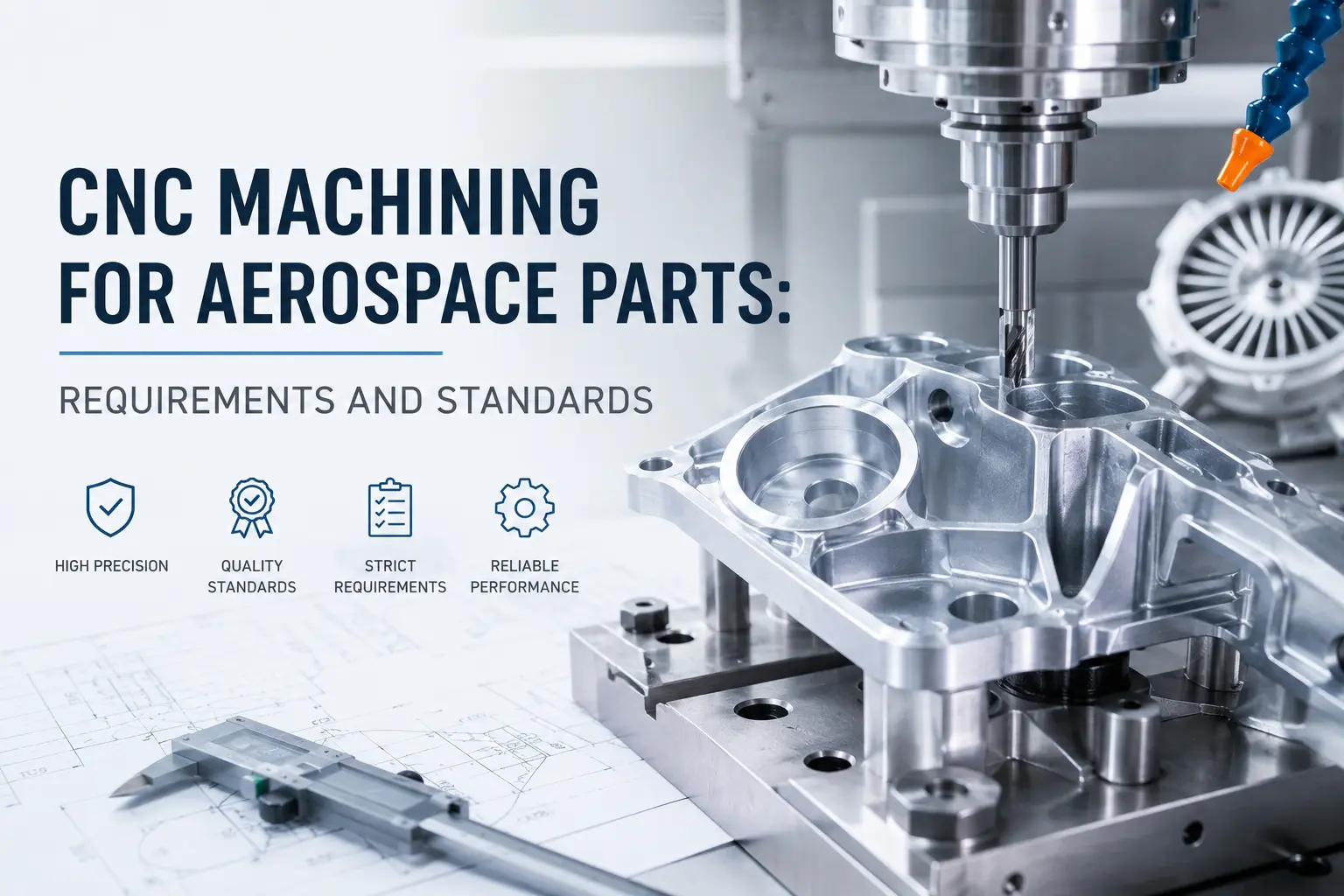
The aerospace industry represents one of the most demanding sectors in modern manufacturing, where precision, reliability, and consistency are not simply competitive advantages but fundamental requirements. From commercial aviation and military defense systems to satellites, spacecraft, and unmanned aerial vehicles, aerospace products operate in environments characterized by extreme temperatures, high pressures, intense vibration, and significant mechanical stress. Under these conditions, even the smallest manufacturing defect or dimensional deviation can lead to performance degradation, system failure, or costly operational consequences. As a result, manufacturers supplying components to the aerospace sector must adhere to exceptionally strict production standards and quality management procedures.
CNC machining has become one of the most critical manufacturing technologies supporting the aerospace industry due to its ability to produce highly complex components with outstanding precision and repeatability. Unlike conventional manufacturing methods, CNC machining provides the flexibility required to manufacture parts with intricate geometries, tight tolerances, and demanding surface finish requirements while maintaining consistent quality across production batches. This capability is especially important for aerospace applications, where components often feature complex contours, lightweight structures, and challenging materials that require advanced machining strategies.
The increasing demand for fuel efficiency, lightweight structures, enhanced performance, and improved safety has further accelerated the adoption of precision CNC machining technologies throughout the aerospace supply chain. Modern aerospace manufacturers rely on multi-axis machining centers, advanced tooling systems, sophisticated inspection equipment, and comprehensive process controls to ensure that every component meets stringent engineering and regulatory requirements. Whether manufacturing structural aircraft components, turbine engine parts, avionics housings, or satellite hardware, CNC machining plays a vital role in enabling the production of mission-critical aerospace products.
This article explores the unique requirements and standards associated with aerospace CNC machining, examines the types of components commonly manufactured, and provides insight into the technical challenges and quality expectations that distinguish aerospace manufacturing from other industrial sectors.
Aerospace CNC machining differs significantly from conventional industrial machining because of the extraordinary level of precision required throughout the manufacturing process. Aerospace components are often designed with extremely tight tolerances to ensure proper assembly, structural integrity, aerodynamic performance, and operational reliability. Small dimensional variations that may be acceptable in other industries can have serious consequences in aerospace applications, making precision control a primary manufacturing objective.
Modern aerospace machining facilities utilize advanced CNC equipment capable of maintaining micron-level accuracy while producing complex geometries and intricate features. Multi-axis machining technologies enable manufacturers to reduce setup changes, improve dimensional consistency, and achieve higher levels of precision across complex surfaces. Additionally, sophisticated metrology equipment, including coordinate measuring machines and optical inspection systems, is used extensively to verify dimensional conformity throughout production.
Another defining characteristic of aerospace CNC machining is the extensive use of high-performance materials. Aerospace engineers frequently specify materials such as titanium alloys, nickel-based superalloys, aerospace-grade aluminum alloys, stainless steels, and advanced engineering plastics due to their superior mechanical properties and resistance to extreme environmental conditions. While these materials provide exceptional performance characteristics, they also introduce significant machining challenges.
Titanium alloys, for example, possess excellent strength-to-weight ratios but generate substantial heat during machining and exhibit poor thermal conductivity. Nickel-based superalloys can maintain their mechanical properties at elevated temperatures but are extremely difficult to cut efficiently. Successfully machining these materials requires specialized tooling, optimized cutting parameters, advanced cooling strategies, and extensive process expertise.
Quality control requirements in aerospace manufacturing are substantially more rigorous than those found in most industrial sectors. Aerospace manufacturers must maintain complete traceability throughout the entire production process, documenting material certifications, manufacturing procedures, inspection records, process controls, and quality verification activities. This extensive documentation ensures compliance with industry regulations and customer-specific requirements while providing full accountability for every manufactured component.
Additionally, aerospace parts frequently undergo multiple inspection stages during production, including in-process verification, dimensional analysis, surface quality evaluation, and final inspection procedures. Statistical process control methods, first article inspections, and comprehensive validation processes help manufacturers maintain consistency and minimize production risks.
Perhaps the most important distinction of aerospace CNC machining is that many components are used in safety-critical applications where failure cannot be tolerated. Aircraft structural components, engine systems, landing gear assemblies, flight control mechanisms, and spacecraft hardware must perform reliably under severe operating conditions over extended service lives. This requirement drives every aspect of the manufacturing process, from material selection and machining strategy to inspection procedures and quality assurance protocols. As a result, aerospace CNC machining represents one of the highest standards of precision manufacturing in the world.
Aircraft structures rely heavily on precision CNC machined components to achieve the required combination of strength, weight reduction, durability, and safety. Structural brackets, support frames, mounting components, fittings, hinges, and reinforcement elements are commonly produced through CNC machining processes. These components often incorporate complex geometries designed to maximize structural performance while minimizing overall weight, making advanced machining technologies essential for their production.
High-strength aluminum alloys and titanium materials are frequently selected for structural applications due to their excellent mechanical properties and favorable strength-to-weight ratios. Multi-axis CNC machining enables manufacturers to create intricate pockets, thin-wall structures, and optimized geometries that would be difficult or impossible to produce using traditional manufacturing methods.
Aircraft and spacecraft propulsion systems contain numerous precision-machined components that operate under extremely demanding conditions. Compressor housings, mounting structures, turbine support components, fuel system parts, and thermal management assemblies require exceptional dimensional accuracy and material performance. These components must withstand elevated temperatures, high rotational speeds, intense vibration, and substantial mechanical loads throughout their operational lifetimes.
Manufacturing engine components often involves machining advanced alloys that present significant technical challenges. Specialized cutting tools, optimized machining strategies, and precise process control are necessary to maintain dimensional accuracy while achieving the required surface integrity and material properties.
Landing gear systems represent some of the most highly stressed components within an aircraft. During takeoff, landing, and ground operations, these systems experience substantial dynamic loads and repetitive stress cycles. CNC machining is widely used to manufacture landing gear housings, support structures, connecting components, and precision mechanical assemblies that require exceptional strength and reliability.
The production of these components typically involves extensive quality control procedures, including dimensional inspection, surface analysis, and material verification. Manufacturers must ensure that each component satisfies stringent performance and safety requirements before entering service.
Space exploration and defense applications require precision components capable of operating in some of the harshest environments imaginable. Satellite structures, instrument mounts, sensor housings, antenna supports, propulsion components, and thermal management systems all rely heavily on advanced CNC machining technologies. Weight reduction, dimensional stability, thermal performance, and long-term reliability are critical considerations in these applications.
Because replacement or repair may be impossible after deployment, spacecraft components are manufactured according to exceptionally rigorous standards. Extensive testing, inspection, and process validation procedures are incorporated throughout production to minimize risk and maximize mission success.
The rapid expansion of unmanned aerial vehicles and advanced aerospace platforms has created growing demand for precision-machined components. Drone frames, payload mounts, camera housings, propulsion components, electronic enclosures, and customized structural assemblies all benefit from the flexibility and accuracy offered by CNC machining. These applications often require rapid prototyping, low-volume production capabilities, and lightweight materials while maintaining the high-performance characteristics expected in aerospace environments.
As aerospace technologies continue to evolve, CNC machining remains a foundational manufacturing process capable of supporting increasingly sophisticated designs, advanced materials, and demanding performance requirements across commercial, defense, and space applications.
The selection of materials is one of the most critical factors in aerospace manufacturing. Aerospace components are expected to perform reliably under conditions that include extreme temperatures, high pressure differentials, continuous vibration, corrosive environments, and substantial mechanical loads. At the same time, manufacturers must minimize weight whenever possible to improve fuel efficiency, payload capacity, and overall system performance. These demanding requirements have led to the widespread use of specialized aerospace-grade materials, many of which present significant machining challenges.
Aluminum remains one of the most widely used materials in aerospace manufacturing due to its excellent strength-to-weight ratio, corrosion resistance, and machinability. Aerospace-grade aluminum alloys such as 6061, 2024, and 7075 are commonly used for structural components, housings, mounting brackets, and support structures. These materials provide the necessary combination of lightweight performance and mechanical strength while allowing manufacturers to achieve high production efficiency.
Among aluminum alloys, 7075 aluminum is particularly valued in aerospace applications because of its exceptional mechanical properties and fatigue resistance. Components manufactured from aerospace aluminum frequently require tight dimensional tolerances and superior surface finishes, making CNC machining an ideal production method.
Titanium alloys play a critical role in modern aerospace engineering because they offer outstanding strength, low density, excellent corrosion resistance, and superior high-temperature performance. Titanium components are extensively used in aircraft structures, engine systems, landing gear assemblies, and spacecraft hardware.
However, titanium is also one of the most challenging materials to machine. Its poor thermal conductivity causes heat to concentrate at the cutting edge, accelerating tool wear and increasing machining complexity. Successful titanium machining requires advanced cutting tools, optimized cutting parameters, high-pressure coolant systems, and extensive manufacturing expertise. Despite these challenges, the performance advantages of titanium continue to make it one of the most important aerospace materials.
Aircraft engines and space propulsion systems frequently utilize nickel-based superalloys due to their exceptional ability to maintain mechanical strength at elevated temperatures. Materials such as Inconel are capable of operating under extreme thermal conditions while resisting oxidation, creep deformation, and mechanical fatigue.
Machining nickel-based superalloys presents significant challenges because of their hardness, work-hardening characteristics, and poor thermal conductivity. Manufacturers often employ specialized machining strategies, including reduced cutting speeds, advanced coatings, and precision tool path optimization to achieve the required dimensional accuracy and surface integrity.
Various aerospace systems also rely on stainless steels and specialty alloys for applications requiring corrosion resistance, structural strength, and environmental durability. These materials are commonly found in hydraulic systems, fasteners, support structures, and specialized mechanical components.
Although stainless steel is generally easier to machine than titanium or nickel-based superalloys, maintaining dimensional stability and achieving high-quality surface finishes still require careful process control and optimized tooling strategies.
Advanced engineering plastics continue to gain importance in aerospace manufacturing due to their lightweight properties, electrical insulation characteristics, and chemical resistance. Materials such as PEEK, PTFE, Delrin, and Ultem are frequently used in aerospace electrical systems, interior components, insulation assemblies, and specialized support structures.
CNC machining provides manufacturers with the flexibility to produce highly customized plastic components while maintaining the precision and consistency required for aerospace applications. As aerospace materials continue to evolve, CNC machining technologies must continuously adapt to support new performance requirements and increasingly sophisticated engineering designs.
Manufacturing aerospace components involves far more than simply producing parts that conform to dimensional specifications. Aerospace manufacturers must satisfy comprehensive requirements related to precision, material integrity, traceability, quality assurance, reliability, and regulatory compliance. These requirements influence every stage of the manufacturing process, from initial engineering review to final inspection and documentation.
Dimensional accuracy remains one of the most important requirements in aerospace manufacturing. Many aerospace assemblies depend on extremely precise component interactions to ensure proper functionality, structural integrity, and operational safety. Even small dimensional variations can negatively impact system performance, assembly processes, or long-term reliability.
To achieve these requirements, aerospace manufacturers utilize high-precision CNC machining centers, environmental controls, advanced tooling systems, and sophisticated inspection technologies. Multi-axis machining strategies help minimize setup errors while improving overall dimensional consistency.
Surface quality plays a significant role in aerospace component performance. Poor surface finishes can contribute to premature wear, increased friction, fatigue failure, corrosion, and reduced aerodynamic performance. Depending on the application, aerospace components may require highly controlled surface roughness values and additional finishing operations.
Manufacturers frequently employ specialized machining techniques, polishing processes, and surface treatments to achieve the required surface characteristics while preserving dimensional accuracy.
Complete traceability is essential throughout aerospace manufacturing. Every material batch, machining operation, inspection procedure, and production process must be fully documented and traceable. Material certifications, heat treatment records, inspection reports, and process documentation ensure accountability and compliance with regulatory requirements.
Traceability systems also support quality investigations, regulatory audits, and long-term product lifecycle management. Without comprehensive traceability procedures, aerospace components cannot satisfy industry standards.
Aerospace manufacturers must demonstrate that their manufacturing processes consistently produce acceptable parts. Process validation activities include machine qualification, tooling verification, first article inspection, statistical process control, and ongoing performance monitoring.
Risk management procedures are equally important because aerospace applications often involve safety-critical systems where component failure cannot be tolerated. Continuous monitoring and process improvement help manufacturers minimize risks while maintaining production efficiency.
Quality assurance in aerospace manufacturing extends far beyond traditional inspection methods. Components may undergo dimensional inspection, surface analysis, material testing, non-destructive testing, and functional verification before approval.
Coordinate measuring machines, optical scanners, laser measurement systems, and specialized inspection equipment provide the accuracy required to validate aerospace components. Comprehensive inspection programs ensure that every component satisfies both engineering specifications and regulatory requirements.
Aerospace manufacturing operates within one of the world’s most highly regulated industrial environments. Manufacturers must comply with numerous standards, certifications, and customer-specific requirements designed to ensure safety, quality, reliability, and consistency throughout the supply chain.
Quality management systems form the foundation of aerospace manufacturing operations. Aerospace suppliers are expected to establish documented procedures governing production planning, supplier management, risk assessment, process control, inspection activities, corrective actions, and continuous improvement.
These systems provide a structured framework that helps manufacturers maintain consistent quality while ensuring compliance with customer and regulatory requirements.
Many aerospace customers require suppliers to maintain specialized aerospace certifications that demonstrate their capability to manufacture high-reliability components. These certifications involve rigorous audits, process evaluations, documentation reviews, and ongoing compliance assessments.
Certification requirements extend beyond manufacturing processes and frequently include personnel training, equipment calibration, supplier qualification, and risk management procedures.
Certain aerospace manufacturing processes require additional accreditation due to their critical impact on component performance. Heat treatment, surface finishing, welding, non-destructive testing, and chemical processing operations often require independent validation and certification.
These requirements ensure that specialized manufacturing processes are performed consistently and according to established industry standards.
In addition to industry standards, aerospace manufacturers must often comply with customer-specific specifications that govern materials, manufacturing procedures, inspection methods, documentation requirements, and quality assurance activities.
Successfully managing these requirements requires extensive technical expertise, robust quality systems, and strong communication throughout the supply chain.
Modern aerospace manufacturing relies heavily on advanced machining technologies capable of producing complex geometries while maintaining exceptional precision and repeatability. Continuous improvements in machine tool technology have significantly expanded the capabilities of aerospace CNC manufacturing.
Multi-axis machining has become a cornerstone of aerospace manufacturing because it enables the production of highly complex components with fewer setups and improved accuracy. Advanced machining centers can simultaneously move along multiple axes, allowing manufacturers to machine intricate geometries efficiently.
Reducing the number of setups minimizes positioning errors while improving productivity and dimensional consistency. This capability is particularly valuable for aerospace structures, engine components, and lightweight optimized parts.
High-speed machining technologies allow manufacturers to increase productivity while maintaining excellent surface quality and dimensional precision. These techniques are especially effective when machining aerospace aluminum components and complex structural parts.
Advanced cutting strategies and optimized tool paths help reduce cycle times while preserving part quality and tool life.
Many aerospace components contain cylindrical features that require advanced turning operations. Modern mill-turn centers combine turning and milling capabilities within a single machine, reducing handling operations and improving manufacturing efficiency.
These technologies are particularly useful for engine components, shafts, housings, and precision mechanical assemblies.
Certain aerospace materials and geometries are difficult or impossible to produce using conventional cutting tools. Electrical discharge machining provides an alternative manufacturing method capable of producing intricate shapes, narrow slots, and high-precision features in difficult-to-machine materials.
EDM technologies are frequently used in aerospace tooling, engine components, and specialized precision applications.
Modern aerospace machining systems increasingly integrate inspection technologies directly into the manufacturing process. In-machine probing, automated measurement systems, and real-time process monitoring enable manufacturers to detect deviations early and maintain tighter process control.
The integration of manufacturing and inspection technologies supports higher quality levels, reduced production costs, and improved overall manufacturing efficiency.
Despite the tremendous capabilities of modern CNC technology, aerospace manufacturing continues to present numerous technical and operational challenges. Successfully overcoming these challenges requires extensive engineering expertise, advanced equipment, and rigorous process management.
Many aerospace materials exhibit characteristics that make them particularly challenging to machine efficiently. High strength, poor thermal conductivity, work hardening, and abrasive properties contribute to increased tool wear and longer production times.
Manufacturers must continuously optimize tooling strategies, cutting parameters, and cooling techniques to achieve acceptable productivity and quality levels.
Achieving consistent precision across complex aerospace components remains a significant challenge. Machine thermal expansion, tool wear, vibration, fixturing stability, and environmental factors can all influence dimensional accuracy.
Advanced compensation techniques, environmental controls, and process monitoring systems help manufacturers maintain the required precision levels.
Aerospace manufacturing often involves expensive materials, specialized tooling, extensive inspection procedures, and relatively low production volumes. Balancing cost efficiency with stringent quality requirements represents a constant challenge for manufacturers.
Effective process optimization and advanced manufacturing technologies play important roles in improving competitiveness while maintaining quality standards.
Regulatory requirements continue to evolve as aerospace technologies become increasingly sophisticated. Manufacturers must continuously update procedures, documentation systems, training programs, and quality processes to remain compliant.
Maintaining compliance requires significant investment in personnel, equipment, certification activities, and continuous improvement initiatives.
Modern aerospace engineering increasingly relies on lightweight structures, topology optimization, and highly integrated components. These advanced designs often present substantial manufacturing challenges due to their complexity and demanding performance requirements.
As aerospace technologies continue to advance, CNC manufacturers must continuously develop new capabilities and manufacturing strategies to support future innovations.
Manufacturing aerospace components successfully requires more than advanced equipment and high-quality materials. It demands a comprehensive manufacturing strategy that integrates engineering expertise, process control, quality management, and continuous improvement. Aerospace manufacturers that consistently deliver high-performance components typically follow a series of best practices designed to minimize risk while maximizing quality and efficiency.
One of the most important steps in aerospace manufacturing is performing a comprehensive Design for Manufacturability (DFM) analysis before production begins. DFM reviews help identify potential manufacturing challenges, optimize machining strategies, reduce production costs, and improve overall product quality.
Engineering teams should evaluate part geometry, tolerance requirements, material selection, surface finishing specifications, and inspection requirements before releasing parts to production. Early collaboration between design engineers and manufacturing engineers significantly reduces the likelihood of costly revisions and production delays.
For complex aerospace projects, rapid prototyping technologies can also support design validation before full production begins. Companies offering integrated manufacturing solutions, such as CNC machining, rapid prototyping, and low-volume production, can help streamline this process.
Internal Link:
For more information about rapid prototyping and production support, visit WinsunProto Manufacturing Services.
Modern aerospace manufacturing increasingly relies on advanced machining technologies, including multi-axis machining centers, high-speed machining systems, automated inspection equipment, and intelligent process monitoring systems. Investing in advanced manufacturing capabilities allows suppliers to achieve higher accuracy, improved productivity, and better process consistency.
Multi-axis machining technologies are particularly valuable because they reduce setup changes, minimize cumulative errors, and enable the efficient production of highly complex aerospace geometries. Advanced manufacturing equipment also supports greater flexibility when producing prototypes, low-volume production runs, and customized aerospace components.
Quality management remains the foundation of aerospace manufacturing excellence. Successful suppliers implement robust quality management systems that incorporate incoming material inspection, in-process verification, final inspection, statistical process control, and continuous improvement procedures.
Inspection technologies such as coordinate measuring machines, optical scanning systems, laser measurement equipment, and automated probing systems enable manufacturers to verify compliance with increasingly demanding specifications. Comprehensive documentation and traceability procedures further support regulatory compliance and customer confidence.
Aerospace manufacturing projects often involve complex supply chains with multiple suppliers, subcontractors, and specialized process providers. Building strong partnerships throughout the supply chain improves communication, reduces risks, and enhances overall manufacturing performance.
Reliable manufacturing partners provide not only production capacity but also engineering support, process optimization expertise, and long-term technical collaboration, helping customers achieve better results throughout the product lifecycle.
Selecting the right aerospace manufacturing partner is one of the most important decisions for aerospace companies. Because aerospace applications demand exceptional precision, reliability, and compliance, suppliers must demonstrate capabilities that extend far beyond standard machining services.
Experience within the aerospace industry is a critical consideration when selecting a CNC machining supplier. Experienced aerospace manufacturers understand the unique requirements associated with aerospace materials, dimensional tolerances, inspection procedures, documentation standards, and regulatory compliance.
Manufacturers with extensive aerospace experience can identify potential production challenges early and recommend optimized manufacturing solutions that reduce costs while maintaining quality.
The complexity of modern aerospace components requires advanced manufacturing equipment capable of producing highly precise parts efficiently. Customers should evaluate whether suppliers possess the necessary capabilities, including multi-axis machining centers, CNC turning equipment, precision inspection systems, and advanced software tools.
A supplier’s investment in technology often reflects its ability to support increasingly complex aerospace applications.
Quality certifications provide important evidence of a supplier’s commitment to manufacturing excellence. Aerospace customers should verify that suppliers maintain appropriate quality management systems and industry certifications while also reviewing their quality procedures, inspection capabilities, and documentation practices.
Strong quality systems help ensure consistent product performance and long-term supply chain reliability.
The best aerospace suppliers provide more than manufacturing services. They also offer engineering support, manufacturability analysis, material recommendations, process optimization, and technical consulting throughout the project lifecycle.
Engineering collaboration frequently leads to improved product performance, reduced costs, and shorter development cycles.
To learn more about experienced CNC manufacturing capabilities, visit WinsunProto CNC Machining Services.
The aerospace industry continues to evolve rapidly, driven by increasing demand for improved efficiency, sustainability, automation, and performance. These trends are transforming manufacturing technologies and creating new opportunities for CNC machining suppliers.
Advanced manufacturing facilities increasingly utilize connected production systems, real-time monitoring technologies, predictive maintenance tools, and intelligent manufacturing software. These technologies improve process visibility, reduce downtime, and enhance manufacturing consistency.
Digital manufacturing environments also enable manufacturers to collect valuable production data that supports continuous process optimization and quality improvement initiatives.
Artificial intelligence technologies are beginning to influence aerospace manufacturing through intelligent process optimization, predictive maintenance, automated programming, and adaptive machining systems. AI-assisted manufacturing can improve production efficiency while reducing human error and process variability.
As machine learning technologies mature, aerospace manufacturers will increasingly adopt intelligent manufacturing systems capable of optimizing production parameters automatically.
Future aerospace platforms will continue to utilize increasingly sophisticated materials designed to improve performance while reducing weight. These materials will require the development of new machining strategies, tooling technologies, and process controls.
Manufacturers capable of adapting to new materials quickly will maintain significant competitive advantages within the aerospace supply chain.
The combination of additive manufacturing and CNC machining technologies continues to expand throughout aerospace manufacturing. Hybrid manufacturing approaches allow manufacturers to leverage the design flexibility of additive manufacturing while utilizing CNC machining to achieve the precision and surface quality required for critical applications.
This combination offers new opportunities for producing highly optimized aerospace components with improved performance characteristics.
Aerospace CNC machining represents one of the most demanding areas of modern manufacturing. Components must satisfy stringent requirements for dimensional accuracy, material performance, quality assurance, traceability, and regulatory compliance while operating reliably in some of the world’s most challenging environments.
Success in aerospace manufacturing requires advanced equipment, experienced engineering teams, robust quality systems, and extensive expertise in machining complex materials and geometries. As aerospace technologies continue to evolve, CNC machining will remain a foundational manufacturing technology supporting innovation across commercial aviation, defense, space exploration, and unmanned systems.
By partnering with experienced manufacturing suppliers that possess advanced machining capabilities, comprehensive quality systems, and strong engineering expertise, aerospace companies can successfully navigate the challenges of modern aerospace production.
For professional aerospace CNC machining, prototyping, and low-volume manufacturing services, visit WinsunProto Official Website.
Depending on the material, geometry, and manufacturing process, aerospace CNC machining can commonly achieve tolerances ranging from ±0.005 mm to even tighter specifications for critical applications.
Five-axis machining reduces setup changes, improves dimensional accuracy, shortens production times, and enables the manufacturing of highly complex aerospace geometries.
Common aerospace materials include aluminum alloys, titanium alloys, stainless steels, nickel-based superalloys, and advanced engineering plastics.
Traceability ensures that every material, manufacturing operation, and inspection process can be verified, supporting quality assurance, regulatory compliance, and long-term reliability.
Yes. CNC machining is widely used for aerospace prototyping because it provides excellent dimensional accuracy, material flexibility, and rapid production capabilities for prototype validation and low-volume production.
