Our Location
304 North Cardinal St.
Dorchester Center, MA 02124

304 North Cardinal St.
Dorchester Center, MA 02124

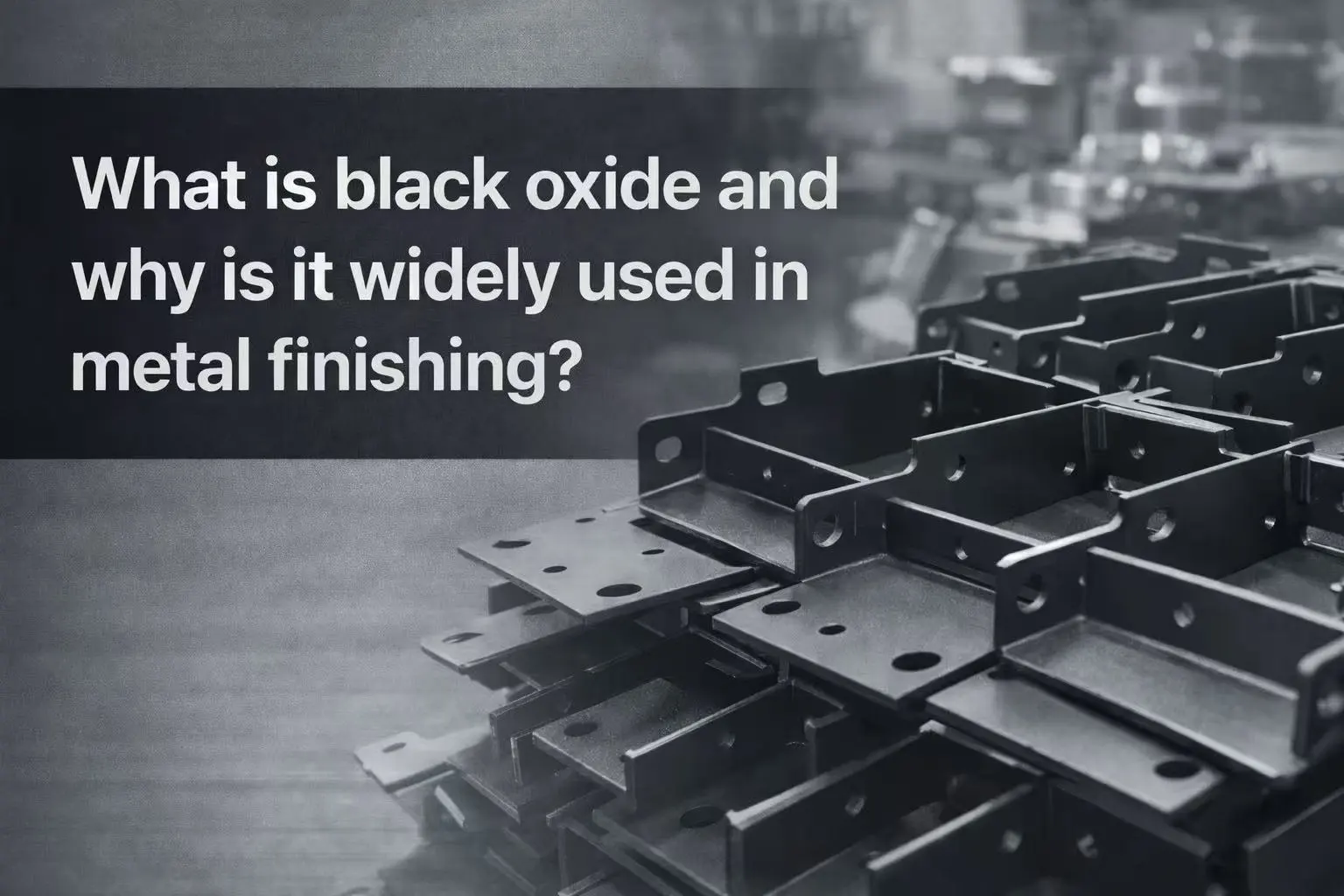
Black oxide coating is a widely used metal finishing process that helps protect ferrous metals from corrosion while improving their overall performance. Ferrous metals are known for their exceptional strength and hardness. However, they are also equally well-known for their tendency to rust, due to the oxidation of iron when exposed to oxygen and water.
Since rusted metal can lead to weak and potentially hazardous structures, it is crucial to prevent the oxidation of ferrous materials by any means possible. One of the most effective ways to achieve this is by applying a layer of black oxide, which helps improve corrosion resistance and extend the functional lifespan of metal components.
For ferrous metals and other materials such as copper and zinc, black oxide finishes are especially effective. Sometimes called blackening or blacking, black oxide coating is a type of chemical conversion coating, meaning it modifies the surface of the metal rather than adding an extra layer on top of it.
This article reviews the fundamentals of black oxide coating and explains why it is so important in steel manufacturing. It also discusses its main advantages and disadvantages, as well as the ideal situations in which it is most appropriate to apply.
Black oxide coating is a type of conversion coating used to improve corrosion protection, reduce light reflection, and enhance the appearance of metal. Corrosion resistance extends the lifespan of metal products; reduced reflections can improve the functionality of items such as surgical instruments; and the attractive matte black finish of black oxide can increase the value of various products.
The blackening process has existed for centuries. It provides a higher level of corrosion resistance than the older but comparable process known as bluing, which is still commonly used in firearms manufacturing.
Black oxide coating is primarily applied to ferrous metals, including:Steel, Carbon steel and Cast iron
However, with slight modifications, the process can also be applied to stainless steel (which behaves differently from most ferrous metals), as well as non-ferrous metals such as: Copper and its alloys and Zinc.
Like other conversion coatings, black oxide coating is a chemical treatment that transforms the metal surface into a thin, adherent, protective layer. This is achieved through a chemical reaction between the iron atoms in the metal and the oxidizing salts present in a chemical bath.
In ferrous metals, the resulting black oxide coating is iron(II,III) oxide (Fe₃O₄), which occurs naturally as the mineral magnetite. This oxide has other industrial uses besides corrosion protection; for example, it is widely used as a black pigment under the name Mars Black.
The type of oxide varies depending on the base material. For example, the black oxide on copper is copper(II) oxide or cupric oxide, which occurs naturally as tenorite.
In the metallurgy industry, the black oxide process for copper is commercially known as Ebonol C. The equivalent process for zinc is called Ebonol Z. The patents for both processes originally belonged to the chemical company Enthone, which now operates as MacDermid Enthone, a subsidiary of Element Solutions, headquartered in the state of Florida, USA.
At its core, black oxide coating is a chemical conversion process. The main component of the process is a blackening solution containing oxidizing salts—special salts that act as electron acceptors and decompose to release oxygen.
The step-by-step black oxide coating process outlined below illustrates how a typical blackening process works. Variations of the process are explained in the following sections.
The most important variation in the black oxide coating process is the temperature of the blackening solution.
Hot black oxide coating, or hot blackening, uses a high-temperature chemical bath, resulting in a more uniform and durable finish. Cold blackening, or room-temperature blackening, uses a cold black oxide solution and is easier to perform in a non-industrial setting.
The hot black oxide process is the most common variation. It involves immersing metal parts in a boiling solution containing oxidizing salts and other ingredients. The solution temperature is maintained between 138 and 143 °C (280 and 290 °F), allowing for more efficient blackening without overheating (which would lead to red rust).
Because the parts must be moved quickly between the various high-temperature stages, this process is usually automated in a factory. This allows the machines to subject the parts to cleaning, rinsing, blackening, another rinse, and sealing without requiring them to cool down.
Medium-temperature black oxide coating involves heating the blackening solution to a lower temperature, between 90 and 120 °C (194 and 248 °F). While this results in a lower degree of corrosion resistance, this method has the advantage of not producing caustic fumes and therefore requires fewer safety precautions.
Cold or room-temperature black oxide coating requires low temperatures between 20 and 30 °C (68 and 86 °F). For this to work, the solution is very different from the conventional black oxide mixture composed of salts, nitrates, and nitrites. Instead, it contains selenium compounds such as selenium dioxide and other chemicals.
The main advantage of cold blackening is that it can be carried out in non-industrial environments while providing a comparable level of corrosion resistance. It is easier to use but offers only moderate corrosion resistance compared to hot and medium-temperature methods. One of its disadvantages is that the oxidized surface wears or scratches more easily, making it unsuitable for some mechanical parts.
Black oxide is more common on steel than on other metals and their alloys. However, black oxide can form on a variety of substrates, including some non-ferrous metals. For some metals, the process differs significantly from the primary process. For example, black oxide on stainless steel requires caustic and sulfuric salts.
The following table shows the different black oxide coatings that can form on various metals, including notes on process variations and results.
| Metal | Black Oxide | Best Process | Notes |
|---|---|---|---|
| Carbon steel, alloy steel, cast iron | Iron(II,III) oxide / magnetite (Fe₃O₄) | Hot black oxide coating | Excellent finish and corrosion resistance; maintains dimensional accuracy |
| Copper, brass, bronze | Copper(II) oxide / cupric oxide / tenorite (CuO) | Cold / room-temperature black oxide coating | Excellent matte black or satin finish; good corrosion resistance |
| Zinc | Zinc oxide / zincite (ZnO) | Specialized cold black oxide coating at 72–82 °C (160–180 °F) | Jet black finish; fair corrosion resistance |
| Stainless steel (200, 300, 400 alloys; precipitation-hardened 17-4 PH) | Iron(II,III) oxide / magnetite (Fe₃O₄) | Specialized mid-temperature stainless black oxide process; caustic and sulfur salts | Reduces surface reflection; good corrosion resistance |
| Aluminum | N/A | Black anodizing: electrolytic passivation combined with black dye | Not a black oxide process; excellent corrosion and wear resistance |
Adding a black coating to steel or other metals does more than simply change its appearance. Black-coated steel offers several important physical, chemical, and thermal properties that can enhance the function of coated parts. Here are some of the advantages of black oxide:
Despite its many advantages, black oxide coating has some drawbacks and limitations. These relate to the material’s versatility and the limited scope of its benefits in certain situations. The main disadvantages of black oxide are:
Blackened steel parts are found in many industrial sectors. This process is efficient for large batches of small parts, and its functional and aesthetic advantages are sought after in many industries. Here are some common applications of black oxide:
Hardware: In terms of volume, one of the main applications of black oxide coating is for metal fasteners such as screws, nuts, and bolts, as well as hardware like hinges.
Firearms: Blackening and the simpler bluing process have been integral parts of firearm production for centuries, helping to extend their lifespan.
Optics: In devices such as cameras, minimal-reflectivity hardware can improve functional performance while maintaining the dimensional stability of miniaturized parts.
Electronics: Black oxide does not reduce electrical conductivity, making it useful for copper parts and other components in electronic systems.
Automotive: For automotive parts, stable matte finishes and dimensional accuracy are essential.
A blackened metallic finish can improve the appearance and corrosion resistance of many parts, whether they are made of steel or certain other metals. While material compatibility is somewhat limited, the low cost and functional benefits of black oxide metallic coating are significant, as they extend the lifespan of parts while giving them a sleek and sophisticated look.
Of course, blackening isn’t the only option for metal parts. Expert advice from a specialist like 3ERP can help you determine whether your parts are better suited to black oxide or another process such as metal plating or powder coating. The answer will depend on your base material and the application of the parts themselves.
For your steel blackening needs and beyond, request a quote from WINSUNPROTO.
Black oxide coating is a chemical conversion process that forms a protective layer on metal parts to protect them from corrosion and provide other benefits. It is primarily used on ferrous metals, but there are workarounds for other materials.
A professionally applied black oxide coating can last for years. However, several factors can reduce its lifespan, including the temperature of the blackening process, the material itself, the humidity level in the environment, and the level of general wear and tear.
No, compared to other surface finishing processes, professional blackening is an affordable process. Additionally, at-home black oxide coating kits are available for cold black oxide processes.
Steel blackening is relatively environmentally friendly, as it does not require harsh chemicals (except for certain metals). The chemical solution used is also quite easy to safely dispose of after the process.
Compared to other protective surface finishing treatments, black oxide has a negligible effect on part thickness, rarely exceeding a few micrometers. This is one of its main advantages.
Black oxide is not safe for food products. However, it is safe for many medical applications, including surgical instruments.
Although one of its primary purposes is to prevent corrosion, black oxide can still rust over time, especially if it is not sealed with a layer of oil or wax. Regular reapplication of this coating is necessary to maintain the corrosion resistance of black oxide.
Yes, black oxide is a conversion coating. For steel parts, the surface layer transforms into magnetite. For other metals, a different oxide is produced.
Room-temperature black oxide coating can be applied in non-industrial environments. Ready-to-use solutions are available from many suppliers, and waste can be safely disposed of. However, keep in mind that the results obtained by a professional hot black oxide coating service provider will be superior.

CNC Machining & Rapid Prototyping Expert
Freja focuses on CNC machining, rapid prototyping, and metal finishing solutions, helping global customers bring precision parts from design to production.

