Our Location
304 North Cardinal St.
Dorchester Center, MA 02124

304 North Cardinal St.
Dorchester Center, MA 02124

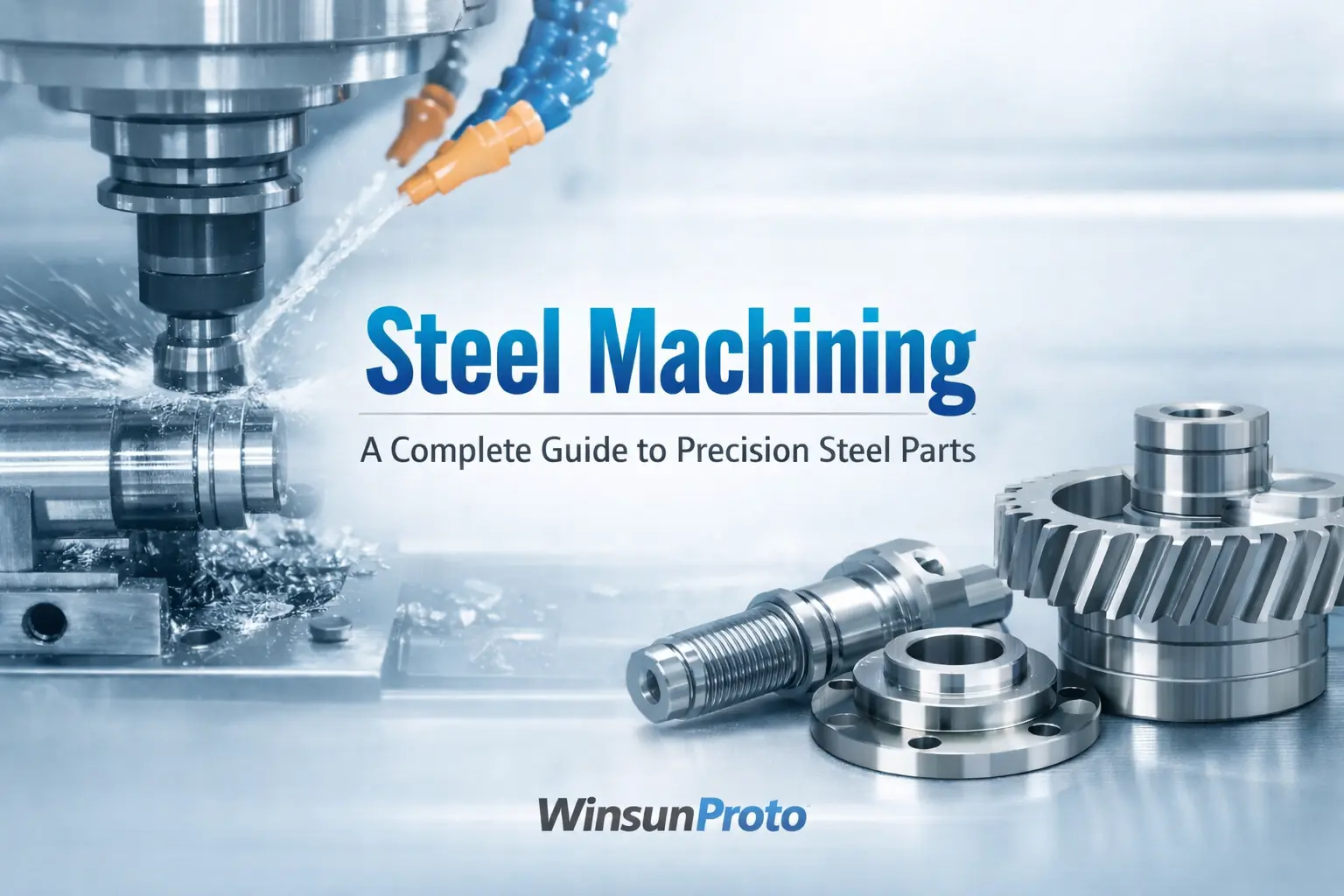
Steel machining plays a critical role in modern manufacturing, enabling the production of high-strength, high-precision components used across industries such as aerospace, automotive, electronics, medical devices, and industrial machinery. Thanks to its durability, mechanical strength, and wide availability, steel remains one of the most commonly machined materials in CNC manufacturing.
At WinsunProto, we specialize in precision steel machining services that support everything from rapid prototyping to large-scale production. Using advanced CNC milling, turning, and finishing technologies, our engineering team ensures tight tolerances, consistent quality, and reliable performance for every steel component. Whether customers require simple mechanical parts or complex custom designs, our steel machining capabilities provide efficient and cost-effective solutions.
Steel machining refers to the process of removing material from steel workpieces to create precise parts and components using machining tools and equipment. This process is commonly performed with CNC (Computer Numerical Control) machines, which allow manufacturers to produce highly accurate and repeatable parts based on digital designs.
In steel machining, cutting tools such as end mills, drills, and turning tools remove material from solid steel blocks, bars, or plates to achieve the desired geometry and dimensions. Depending on the design requirements, machining operations may include milling, turning, drilling, tapping, and grinding. These processes enable manufacturers to create both simple components and complex mechanical structures with tight tolerances.
Steel is widely used in CNC machining because it offers excellent mechanical strength, durability, and versatility. Compared with many other metals, steel can withstand high loads, resist wear, and perform reliably in demanding environments. As a result, machined steel parts are commonly found in industries such as automotive, aerospace, industrial machinery, and electronics manufacturing.
For companies that require high-quality custom components, professional CNC machining providers like WinsunProto offer advanced equipment and experienced engineering teams to ensure precision, efficiency, and consistent quality in steel part production.
Different steel grades have unique mechanical properties and machining characteristics. Choosing the right type of steel is important for achieving the required strength, durability, and performance of the final part.
Carbon steel is one of the most commonly used materials in machining. It primarily contains iron and carbon, with small amounts of other elements. Carbon steel offers good strength, affordability, and relatively good machinability, making it suitable for a wide range of industrial components such as shafts, brackets, and machine parts.
Depending on the carbon content, carbon steel can be classified into low-carbon, medium-carbon, and high-carbon steel. Each category provides different levels of hardness and strength.
Alloy steel contains additional elements such as chromium, molybdenum, nickel, or vanadium that improve mechanical properties. These alloys enhance strength, toughness, and resistance to wear and fatigue.
Because of its improved performance characteristics, alloy steel is widely used in high-stress applications, including automotive components, heavy machinery, and aerospace structural parts.
Stainless steel is well known for its excellent corrosion resistance. It contains chromium, which forms a protective oxide layer that helps prevent rust and chemical damage. This property makes stainless steel ideal for applications in medical devices, food processing equipment, marine environments, and chemical industries.
However, stainless steel is generally more challenging to machine than carbon steel due to its tendency to work-harden and generate heat during cutting.
Tool steel is specifically designed for high hardness, wear resistance, and heat resistance. These steels are often used to manufacture cutting tools, molds, dies, and industrial tooling.
Although tool steels provide outstanding durability, they can be more difficult to machine because of their high hardness, especially after heat treatment. Careful machining strategies and specialized cutting tools are often required to achieve accurate results.
Steel components are typically produced using a variety of CNC machining processes that allow manufacturers to achieve high precision and consistent quality. The specific machining method used depends on the part geometry, tolerance requirements, and production volume.
CNC milling is one of the most widely used machining methods for steel parts. In this process, rotating cutting tools remove material from a stationary steel workpiece to create complex shapes, slots, pockets, and surfaces. CNC milling machines can operate on multiple axes, making them ideal for producing intricate components with tight tolerances.
CNC turning is commonly used to manufacture round or cylindrical steel parts such as shafts, bushings, and threaded components. During the turning process, the steel workpiece rotates while a stationary cutting tool removes material to achieve the desired diameter and shape. CNC lathes allow for efficient production of highly precise rotational parts.
Drilling is used to create holes in steel parts, while tapping is used to produce internal threads for fasteners. These operations are often integrated into CNC machining processes to ensure accurate hole placement and consistent thread quality. Proper cutting speeds and tool selection are important when machining steel to prevent excessive tool wear.
Grinding is often used as a finishing operation when extremely tight tolerances or smooth surface finishes are required. This process uses abrasive wheels to remove small amounts of material and improve dimensional accuracy. Grinding is commonly applied to critical components such as precision shafts, bearing surfaces, and tooling parts.
Surface finishing is an important step after machining steel parts. It enhances the appearance, corrosion resistance, wear resistance, and overall performance of the component.
Black oxide coating creates a thin protective layer on the steel surface that improves corrosion resistance and reduces light reflection. It also provides a uniform black appearance, which is commonly used for tools, mechanical components, and fasteners.
Electroplating involves applying a thin metal layer, such as zinc, nickel, or chrome, onto the steel surface. Zinc plating is especially popular because it provides effective corrosion protection and is widely used in automotive and industrial components.
Powder coating and painting are finishing methods that apply a protective and decorative layer to steel parts. Powder coating offers excellent durability, chemical resistance, and color consistency, making it suitable for both functional and aesthetic applications.
Polishing improves the surface smoothness and appearance of steel components, while passivation is commonly used for stainless steel to enhance corrosion resistance by removing surface contaminants. These finishing processes are often used in medical equipment, electronics, and high-end industrial products.
Steel machining offers several advantages that make it a preferred manufacturing method for many industries.
Steel provides excellent mechanical strength and structural integrity, allowing machined components to withstand heavy loads, high stress, and demanding operating conditions.
Many steel grades offer strong resistance to wear, impact, and fatigue. This durability ensures that machined steel parts maintain their performance and reliability over long service periods.
Steel components can be treated with a wide range of surface finishing processes, allowing manufacturers to improve corrosion resistance, appearance, and functional performance.
Steel machining is highly adaptable for both rapid prototyping and large-scale production. CNC machining technology allows manufacturers to produce consistent parts with tight tolerances, making it ideal for industries that require precision and repeatability.
Steel machined parts are widely used across many industries because of their strength, durability, and reliability. With CNC machining technology, manufacturers can produce steel components with high precision and consistent quality, making them suitable for demanding engineering applications.
In the aerospace and defense industries, steel machining is used to manufacture structural parts, brackets, housings, and mechanical components that require high strength and reliability. These parts must meet strict quality and performance standards to ensure safety and durability in extreme conditions.
Steel is commonly used in automotive manufacturing for parts such as engine components, transmission parts, shafts, gears, and suspension components. Machined steel parts provide the strength and wear resistance needed to handle heavy loads and continuous operation.
Many industrial machines rely on precision steel components to maintain stability and performance. Common examples include machine frames, tooling components, drive shafts, and structural supports used in manufacturing equipment and automation systems.
In electronics manufacturing and precision instruments, steel machining is used to produce housings, fixtures, brackets, and mechanical support parts. These components must meet strict dimensional tolerances to ensure proper assembly and reliable operation.
When designing parts for steel machining, several factors should be considered to ensure efficient production, cost control, and optimal performance.
Choosing the right steel grade is essential for achieving the desired mechanical properties, corrosion resistance, and durability. Engineers should evaluate factors such as strength, hardness, and operating environment before selecting the material.
Parts should be designed with machinability in mind to reduce production time and tool wear. Avoiding unnecessary complexity, deep cavities, or extremely thin walls can help improve machining efficiency and lower manufacturing costs.
Tight tolerances and high-quality surface finishes may require additional machining steps such as grinding or polishing. Designers should specify tolerances that meet functional requirements without making the machining process unnecessarily complex.
Some steel components require heat treatment to improve strength or wear resistance. Designers should consider whether machining will occur before or after heat treatment, as hardened steel can be more difficult to machine.
At WinsunProto, we provide professional steel CNC machining services designed to meet the needs of customers across various industries. Our team combines advanced equipment, technical expertise, and strict quality control to deliver reliable machining solutions.
Our facility is equipped with modern CNC milling and turning machines capable of producing complex steel components with high precision. Our experienced engineers carefully review each project to ensure manufacturability and optimal production efficiency.
WinsunProto supports both rapid prototyping and low-to-medium volume production. This flexibility allows customers to quickly test designs, refine products, and move efficiently into full production.
Quality control is a critical part of our manufacturing process. We perform detailed inspections throughout production to ensure that every steel component meets dimensional and performance requirements.
With extensive experience serving international customers, WinsunProto provides clear communication, stable production capabilities, and reliable delivery schedules, making us a trusted partner for precision steel machining projects.
The best type of steel depends on the application. Carbon steel is often chosen for general machining due to its good machinability and affordability, while stainless steel is preferred when corrosion resistance is required.
Yes, stainless steel is generally more difficult to machine. It tends to generate more heat and can harden during cutting, which increases tool wear and requires careful machining strategies.
Modern CNC machining can typically achieve tolerances of ±0.01 mm or even tighter depending on the part design, machining process, and inspection requirements.
Common surface finishing options for steel include black oxide coating, zinc plating, nickel plating, powder coating, polishing, and painting. The appropriate finish depends on the part’s functional and environmental requirements.
