Our Location
304 North Cardinal St.
Dorchester Center, MA 02124

304 North Cardinal St.
Dorchester Center, MA 02124

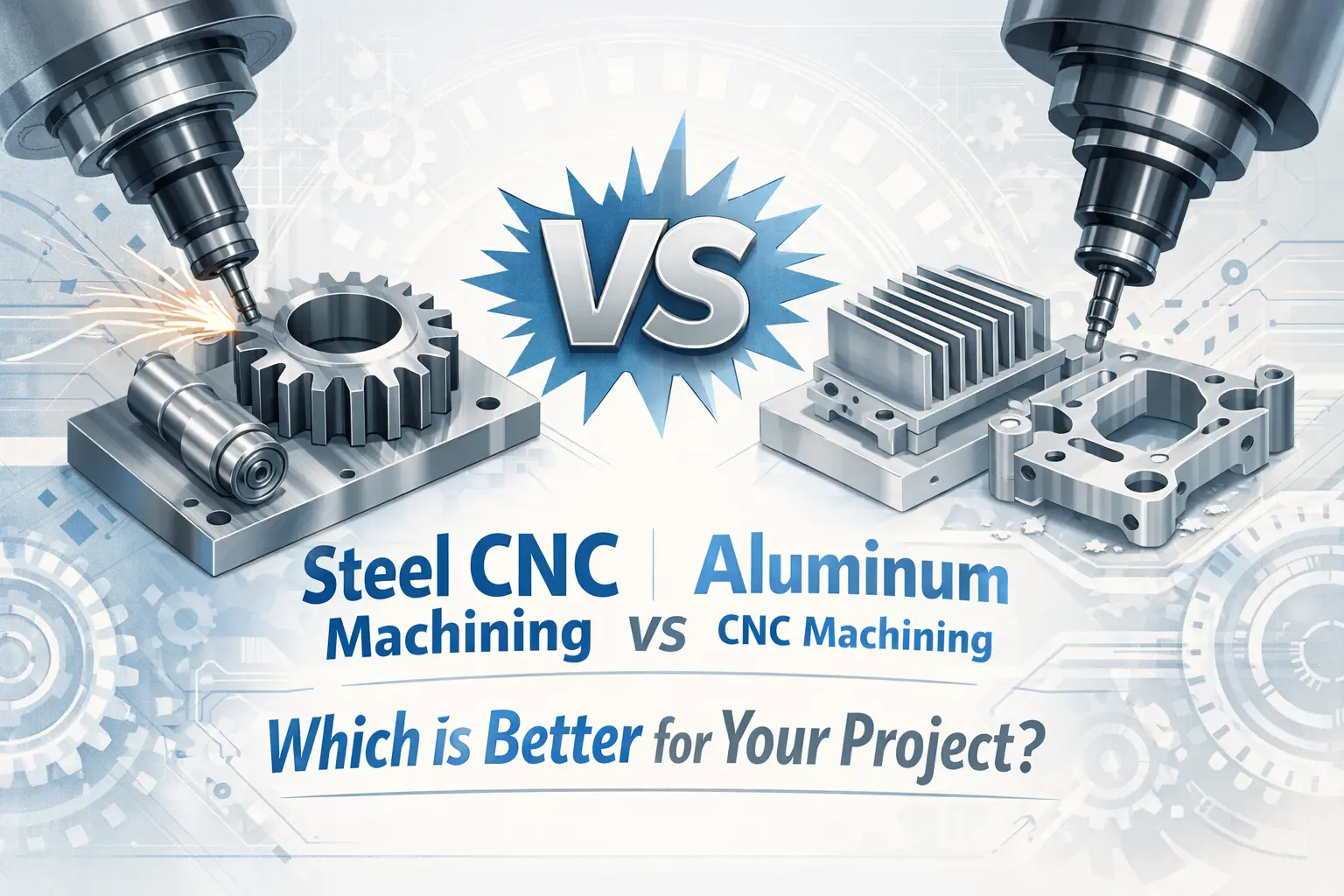
Choosing the right material for CNC machining is a critical decision that affects not only the quality and durability of a component but also the overall cost, production efficiency, and long-term performance of a project. In modern manufacturing, steel and aluminum are two of the most common materials, each offering distinct advantages depending on the application. Steel is renowned for its high strength, durability, and wear resistance, making it suitable for components that need to withstand heavy loads or harsh environments. Aluminum, by contrast, is lightweight, corrosion-resistant, and easier to machine, making it ideal for applications that require rapid production, weight reduction, or thermal management. The decision between steel and aluminum is rarely straightforward; it depends on mechanical requirements, project scale, budget, and environmental conditions. This article provides a detailed comparison of steel and aluminum in CNC machining, exploring material properties, machining considerations, cost implications, and practical applications to help you make an informed choice for your project.
Steel is an alloy primarily composed of iron and carbon, with variations including stainless steel, carbon steel, and tool steel. Each type offers different balances of strength, hardness, corrosion resistance, and machinability. Carbon steel is widely used due to its high tensile strength and relatively low cost, making it suitable for structural parts and industrial machinery. Stainless steel contains chromium and sometimes nickel, providing excellent corrosion resistance and durability for harsh environments, food-grade applications, and outdoor structures. Tool steel, known for extreme hardness and wear resistance, is commonly used for dies, cutting tools, and machinery components that endure repetitive stress. Steel’s density, around 7.8 g/cm³, contributes to its robustness but also increases component weight, which can be a limiting factor in applications sensitive to mass. Additionally, steel performs well under repeated stress and exhibits high fatigue resistance, making it suitable for parts that must endure long-term mechanical loading without deforming. Understanding these characteristics is essential to evaluate whether steel meets the structural, durability, and longevity requirements of a CNC-machined part.
Aluminum is a lightweight, corrosion-resistant metal with excellent thermal conductivity and machinability. With a density of approximately 2.7 g/cm³, it is roughly one-third the weight of steel, which is advantageous for applications where weight reduction is critical, such as aerospace, automotive, and portable electronic devices. Aluminum alloys, such as 6061 and 7075, provide different combinations of strength, corrosion resistance, and machinability. 6061 aluminum offers good all-around properties and corrosion resistance, making it ideal for structural and mechanical components. 7075 aluminum is stronger and comparable to some steels, while still maintaining the lightweight advantage, making it suitable for high-stress aerospace or automotive applications. Aluminum also has excellent thermal and electrical conductivity, which allows it to dissipate heat efficiently and perform well in electronics housings, heat sinks, and cooling components. While softer than steel, aluminum’s machinability and weight advantage often outweigh its lower wear resistance in applications where lightness, corrosion resistance, or rapid production are prioritized.
Machinability is a key factor when selecting a material for CNC machining. Aluminum is generally easier to machine due to its lower hardness and reduced cutting forces. It allows higher cutting speeds, smoother surface finishes, and minimal tool wear, making it ideal for rapid prototyping, small- to medium-batch production, and projects requiring frequent iterations. Steel, in comparison, presents greater challenges in machining. Carbon steel can be machined efficiently with standard carbide tools, but stainless steel or tool steel requires specialized tooling and careful cutting parameters to prevent tool wear and maintain part accuracy. Machining steel generates more heat and cutting forces, which can affect tool life and surface finish quality. Understanding these differences is crucial to plan production schedules, select proper tooling, and maintain dimensional tolerances across multiple parts.
Surface finish and dimensional accuracy are important in determining the final quality of CNC-machined components. Aluminum can achieve smooth surfaces with minimal secondary finishing due to its softness and good chip formation characteristics. Steel, being harder, often requires additional processes like grinding, polishing, or heat treatment to reach tight tolerances and desired aesthetics. For components where precision is critical, steel’s thermal stability can be beneficial, reducing expansion during high-speed cutting and maintaining dimensional accuracy. Evaluating the machining characteristics of both materials allows manufacturers to meet design specifications efficiently while minimizing post-processing requirements.
CNC machines must meet specific requirements depending on the material being machined. Aluminum’s lower hardness allows machining on lighter equipment without compromising speed or accuracy. Steel, however, requires more rigid machines with higher spindle power, stronger fixtures, and effective coolant systems to handle increased cutting forces and heat generation. Proper equipment selection ensures that production efficiency is maximized, tool wear is minimized, and final part quality meets or exceeds design expectations.
Raw material cost varies significantly between steel and aluminum. Carbon steel is generally more affordable than aluminum, while stainless and high-strength steels may be more expensive. Aluminum alloys, especially high-strength grades, often cost more upfront but can provide indirect savings through reduced weight, faster machining, and lower energy consumption. Understanding the price differences at the material stage helps manufacturers estimate project budgets more accurately.
Aluminum’s machinability translates into faster production cycles, lower tool wear, and reduced energy use, resulting in significant processing cost savings. Steel machining typically requires longer production times, specialized tools, and additional finishing processes, increasing overall costs. For large-volume production, these differences can impact project profitability and timeline management.
Long-term performance and maintenance costs also affect the total cost of ownership. Steel components generally offer longer service life and higher wear resistance, reducing replacement frequency in demanding applications. Aluminum’s lightweight properties can lower operational costs in transport-heavy industries or reduce structural stress in multi-part assemblies. A balanced cost analysis should consider both immediate manufacturing costs and long-term operational benefits.
Steel is ideal for applications requiring high strength, durability, and wear resistance. Components such as industrial machinery parts, load-bearing frames, gears, and dies benefit from steel’s mechanical robustness. Its ability to withstand extreme loads and repetitive stress makes it suitable for environments where part failure is not an option. Steel’s versatility allows it to perform reliably in both indoor and outdoor conditions, including exposure to mechanical abrasion or corrosive elements when appropriately treated.
Aluminum excels in applications prioritizing lightweight design, corrosion resistance, and thermal management. Aerospace brackets, automotive body components, heat sinks, and consumer electronics housings often utilize aluminum to reduce weight while maintaining structural integrity. Aluminum also enables faster production and easier design iteration, which is advantageous for rapid prototyping or projects with tight deadlines. Its corrosion resistance and high thermal conductivity make it particularly suitable for outdoor, electronic, or heat-intensive applications.
Comparing steel and aluminum helps clarify trade-offs for material selection. Steel provides high strength, wear resistance, and long-term durability but is heavier and more challenging to machine. Aluminum is lightweight, easier to machine, and corrosion-resistant, yet softer and less wear-resistant. Presenting these differences in a summary table or visual format can aid decision-making, allowing engineers and project managers to align material selection with performance, cost, and production requirements. Understanding the strengths and limitations of each material ensures informed decisions that optimize efficiency and product quality.
Selecting between steel and aluminum for CNC machining requires careful evaluation of mechanical requirements, production efficiency, cost, and application-specific needs. Steel is preferred for high-load, wear-resistant parts, while aluminum suits lightweight, corrosion-resistant, and thermally sensitive components. By analyzing material properties, machining considerations, cost implications, and real-world applications, manufacturers can choose the material that offers the best combination of performance, reliability, and value. Consulting with experienced CNC suppliers or engineers further ensures that each component meets design specifications and contributes to project success.
