Our Location
304 North Cardinal St.
Dorchester Center, MA 02124

304 North Cardinal St.
Dorchester Center, MA 02124

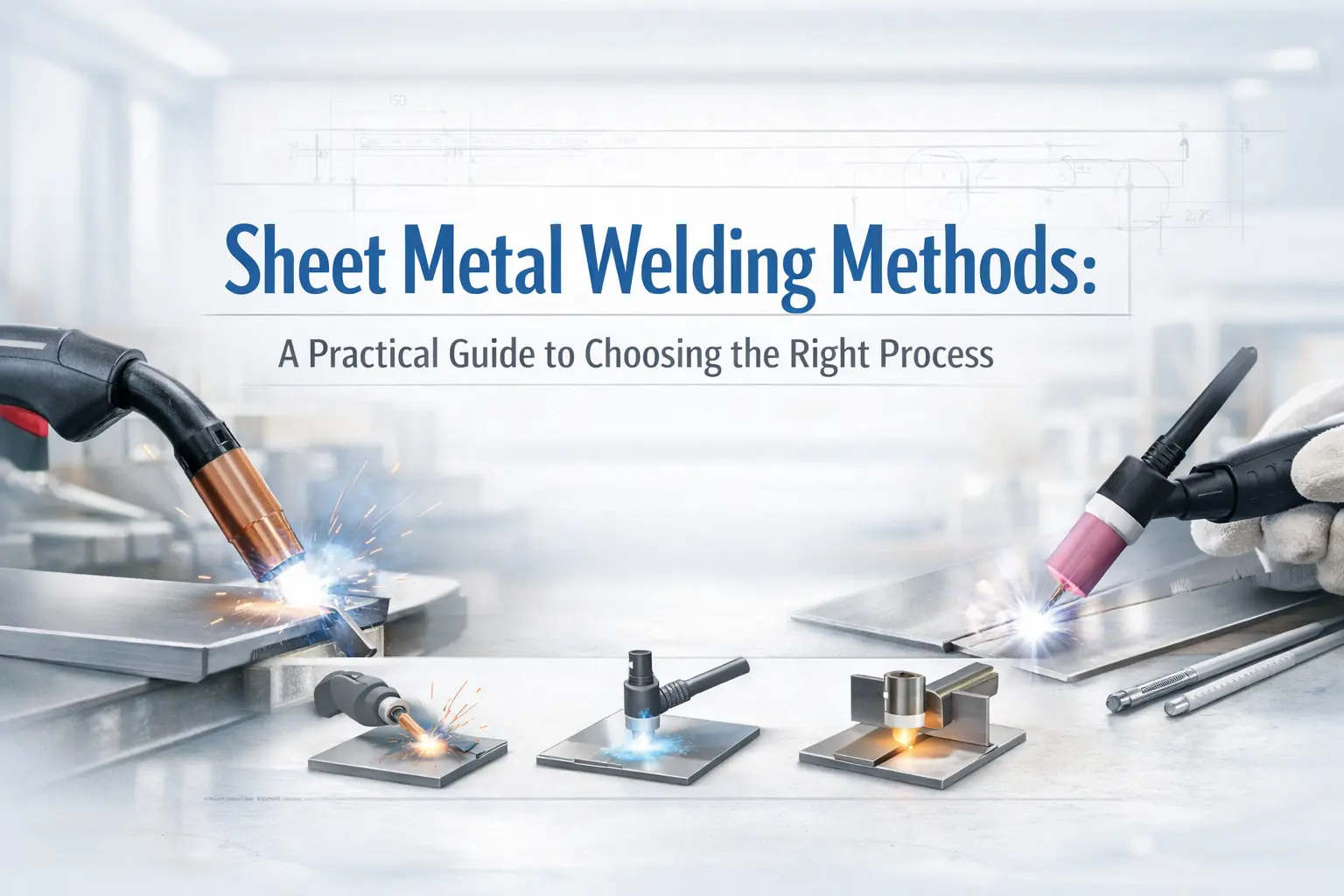
Sheet metal welding plays a vital role in modern manufacturing, enabling strong, reliable joints for everything from simple brackets to complex structural assemblies. With a wide range of welding methods available, choosing the right process is essential to achieving the desired balance between strength, precision, appearance, and cost. Each welding technique offers unique advantages depending on material type, thickness, and production requirements.
At Winsun Proto, we work closely with engineers and product teams to select the most suitable sheet metal welding method for every project. Whether it’s precision TIG welding for thin, high-tolerance parts or efficient MIG and spot welding for scalable production, our experience in prototype and production welding helps ensure consistent quality, fast lead times, and dependable performance across industries.
Sheet metal welding is a fabrication process used to permanently join thin metal sheets by applying heat, pressure, or a combination of both. The goal is to create a strong, durable bond while maintaining the material’s structural integrity, dimensional accuracy, and surface quality. This process is widely used in industries where lightweight components, precise tolerances, and reliable joints are required.
Unlike welding thick plates or structural steel, sheet metal welding demands greater control over heat input and technique. Thin materials are more susceptible to distortion, burn-through, and warping, making process selection and parameter control especially critical.
At its core, sheet metal welding works by melting the base metals at the joint area, often with or without a filler material, and allowing them to fuse as they cool. Depending on the welding method, the heat source may come from an electric arc, electrical resistance, or a focused energy beam such as a laser.
Key principles of sheet metal welding include controlling heat input, ensuring proper joint fit-up, and achieving consistent penetration without damaging the surrounding material. Shielding gases or electrodes are often used to protect the molten weld pool from contamination, helping produce clean, high-quality welds.
Welding is a fundamental process in sheet metal fabrication because it enables the assembly of complex parts that cannot be formed from a single piece of material. It allows manufacturers to combine strength with flexibility in design, supporting everything from simple enclosures to load-bearing assemblies.
In addition, welding provides long-term durability compared to mechanical fastening methods such as rivets or screws. Properly welded joints improve structural integrity, reduce the need for additional hardware, and help maintain a clean, streamlined appearance. For both prototype development and full-scale production, reliable sheet metal welding is essential to ensuring part performance, safety, and consistency.
Sheet metal welding involves several commonly used processes, each suited to different materials, thicknesses, and production requirements. Understanding the characteristics of each welding method helps engineers and manufacturers select the most efficient and reliable option for their specific application.
MIG welding, also known as Gas Metal Arc Welding, is widely used for sheet metal fabrication due to its speed and ease of operation. It uses a continuously fed wire electrode and shielding gas to create the weld, making it suitable for both thin and medium-gauge sheet metal.
This method is commonly applied in high-volume production where efficiency and repeatability are priorities. MIG welding produces strong joints but requires careful heat control when working with thin sheet metal to prevent distortion or burn-through. It is often used for steel and aluminum components in automotive, enclosures, and general fabrication projects.
TIG welding offers superior control and precision, making it ideal for thin sheet metal and applications with strict quality or appearance requirements. It uses a non-consumable tungsten electrode and allows the operator to add filler material manually if needed.
Because of its low heat input and precise arc control, TIG welding is well suited for stainless steel, aluminum, and other non-ferrous materials. Although TIG welding is slower and more labor-intensive than MIG welding, it delivers clean, high-quality welds with excellent aesthetic results, making it a preferred choice for prototypes and high-end components.
Spot welding is a type of resistance welding that joins sheet metal by applying pressure and electrical current at specific points. It is especially effective for thin sheet metal assemblies where speed and consistency are essential.
This method is commonly used in mass production environments, such as automotive body manufacturing and appliance fabrication. Spot welding does not require filler material and minimizes overall heat input, reducing the risk of warping. However, it is best suited for lap joints and may not provide the same strength as continuous welds in structural applications.
Laser welding uses a highly focused laser beam to create narrow, deep welds with minimal heat-affected zones. This makes it an excellent choice for precision sheet metal parts that require tight tolerances and minimal distortion.
Laser welding is often used in electronics, medical devices, and high-end industrial components. While the initial equipment cost is higher, the process offers exceptional repeatability, high welding speed, and clean weld seams, particularly in automated or robotic production setups.
Resistance welding encompasses several techniques, including seam welding and projection welding, that rely on electrical resistance and pressure to generate heat at the joint. These methods are well suited for repetitive, high-volume sheet metal production.
Resistance welding offers consistent weld quality and low operating costs once set up. It is commonly used for steel components and applications where joint locations are predefined. However, the process requires precise tooling and is less flexible for custom or low-volume projects.
Each sheet metal welding method has its own strengths and limitations. Comparing them from multiple perspectives helps manufacturers and engineers make informed decisions based on performance requirements, production scale, and cost considerations.
Welding speed plays a critical role in overall production efficiency. MIG welding and resistance welding are well suited for high-volume manufacturing due to their fast deposition rates and ease of automation. Spot welding, in particular, excels in mass production environments where repeatable weld points are required.
TIG welding, while slower, offers unmatched control and is often chosen for low-volume production, prototypes, or parts requiring exceptional precision. Laser welding combines high speed with automation potential, making it ideal for advanced manufacturing setups despite its higher initial investment.
Joint strength and consistency vary depending on the welding process and joint design. TIG welding produces clean, high-quality welds with excellent mechanical properties, especially for thin sheet metal and critical components.
MIG welding delivers strong and reliable joints for a wide range of materials but may result in larger weld beads. Spot and resistance welding provide consistent joint strength for overlapping sheet metal but are generally limited to specific joint configurations. Laser welding offers deep penetration and uniform weld quality, particularly for precision assemblies.
Controlling heat input is essential when welding thin sheet metal. Excessive heat can cause warping, distortion, or burn-through. TIG and laser welding provide precise heat control, minimizing thermal distortion and preserving dimensional accuracy.
MIG welding requires careful parameter adjustment to manage heat input, especially on thinner gauges. Resistance and spot welding localize heat at the weld point, reducing overall thermal impact on the surrounding material, which is beneficial for maintaining flatness and alignment.
Cost is influenced by equipment investment, labor, and production volume. MIG and spot welding systems are generally cost-effective for large-scale production. TIG welding involves higher labor costs due to slower welding speeds but requires relatively modest equipment investment.
Laser welding has higher upfront equipment costs but can significantly reduce labor and rework in automated, high-precision production. Resistance welding systems require dedicated tooling, making them ideal for repeatable jobs but less flexible for custom projects.
Selecting the right welding method for sheet metal is not only about equipment availability, but also about balancing performance, cost, appearance, and production efficiency. The optimal choice depends on several technical and practical factors that directly impact part quality and project success.
Material thickness is one of the most important factors in welding method selection. Thin sheet metal requires precise heat control to avoid burn-through and distortion, making TIG, laser, or resistance welding more suitable in many cases.
Material type also plays a critical role. Mild steel, stainless steel, aluminum, and specialty alloys each respond differently to heat input and shielding. For example, aluminum sheet metal often benefits from TIG or MIG welding with proper shielding, while stainless steel is commonly welded using TIG for improved appearance and corrosion resistance.
When dimensional accuracy and surface finish are critical, welding precision becomes a top priority. TIG and laser welding offer excellent control over weld size and penetration, helping maintain tight tolerances and clean weld seams.
For parts that will remain visible or require minimal post-processing, these methods are often preferred. In contrast, MIG and spot welding are more commonly used when cosmetic appearance is secondary to structural strength or production efficiency.
Production scale has a significant influence on welding method selection. For prototypes, low-volume runs, or custom projects, flexible processes such as TIG welding allow for quick adjustments and detailed control.
High-volume production typically favors MIG, spot, or resistance welding due to their speed and suitability for automation. Laser welding also performs well in high-volume environments where consistency and repeatability are essential, especially when integrated into automated production lines.
The functional purpose of the welded joint should always be considered. Structural components require strong, reliable welds that can withstand mechanical stress and environmental exposure. MIG, TIG, and laser welding are commonly used for load-bearing applications depending on design requirements.
For cosmetic or non-structural parts, minimizing weld marks and distortion may be more important than maximum strength. In these cases, spot welding or low-heat-input processes can provide sufficient performance while maintaining a clean appearance.
Different sheet metal welding methods are commonly used across industries based on performance requirements, production volume, and material characteristics. Understanding typical applications helps clarify why certain welding processes are preferred in specific use cases.
In the automotive and transportation industry, sheet metal welding is widely used for body panels, brackets, frames, and structural reinforcements. Spot welding and resistance welding are commonly applied in high-volume production environments due to their speed and consistency.
MIG welding is frequently used for subassemblies and structural parts where strength and efficiency are required. For lightweight materials and precision components, laser welding is increasingly adopted to reduce distortion and improve repeatability.
Sheet metal welding plays a key role in manufacturing electronic enclosures, control cabinets, and housings. These applications often require clean welds, tight tolerances, and minimal thermal distortion to ensure proper fit and function.
TIG welding and laser welding are commonly used for stainless steel and aluminum enclosures, particularly when appearance and dimensional accuracy are important. Spot welding is also widely used for internal joints where weld visibility is not critical.
Industrial equipment and machinery often involve thicker sheet metal and higher load-bearing requirements. MIG welding is widely used for these applications due to its ability to produce strong, durable joints efficiently.
For components that demand higher precision or reduced heat input, TIG welding may be selected. Resistance welding is also applied in repetitive industrial assemblies where joint locations are standardized and production volumes are high.
For prototypes and low-volume sheet metal parts, flexibility and control are essential. TIG welding is particularly well suited for these projects, allowing precise adjustments during fabrication and delivering high-quality welds on thin materials.
Laser welding may also be used for advanced prototypes requiring tight tolerances or specialized designs. In these scenarios, welding method selection is often driven by design complexity, lead time, and post-processing requirements rather than pure production speed.
Welding thin sheet metal presents unique challenges compared to thicker materials. Without proper process selection and parameter control, weld quality and part accuracy can be easily compromised. Understanding these common issues helps manufacturers reduce defects and improve consistency.
Warping and distortion are among the most frequent challenges in sheet metal welding. Excessive heat input can cause uneven expansion and contraction, leading to misalignment or dimensional inaccuracies.
To minimize distortion, welding methods with controlled heat input such as TIG, laser, and resistance welding are often preferred. Proper fixturing, balanced weld sequences, and optimized welding parameters also play a critical role in maintaining part flatness and geometry.
Burn-through occurs when excessive heat melts completely through thin material, creating holes or weak joints. This issue is especially common when welding thin-gauge sheet metal with high-energy processes.
Reducing current, using appropriate filler material, and selecting low-heat-input welding methods can significantly lower the risk of burn-through. TIG welding, laser welding, and spot welding are frequently chosen for thin materials due to their superior heat control.
Achieving consistent weld quality across multiple parts can be challenging, particularly in high-volume production or complex assemblies. Variations in material thickness, joint fit-up, or operator technique may result in inconsistent weld appearance and strength.
Automation, standardized welding procedures, and quality inspections help improve repeatability. Processes such as resistance welding and laser welding are especially effective in maintaining uniform weld quality in repetitive manufacturing environments.
Selecting the right welding method for your sheet metal project is crucial for ensuring durability, precision, and overall quality. The choice depends on the material type, thickness, project requirements, and budget. Understanding the strengths and limitations of each method will help you make the best decision for your project.
MIG Welding (Metal Inert Gas)
MIG welding is ideal for thin to medium sheet metals and is widely used in production due to its speed and versatility. It is beginner-friendly and works well on mild steel and aluminum. However, it may produce more spatter and requires proper gas shielding.
TIG Welding (Tungsten Inert Gas)
TIG welding offers precise, clean, and strong welds, making it perfect for stainless steel, aluminum, or projects requiring a high-quality finish. While slower and requiring more skill, TIG is excellent for thin metals where appearance and strength are critical.
Key Takeaway: Use MIG welding for faster, general-purpose fabrication, and TIG welding when precision, aesthetics, and material control are priorities.
Spot Welding
Spot welding joins metals at specific points using electrical resistance. It is extremely efficient for thin sheet metals and high-volume production, such as automotive panels. Spot welding minimizes distortion and works best for lap joints.
Laser Welding
Laser welding provides highly precise and fast results with minimal heat distortion. It is ideal for complex designs or high-volume projects requiring tight tolerances. The main limitation is the higher equipment cost and need for skilled operators.
Key Takeaway: Spot welding is cost-effective for repetitive, thin metal tasks, while laser welding is perfect for precision and intricate designs.
Choosing a welding method often involves trade-offs between cost, quality, and performance:
Cost: MIG and spot welding are generally more affordable.
Quality: TIG and laser welding produce cleaner, stronger welds.
Performance: Consider material type, thickness, joint strength, and production volume.
By weighing these factors, you can select the method that meets your project’s functional and budgetary needs without compromising quality.
Pro Tip: Partnering with an experienced sheet metal fabrication company, like WinSun Proto, can streamline the process. Experts can recommend the best welding method, ensure precise and durable welds, and optimize your production workflow for efficiency and cost-effectiveness.
At WinSun Proto, we offer comprehensive sheet metal welding services designed to meet the needs of projects ranging from prototypes to high-volume production. Our expertise ensures strong, precise welds, optimized workflows, and consistent quality across every project.
For prototypes and low-volume production, flexibility and precision are key. Our team can handle MIG, TIG, spot, and laser welding for a variety of metals and thicknesses. We work closely with clients to refine designs, test welds, and deliver parts that meet exact specifications. This ensures that your prototypes are functional, aesthetically clean, and ready for further testing or production scaling.
When your project requires large-scale production, efficiency and repeatability become essential. WeYoung CNC leverages automated welding systems and advanced fabrication techniques to deliver high-volume orders without compromising quality. Our processes minimize distortion, maintain tight tolerances, and keep production costs under control, making us a reliable partner for demanding manufacturing schedules.
Quality is at the heart of our welding services. Every weld undergoes rigorous inspection to ensure strength, durability, and compliance with industry standards. We use visual inspections, measurement verification, and, when required, non-destructive testing to guarantee that every part meets or exceeds your expectations. Partnering with WeYoung CNC means you can trust that your welded sheet metal components are precise, reliable, and ready for real-world use.
Q1: What types of sheet metal welding services does WinsunProto offer?
WinsunProto provides MIG, TIG, spot, and laser welding services for a wide range of metals and thicknesses. They handle prototypes, low-volume production, and high-volume manufacturing with precision and efficiency.
Q2: How do I choose the best welding method for my project?
The right method depends on material type, thickness, desired strength, aesthetics, and production volume. MIG welding is ideal for fast, general-purpose fabrication, TIG welding for precise and clean finishes, spot welding for repetitive thin-sheet work, and laser welding for intricate designs with minimal distortion.
Q3: Can WinsunProto handle prototype and low-volume projects?
Yes. WinsunProto specializes in prototype and low-volume welding solutions, helping clients refine designs, test welds, and produce functional, high-quality parts ready for further development or scaling.
Q4: What quality control measures does WinsunProto implement?
WinsunProto follows strict quality standards for all welding projects. Inspections include visual checks, dimensional verification, and, if necessary, non-destructive testing to ensure every weld meets strength, durability, and industry standards.
Q5: Can WinsunProto support high-volume production?
Absolutely. WinsunProto uses automated welding systems and advanced fabrication techniques to maintain efficiency, repeatability, and consistent quality for large-scale production runs.
Q6: Why choose WinsunProto for sheet metal welding?
WinsunProto combines expert craftsmanship, advanced equipment, and a focus on precision to deliver reliable, cost-effective, and high-quality welded sheet metal components for projects of any size.
