Our Location
304 North Cardinal St.
Dorchester Center, MA 02124

304 North Cardinal St.
Dorchester Center, MA 02124

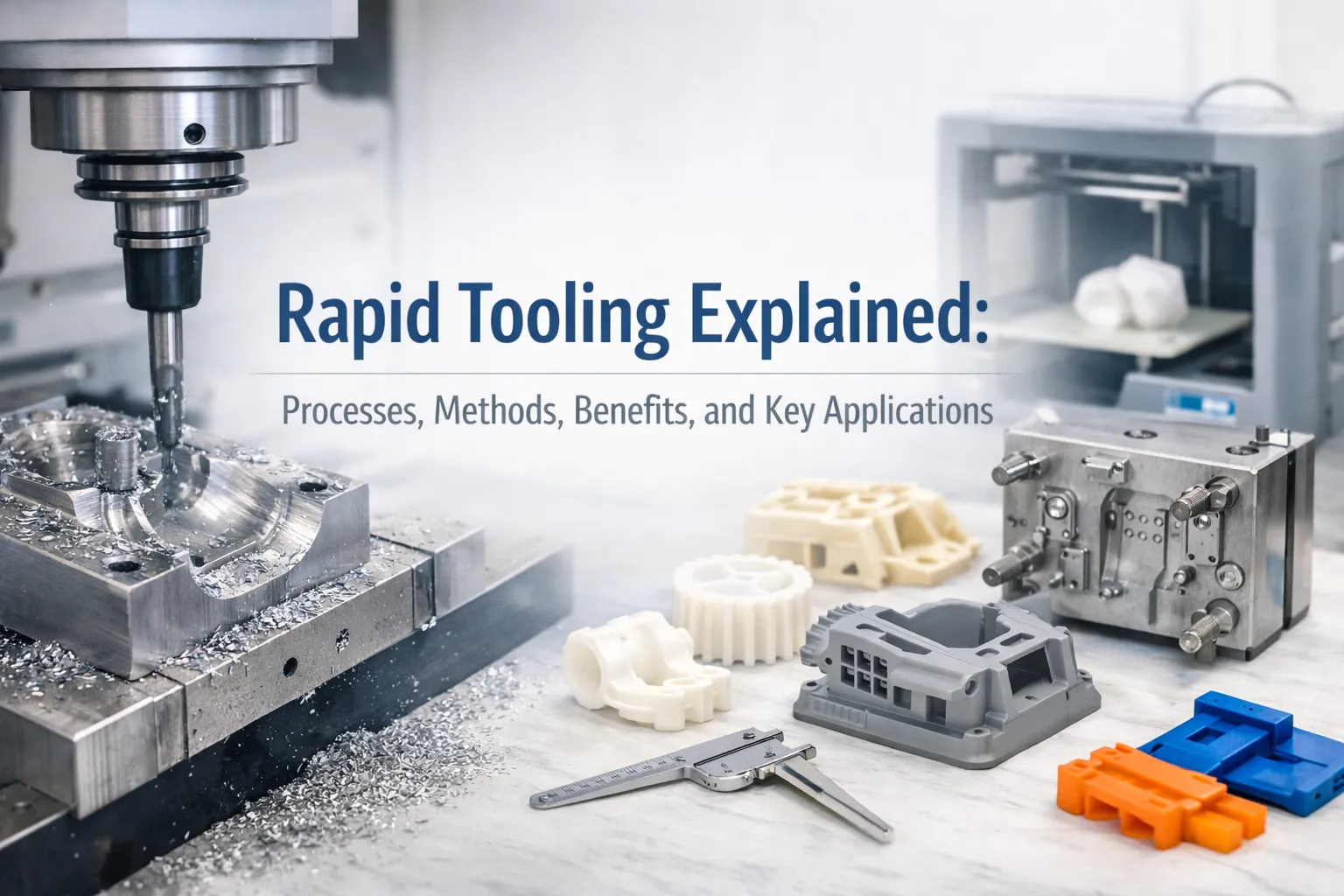
In today’s fast-paced manufacturing landscape, companies are under constant pressure to reduce product development cycles while maintaining high quality and cost efficiency. This is where rapid tooling has become a critical solution. Rapid tooling refers to a range of manufacturing techniques used to quickly produce molds, dies, or tooling inserts that enable faster prototyping and low-volume production. Compared to traditional tooling methods, which often require long lead times and significant upfront investment, rapid tooling offers a more agile and cost-effective approach for modern product development.
Industries such as automotive, aerospace, and consumer electronics are evolving rapidly, and businesses must respond quickly to market demands. Shorter product life cycles mean that delays in tooling can result in lost opportunities. Rapid tooling addresses this challenge by significantly reducing lead times, allowing companies to move from design to production much faster. This capability is especially important for companies launching new products or entering competitive markets where speed is a key differentiator.
Another major advantage of rapid tooling is its flexibility. Traditional tooling is typically designed for mass production, which makes it less suitable for iterative design processes. In contrast, rapid tooling allows engineers to quickly modify tool designs, enabling multiple iterations without excessive cost or delay. This is particularly beneficial during the early stages of product development, where design validation and optimization are critical.
With rapid tooling, design teams can test different geometries, materials, and functional features in a short time frame. This iterative approach leads to better-performing products and reduces the likelihood of costly redesigns later in the production cycle. As a result, companies can innovate more confidently and bring higher-quality products to market.
From a cost perspective, rapid tooling significantly lowers the initial investment required for product development. Instead of committing to expensive hardened steel molds, manufacturers can use alternative materials such as aluminum, resin, or silicone to produce functional tools. These tools are ideal for prototyping, bridge production, or low-volume manufacturing, making rapid tooling an attractive option for startups and established companies alike.
In addition, rapid tooling enables businesses to test market demand before scaling up to full production. This reduces financial risk and ensures that resources are allocated efficiently. If you are considering rapid tooling for your next project and want to evaluate feasibility, cost, or lead time, you can consult with an experienced team here: https://winsunproto.com/contact/.
Rapid tooling is a manufacturing approach that focuses on the quick production of molds, dies, or tooling components used in processes such as injection molding, casting, or forming. The primary goal is to shorten the tooling development cycle while maintaining sufficient quality for prototyping or low-volume production. Unlike conventional tooling, which may take weeks or months to produce, rapid tooling can often be completed in a matter of days.
This approach leverages advanced manufacturing technologies such as CNC machining and additive manufacturing to streamline the tooling process. By reducing the time required to create tools, companies can accelerate product development and respond more effectively to market changes. Rapid tooling serves as a bridge between concept validation and mass production, allowing manufacturers to test and refine designs before committing to high-cost tooling.
Although rapid tooling and rapid prototyping are closely related, they serve different purposes. Rapid prototyping focuses on creating physical models of a product design, often using 3D printing or CNC machining. These prototypes are primarily used for visual evaluation, design validation, and functional testing.
Rapid tooling, on the other hand, involves creating the actual tools needed for manufacturing parts. Instead of producing a single prototype, rapid tooling enables the production of multiple parts using processes like injection molding or casting. This makes it more suitable for testing production processes, material behavior, and part performance under real-world conditions.
Understanding the distinction between these two approaches is essential for choosing the right manufacturing strategy. In many cases, companies use rapid prototyping first and then transition to rapid tooling for further validation and small-scale production.
Rapid tooling can be broadly classified into direct and indirect methods. Direct rapid tooling involves creating the final tool directly using additive manufacturing or CNC machining. For example, a mold insert can be 3D printed using metal or high-performance polymer materials and used immediately in production. This approach offers the fastest turnaround time and is ideal for simple or low-volume applications.
Indirect rapid tooling, on the other hand, uses a master pattern to create a mold. Techniques such as silicone molding or investment casting fall into this category. The master pattern is typically produced using rapid prototyping methods, and then used to create the final tooling. While this process may involve additional steps, it often provides better surface finish and material properties compared to direct methods.
Choosing between direct and indirect rapid tooling depends on factors such as part complexity, material requirements, production volume, and budget. If you are unsure which method is best for your application, reaching out to a professional team can help you make the right decision: https://winsunproto.com/contact/.
CNC machining is one of the most widely used methods for rapid tooling due to its precision, reliability, and material versatility. Aluminum molds, in particular, are commonly produced using CNC machining because they offer a good balance between cost and durability. These molds can be used for injection molding or other manufacturing processes, making them suitable for prototyping and low-volume production.
One of the key advantages of CNC machining is its ability to produce high-quality tooling with tight tolerances and excellent surface finishes. This ensures that the final parts meet design specifications and functional requirements. Additionally, CNC machining supports a wide range of materials, allowing manufacturers to select the most appropriate option based on the application.
Additive manufacturing, commonly known as 3D printing, has revolutionized rapid tooling by enabling the direct fabrication of complex tooling geometries. This method is particularly useful for creating conformal cooling channels in molds, which can improve cooling efficiency and reduce cycle times in injection molding processes.
3D printing also allows for rapid iteration, as design changes can be implemented quickly without the need for extensive retooling. However, the choice of materials and the durability of printed tools must be carefully considered, as they may not always match the performance of traditionally machined tools.
Vacuum casting is a popular indirect rapid tooling method used to produce small batches of high-quality parts. This process involves creating a silicone mold from a master pattern, which is then used to cast parts in materials such as polyurethane. Vacuum casting is widely used for functional prototypes, product testing, and low-volume production.
Silicone mold tooling offers several advantages, including low cost, fast turnaround time, and the ability to replicate fine details. However, silicone molds have a limited lifespan and are typically suitable for producing a relatively small number of parts. Despite this limitation, they remain an effective solution for early-stage product development and validation.
Rapid tooling can also be categorized into soft tooling and hard tooling based on the materials and durability of the tools. Soft tooling typically uses materials such as aluminum, silicone, or resin, and is designed for low-volume production. It is cost-effective and quick to produce, making it ideal for prototyping and bridge production.
Hard tooling, on the other hand, involves the use of hardened steel and is intended for high-volume manufacturing. While it offers superior durability and longer tool life, it requires significantly more time and investment to produce. Rapid tooling often focuses on soft tooling solutions to achieve faster turnaround and lower costs.
Aluminum is one of the most commonly used materials in rapid tooling, especially for injection molds and tooling inserts. Its popularity comes from its excellent machinability, relatively low cost, and faster production time compared to hardened steel. Aluminum molds can typically be manufactured much quicker using CNC machining, making them ideal for rapid prototyping and low- to medium-volume production.
Another advantage of aluminum tooling is its superior thermal conductivity. This allows for faster cooling during injection molding cycles, which can significantly reduce production time and improve efficiency. However, aluminum is softer than steel, meaning it has a shorter lifespan and may not be suitable for high-volume manufacturing. Despite this limitation, it remains a preferred choice for bridge production and product validation stages.
Steel tooling is used when higher durability and longer tool life are required. Although it is less commonly associated with rapid tooling due to longer machining times, certain grades of pre-hardened steel can still be used in accelerated tooling processes. Steel molds are capable of producing large quantities of parts with consistent quality, making them suitable for transitioning from prototyping to full-scale production.
The main drawback of steel tooling is its higher cost and longer lead time. However, in cases where the production volume justifies the investment, steel tooling provides unmatched reliability and performance. For projects that require both speed and durability, manufacturers often adopt a hybrid approach—starting with aluminum tooling and later transitioning to steel. If you need help evaluating the right tooling material for your project, you can consult an experienced team here: https://winsunproto.com/contact/.
Epoxy and resin-based materials are frequently used in indirect rapid tooling processes. These materials are typically used to create molds or tooling inserts from a master pattern. One of the main advantages of epoxy tooling is its low cost and quick turnaround time, making it suitable for early-stage development and testing.
Resin tooling can replicate fine details and complex geometries with high accuracy, which is particularly useful for functional prototypes. However, these materials generally have limited mechanical strength and thermal resistance compared to metal tooling. As a result, they are best suited for low-volume production or non-critical applications where cost and speed are the primary concerns.
Silicone rubber is widely used in vacuum casting and other indirect rapid tooling methods. It is known for its flexibility, ease of use, and ability to capture intricate details from a master pattern. Silicone molds are typically used to produce small batches of parts in materials such as polyurethane, making them ideal for product testing, market validation, and early-stage production.
One of the key advantages of silicone tooling is its low cost and fast production cycle. However, silicone molds have a limited lifespan and may degrade after repeated use. This makes them unsuitable for high-volume production but highly effective for rapid prototyping and short production runs.
Selecting the appropriate material for rapid tooling depends on several factors, including production volume, part complexity, material requirements, and budget. For example, aluminum is often chosen for its balance of cost and performance, while steel is preferred for durability and long-term use. Resin and silicone materials are ideal for quick iterations and low-cost testing.
A well-informed material selection strategy can significantly impact the success of a project by optimizing both cost and performance. Working with an experienced manufacturing partner can help you evaluate these factors and choose the most suitable solution. For tailored recommendations, you can reach out here: https://winsunproto.com/contact/.
One of the most significant advantages of rapid tooling is its ability to dramatically shorten the product development cycle. Traditional tooling methods can take weeks or even months to complete, whereas rapid tooling can often deliver functional tools within days. This allows companies to accelerate product launches and respond quickly to market demands.
Faster time to market is especially critical in competitive industries where being first can provide a significant advantage. By reducing lead times, rapid tooling enables businesses to stay ahead of competitors and capitalize on emerging opportunities.
Rapid tooling reduces upfront investment by eliminating the need for expensive hardened steel molds during the early stages of product development. Instead, manufacturers can use cost-effective materials such as aluminum or resin to produce functional tools. This makes it easier for companies to test designs and validate concepts without committing significant financial resources.
Lower development costs also make rapid tooling accessible to startups and small businesses, allowing them to compete with larger organizations. By minimizing financial risk, companies can allocate resources more efficiently and focus on innovation.
Another key benefit of rapid tooling is the ability to support multiple design iterations. In traditional manufacturing, making changes to tooling can be time-consuming and expensive. Rapid tooling, however, allows for quick modifications, enabling engineers to refine designs based on testing and feedback.
This flexibility leads to better product performance and higher quality. It also reduces the likelihood of costly design errors during mass production. As a result, companies can achieve more reliable outcomes while maintaining efficiency.
Rapid tooling serves as an effective bridge between prototyping and full-scale production. It allows manufacturers to produce small to medium volumes of parts while final production tooling is being developed. This ensures continuity in the supply chain and helps companies meet early market demand.
Bridge production is particularly useful for product launches, pilot runs, and market testing. It enables businesses to generate revenue and gather customer feedback before scaling up production.
By enabling early testing and validation, rapid tooling helps identify potential design and manufacturing issues before they become costly problems. This reduces the overall risk associated with product development and improves the chances of success in the market.
Companies can test functionality, material performance, and manufacturing processes using real production methods. If adjustments are needed, they can be made quickly and cost-effectively. To minimize risk and optimize your development process, consider consulting with experts here: https://winsunproto.com/contact/.
One of the primary limitations of rapid tooling is the shorter lifespan of the tools compared to traditional hardened steel molds. Materials such as aluminum, resin, and silicone are not designed for high-volume production and may wear out more quickly under repeated use.
This limitation means that rapid tooling is generally best suited for prototyping, testing, and low-volume production. For large-scale manufacturing, transitioning to more durable tooling materials is often necessary.
Rapid tooling materials may not always meet the mechanical, thermal, or chemical requirements of certain applications. For example, resin and silicone molds may not withstand high temperatures or pressures, limiting their use in certain manufacturing processes.
As a result, careful material selection is essential to ensure that the tooling can meet performance requirements. Understanding these constraints can help avoid unexpected issues during production.
While rapid tooling can achieve good surface finishes and dimensional accuracy, it may not always match the precision of traditional tooling methods. Factors such as material properties, manufacturing processes, and tool wear can affect the final quality of the parts.
In applications where tight tolerances and high-quality finishes are critical, additional post-processing or alternative tooling methods may be required.
Rapid tooling is not typically designed for high-volume manufacturing. While it excels in speed and flexibility, it lacks the durability and efficiency needed for large-scale production. For mass production, traditional tooling methods such as hardened steel molds are usually more appropriate.
However, rapid tooling plays a crucial role in the early stages of product development and can significantly improve overall efficiency when used strategically. If you are unsure whether rapid tooling or traditional tooling is right for your project, you can get professional advice here: https://winsunproto.com/contact/.
The automotive industry is one of the largest adopters of rapid tooling due to its constant demand for innovation and shorter development cycles. Rapid tooling is widely used for prototyping interior and exterior components, functional testing, and small-batch production of customized parts.
Engineers can quickly validate new designs such as dashboards, housings, and brackets before committing to mass production tooling. This significantly reduces development risk and accelerates time to market. Additionally, rapid tooling enables manufacturers to produce bridge quantities while final production molds are still in progress, ensuring that project timelines are not delayed.
In the aerospace sector, precision and reliability are critical. Rapid tooling is used to manufacture complex components for testing and validation, especially for parts with intricate geometries. Because aerospace production volumes are often lower than other industries, rapid tooling provides a cost-effective solution for producing high-quality parts without investing in expensive long-term tooling.
It also supports the development of lightweight components, which are essential for improving fuel efficiency and performance. By enabling faster iteration and testing, rapid tooling helps aerospace companies meet strict regulatory and performance requirements more efficiently.
The consumer electronics industry relies heavily on rapid tooling to keep up with fast product cycles and frequent design updates. Products such as smartphone housings, wearable devices, and accessories often require multiple design iterations before final release.
Rapid tooling allows manufacturers to produce high-quality prototypes and small production runs for testing, marketing, and early sales. This is especially important for companies looking to launch products quickly and gain a competitive edge. If you are developing a new electronic product and need fast turnaround, you can consult here: https://winsunproto.com/contact/.
Rapid tooling plays a vital role in the medical device industry, where precision, customization, and compliance are essential. It is commonly used to produce prototypes for surgical instruments, diagnostic devices, and enclosures for medical equipment.
Because medical products often require validation and testing before approval, rapid tooling enables faster iteration and refinement. It also supports low-volume production for specialized or customized devices, making it an ideal solution for this highly regulated industry.
For industrial machinery and equipment, rapid tooling is used to produce functional components such as housings, connectors, and structural parts. These components often require durability and precise fit, which can be achieved through rapid tooling methods such as CNC machining and casting.
Rapid tooling helps manufacturers reduce downtime by quickly producing replacement parts or testing new designs. This flexibility is particularly valuable in industries where equipment performance directly impacts productivity and profitability.
One of the most significant differences between rapid tooling and traditional tooling is cost. Rapid tooling typically requires a much lower initial investment because it uses less expensive materials and faster manufacturing processes. This makes it ideal for prototyping and low-volume production.
Traditional tooling, on the other hand, involves higher upfront costs due to the use of hardened steel and more complex manufacturing processes. However, it becomes more cost-effective in high-volume production due to its durability and longer lifespan.
Lead time is another critical factor when comparing these two approaches. Rapid tooling can often be completed within days or weeks, allowing companies to move quickly from design to production.
In contrast, traditional tooling may take several weeks or even months to produce, especially for complex molds. This longer lead time can delay product launches and reduce a company’s ability to respond to market changes.
Rapid tooling is best suited for low- to medium-volume production, where flexibility and speed are more important than long-term durability. It is commonly used for prototyping, testing, and bridge production.
Traditional tooling is designed for high-volume manufacturing and offers superior durability and consistency. Once a product design is finalized and demand is stable, transitioning to traditional tooling is often the most efficient option.
Choosing between rapid tooling and traditional tooling depends on your project requirements. If you need fast turnaround, lower costs, and design flexibility, rapid tooling is the better choice. If your goal is mass production with consistent quality over large volumes, traditional tooling is more suitable.
In many cases, companies use both methods strategically—starting with rapid tooling for development and validation, then moving to traditional tooling for large-scale production. If you need help determining the best approach, you can get expert advice here: https://winsunproto.com/contact/.
A successful rapid tooling project starts with good design practices. Design for Manufacturability (DFM) ensures that parts are optimized for efficient production. This includes considerations such as wall thickness, draft angles, and material selection.
By addressing these factors early in the design phase, manufacturers can avoid common issues such as warping, sink marks, and excessive tool wear. DFM not only improves product quality but also reduces production time and cost.
Selecting the appropriate rapid tooling process is critical to achieving the desired results. Factors such as part complexity, material requirements, and production volume should all be considered. For example, CNC machining is ideal for high-precision metal tooling, while silicone molding is better suited for low-cost prototyping.
Working with an experienced supplier can help you evaluate these options and choose the most effective solution for your project.
Close collaboration with your manufacturing partner is essential for successful rapid tooling. Clear communication of design requirements, tolerances, and expectations helps ensure that the final tooling meets your needs.
An experienced partner can also provide valuable insights and recommendations based on their expertise, helping you avoid potential issues and optimize your design. For professional support, you can reach out here: https://winsunproto.com/contact/.
A structured prototyping and validation strategy is key to maximizing the benefits of rapid tooling. This involves testing parts under real-world conditions, gathering feedback, and making necessary adjustments.
By validating designs early and often, companies can reduce the risk of costly errors and ensure that the final product meets performance and quality standards.
Rapid tooling is an excellent choice for low-volume production runs where traditional tooling would be too expensive or time-consuming. It allows manufacturers to produce functional parts quickly and cost-effectively.
During the development phase, rapid tooling enables companies to test product functionality, material performance, and manufacturing processes. This helps identify potential issues before moving to full-scale production.
Rapid tooling is commonly used as a bridge solution while waiting for traditional tooling to be completed. This ensures that production can begin without delays, allowing companies to meet market demand and generate early revenue.
For companies looking to launch products quickly, rapid tooling provides a competitive advantage. It enables faster design iterations, quicker production, and shorter time to market.
If speed and flexibility are critical to your project, rapid tooling is likely the right solution. To evaluate your specific needs, you can consult with experts here: https://winsunproto.com/contact/.
Rapid tooling has become an essential part of modern manufacturing by enabling faster product development, reducing costs, and supporting design flexibility. From material selection to process optimization, it offers a wide range of advantages for companies across industries.
As markets become more competitive and product life cycles shorten, the ability to innovate quickly is more important than ever. Rapid tooling provides the agility needed to stay ahead, allowing businesses to adapt to changing demands and bring products to market faster.
To fully leverage the benefits of rapid tooling, it is crucial to work with an experienced and reliable manufacturing partner. The right partner can guide you through material selection, process optimization, and production planning to ensure the success of your project.
If you are ready to accelerate your product development and reduce manufacturing risks, don’t hesitate to get in touch: https://winsunproto.com/contact/.
