Our Location
304 North Cardinal St.
Dorchester Center, MA 02124

304 North Cardinal St.
Dorchester Center, MA 02124

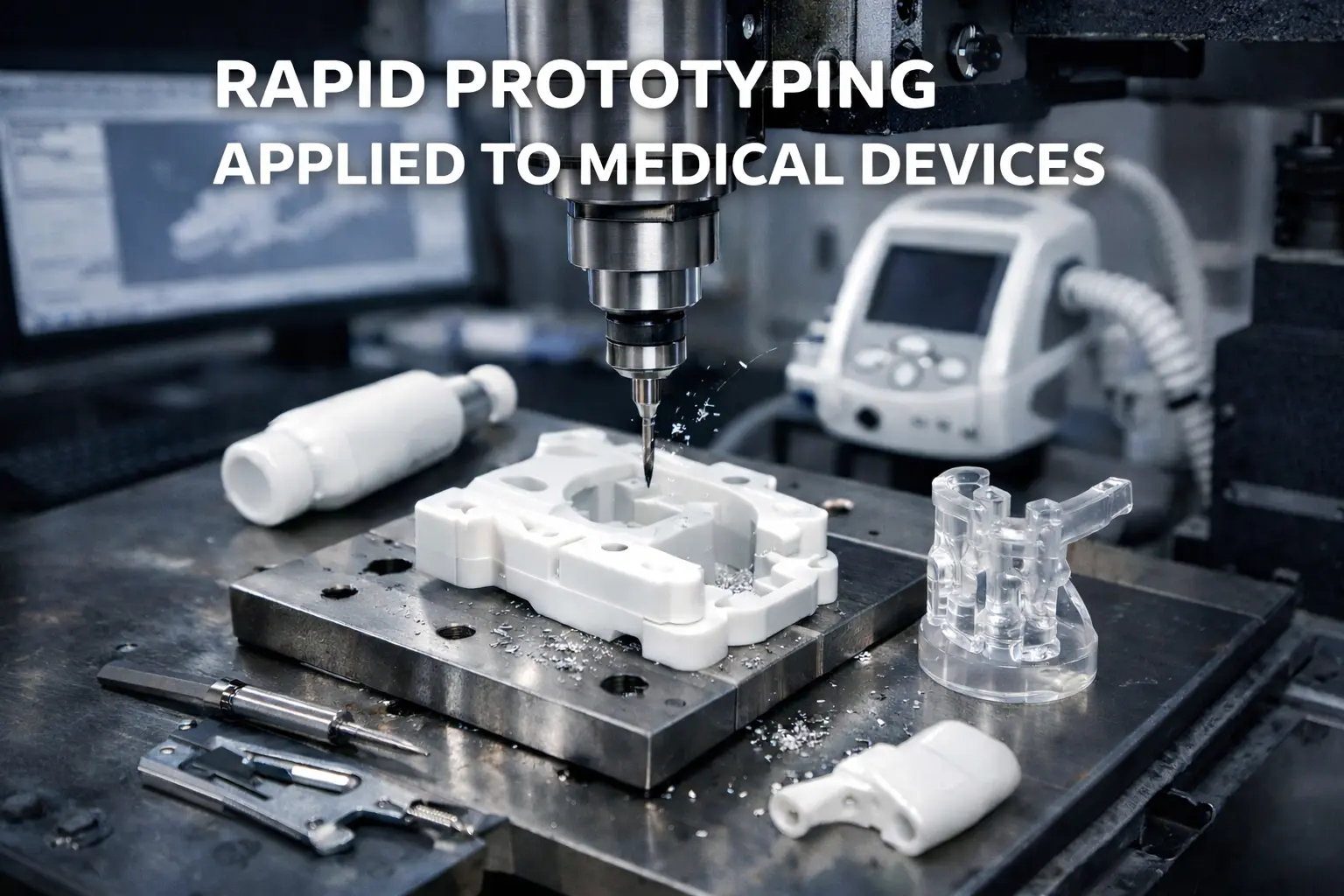
What techniques are used in medical device prototyping?
Medical device prototyping utilizes a wide variety of techniques, ranging from additive manufacturing to subtractive manufacturing, each selected according to the specific requirements of the project. These techniques include:
3D printing: Uses additive processes to rapidly create complex shapes and detailed prototypes.
CNC machining: A subtractive process based on milling and turning, enabling the production of highly accurate prototypes.
Injection molding: Suitable for producing intermediate volumes, it allows for the rapid fabrication of test units.
Laser cutting: Enables the cutting of materials with high precision, ideal for flat components.
Vacuum casting: Produces high-quality prototypes by pouring resin under vacuum.
3D printing
3D printing is a key technology in medical device prototyping. It is characterized by an additive manufacturing process using successive layers, allowing the creation of parts directly from CAD data. This technique encompasses several methods, such as fused deposition modeling (FDM), selective laser sintering (SLS), multi-jet fusion, and stereolithography (SLA).
Applications
Early conceptual models: Ideal for the rapid visualization of new concepts.
Complex shapes and detailed prototypes: Enables the creation of geometries that are difficult, or even impossible, to produce using traditional methods.
Mass customization: Adapting devices to specific patient needs, for example, for custom-made prostheses.
Advantages
Disadvantages
CNC Machining
CNC machining is widely used in medical device prototyping due to its ability to produce robust, functional prototypes and final parts with excellent dimensional accuracy. This subtractive manufacturing process relies on computer-controlled milling machines, lathes, and routers that machine materials from highly accurate digital designs.
Applications:
Engineering Metals and Plastics: Ideal for materials requiring high strength and durability.
Mechanical, Thermal, and Strength Testing: Enables the production of prototypes capable of withstanding demanding testing environments.
Advantages:
High Precision: Achieves the tight tolerances essential for medical devices.
Consistent Quality: Ensures uniformity for each prototype or part, a key factor for functional testing and regulatory submissions.
Disadvantages:
Cost: Costs can be high, especially for complex geometries or the use of expensive materials.
Setup Time: Complex designs sometimes require multiple setups or specific tooling, extending preparation time.
Injection Molding
Injection molding is a fundamental technique for prototyping medical devices. It involves injecting molten plastic or rubber into a metal mold, then allowing it to cool to produce the final parts. The process is carried out using injection molding machines and requires tooling, generally made of aluminum for rapid prototypes or steel for higher production volumes.
Applications:
Suitable for larger production runs when validating the final material properties is essential.
Ideal for verifying part geometry, mechanical strength, and assembly feasibility.
Advantages:
Production of homogeneous and repeatable parts in significant volumes, ensuring strict adherence to medical specifications.
Enables realistic testing of materials and the final design, essential for meeting the stringent standards of the healthcare sector.
Disadvantages:
The initial mold manufacturing process can be costly and time-consuming, making this method less suitable for projects requiring frequent design changes.
Limited flexibility for iterations, except when using rapid injection molding or flexible tooling to reduce costs and lead times.
Laser Cutting
Laser cutting uses a high-power laser beam to cut or engrave patterns in sheet materials, such as metals and plastics. The process is controlled by CNC systems that ensure precise cutting paths, making it particularly well-suited for manufacturing flat components, housings, or jigs used in medical device prototyping.
Applications:
Creating components requiring precise 2D shapes or simple assemblies.
Often used in the initial design phases for rapid part production.
Advantages:
Fast implementation and high precision, with minimal tooling requirements.
Ideal for the rapid fabrication of custom parts or supports, a major advantage during the prototyping phase.
Disadvantages:
Limited to 2D or 2.5D designs, which restricts its use for complex three-dimensional shapes.
Material thickness and cutting edge quality can vary, sometimes requiring additional finishing operations.
Vacuum Molding
Vacuum molding is a versatile prototyping technique that involves creating a silicone mold around a master model, usually 3D printed. The process uses a vacuum chamber to eliminate air bubbles during the pouring of resin or polyurethane, ensuring high-quality parts.
Applications:
Small to medium production runs: Particularly suitable when surface quality and detail accuracy are critical.
Flexible or rubber-like parts: Allows testing of materials that mimic the properties of the final product.
Advantages:
Cost-effectiveness: Tooling costs are relatively low compared to other processes like injection molding, making it ideal for prototyping and small production runs.
Excellent surface quality: Produces parts with fine details and a smooth finish, essential for certain medical devices.
Disadvantages:
Limited mold lifespan: Silicone molds degrade over time and with use, generally limiting production to approximately 20 to 25 parts per mold.
Variable repeatability: Quality can decrease as the mold wears, which can affect the consistency required for certain medical applications.
How to choose the right rapid prototyping technique for medical devices?
Choosing the most suitable rapid prototyping technique for medical devices depends on several key factors to ensure that the prototype meets all technical and regulatory requirements:
Material requirements: The selected method must allow the use of biocompatible materials that are mechanically resistant and compatible with sterilization processes.
Part complexity: Complex geometries favor techniques such as 3D printing, while simpler shapes can be produced by vacuum molding or CNC machining.
Required volumes: The cost-effectiveness of the method should be assessed based on the quantities needed, from a single prototype to small and medium production runs.
Costs and lead times: Consider the initial investment in tooling as well as the overall lead time between design and manufacturing of the parts.
Surface finish and tolerances: Depending on the function of the medical device, dimensional accuracy and surface quality can be critical criteria.
