Our Location
304 North Cardinal St.
Dorchester Center, MA 02124

304 North Cardinal St.
Dorchester Center, MA 02124
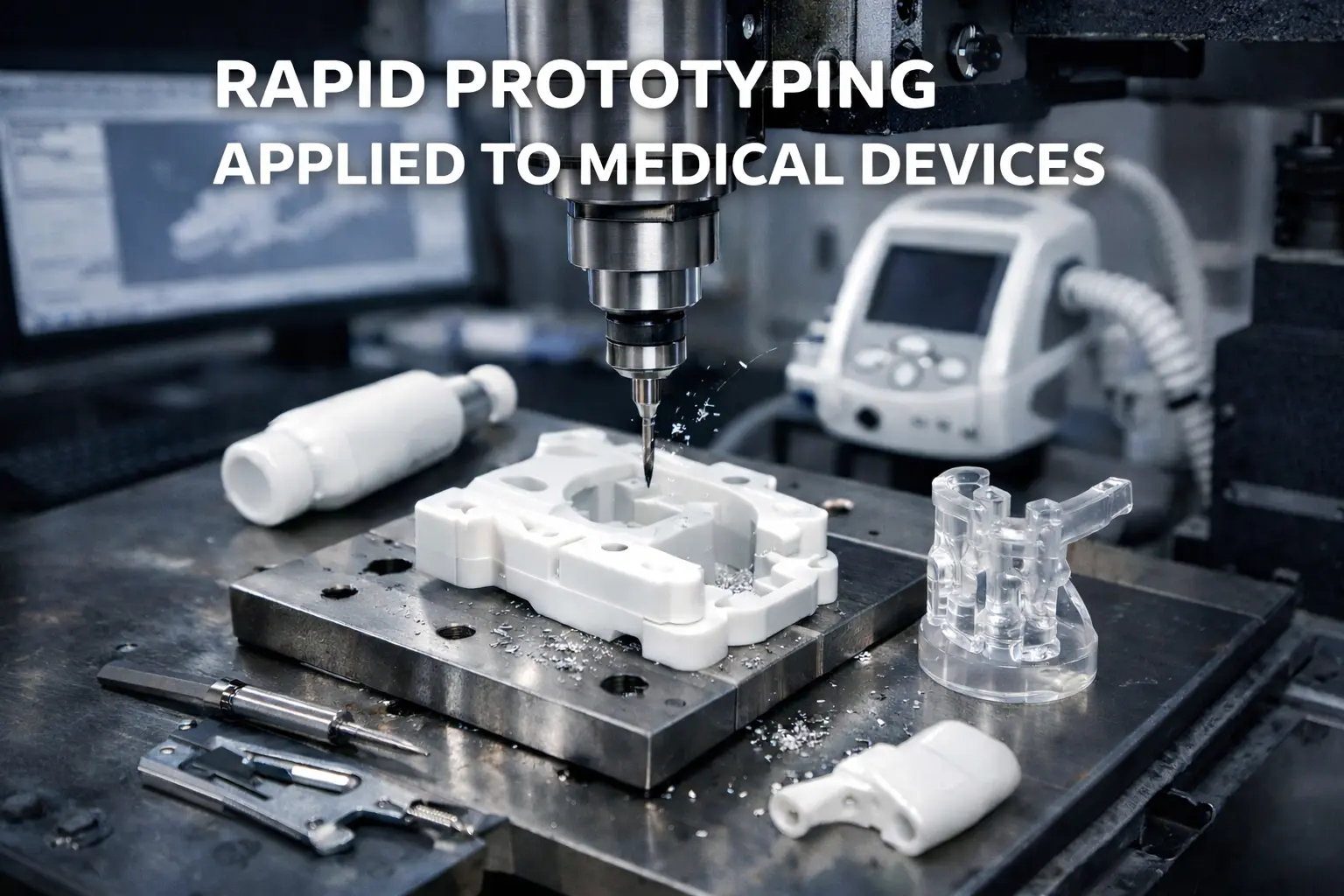
Rapid prototyping is a true revolution, as it reduces the major risks and high costs typically associated with developing new medical solutions. This innovative approach allows for the early identification of design flaws or ergonomic issues, significantly reducing the time and expense of development cycles.
Most importantly, it allows us to push the boundaries of medical technology, ensuring that new devices not only meet regulatory requirements but also address the real needs of patients and healthcare professionals.
Thanks to cutting-edge technologies such as 3D printing, CNC machining, and injection molding, it is now possible to iterate more quickly and bring products to market much faster than before. This represents not just increased efficiency, but a profound transformation of patient care with each new device introduced.
In 2022, the rapid prototyping market in the medical device sector was valued at US$1.5 billion and is projected to reach US$3.2 billion by 2030, highlighting its critical role in medical innovation.
In this article, we will focus on how rapid prototyping is not only shaping the future of medical devices but also redefining what is possible in the field of health technology.
Why is rapid prototyping crucial in the development of medical devices?
Rapid prototyping is essential in medical device manufacturing because it significantly reduces time to market and minimizes risks by detecting potential design or functional flaws early on.
The rapid prototyping process is particularly important for ensuring that devices meet stringent requirements for user experience and human factors engineering. Early prototypes facilitate the collection of feedback from healthcare professionals and patients, ensuring that the device functions effectively in real-world conditions. Furthermore, rapid prototyping contributes to:
How is rapid prototyping implemented for medical devices?
Rapid prototyping in medical device development begins with conceptual sketches that quickly evolve into physical models or digital simulations. This process allows development teams to iterate repeatedly, moving from initial aesthetic designs to fully functional units tailored to medical requirements. In this context, prototyping is essential for evaluating both the appearance and ergonomics of the device, as well as its operational performance.
Using various tools such as 3D printing and computer-aided design (CAD) software, rapid prototyping enables the creation of physical or digital representations that help developers refine the device’s form, fit, functionality, and user interaction early in the development cycle.
This approach plays a key role in preventing costly redesigns and in conducting early compliance checks with regulatory requirements. Whether it involves digital simulations (software mock-ups) or physical models (such as 3D printed components), rapid prototyping streamlines the transition from concept to market-ready medical devices, while highlighting necessary improvements, controlling budgets and accelerating development times.
How does the rapid prototyping process for medical devices work?
The rapid prototyping process for medical devices typically begins with an initial concept, which quickly evolves into CAD designs and then into physical or digital prototypes. This initial phase can be completed in just one to two weeks, although several iterations are often necessary to refine the prototype.
Prototyping allows for testing different aspects of the device, from form and ergonomics to functionality and user interaction, ensuring that each iteration brings the development team closer to a market-ready product.
Rapid iterations help prevent the project from straying too far down a potentially unfeasible path. Furthermore, each prototyping step is critical for addressing functionality and safety issues while meeting stringent regulatory requirements.
This process relies heavily on multidisciplinary teams—including engineers, medical experts, and regulatory specialists—to ensure a comprehensive and consistent approach to medical device development.
What are the main steps in medical device prototyping?
The rapid prototyping process for medical devices involves several key steps, each essential to ensuring that the final product performs well and meets regulatory requirements.
1. Conceptualization and Planning
Objective and Requirements: Initially, the device’s objective is defined, along with a detailed identification of its functional and technical requirements.
Feasibility, Budget, and Timeline: The device’s feasibility is assessed, and the budget and timeline are established to guide the project’s progress.
2. Design and CAD Modeling
Digital Plans: Using computer-aided design (CAD) software, digital plans of the medical device are developed.
Design Refinement: These models are iteratively refined to adjust the geometry, dimensions, and features to meet the device’s function and specifications.
3. Material Selection
Selection Criteria: Materials are chosen based on essential criteria such as biocompatibility, durability, compatibility with sterilization processes, and mechanical properties, to ensure the device’s safety and performance.
4. Preliminary Prototyping
Initial Models: Early prototypes, often called “alpha” prototypes, are developed to verify the basic shape and fit.
Non-Functional Testing: These prototypes are primarily used to validate dimensions and ergonomics, rather than full functionality.
5. Functional Testing and Iterations
Beta Prototypes: More advanced prototypes, known as “beta” prototypes, are then manufactured to test the device’s functionality and gather initial user feedback.
Usability Testing: These prototypes undergo extensive testing to reduce user errors and verify their viability under real-world conditions.
6. Design Refinement
Feedback Integration: Comments from the testing phases are incorporated to adjust the design, improve performance, and optimize user interaction.
7. Compliance and Validation Testing
Regulatory Documentation: All modifications and test results are accurately documented to meet regulatory requirements.
Preparation for Formal Testing: Prototypes are prepared for formal testing procedures, including clinical trials or user testing, to validate their effectiveness and safety.
8. Production Preparation
Finalization for Manufacturing: The design is finalized for mass production, using efficient and cost-effective manufacturing methods.Supply Chain and Quality Control: The robustness of the supply chain is ensured, and strict quality control measures are implemented to maintain high standards.
