Our Location
304 North Cardinal St.
Dorchester Center, MA 02124

304 North Cardinal St.
Dorchester Center, MA 02124

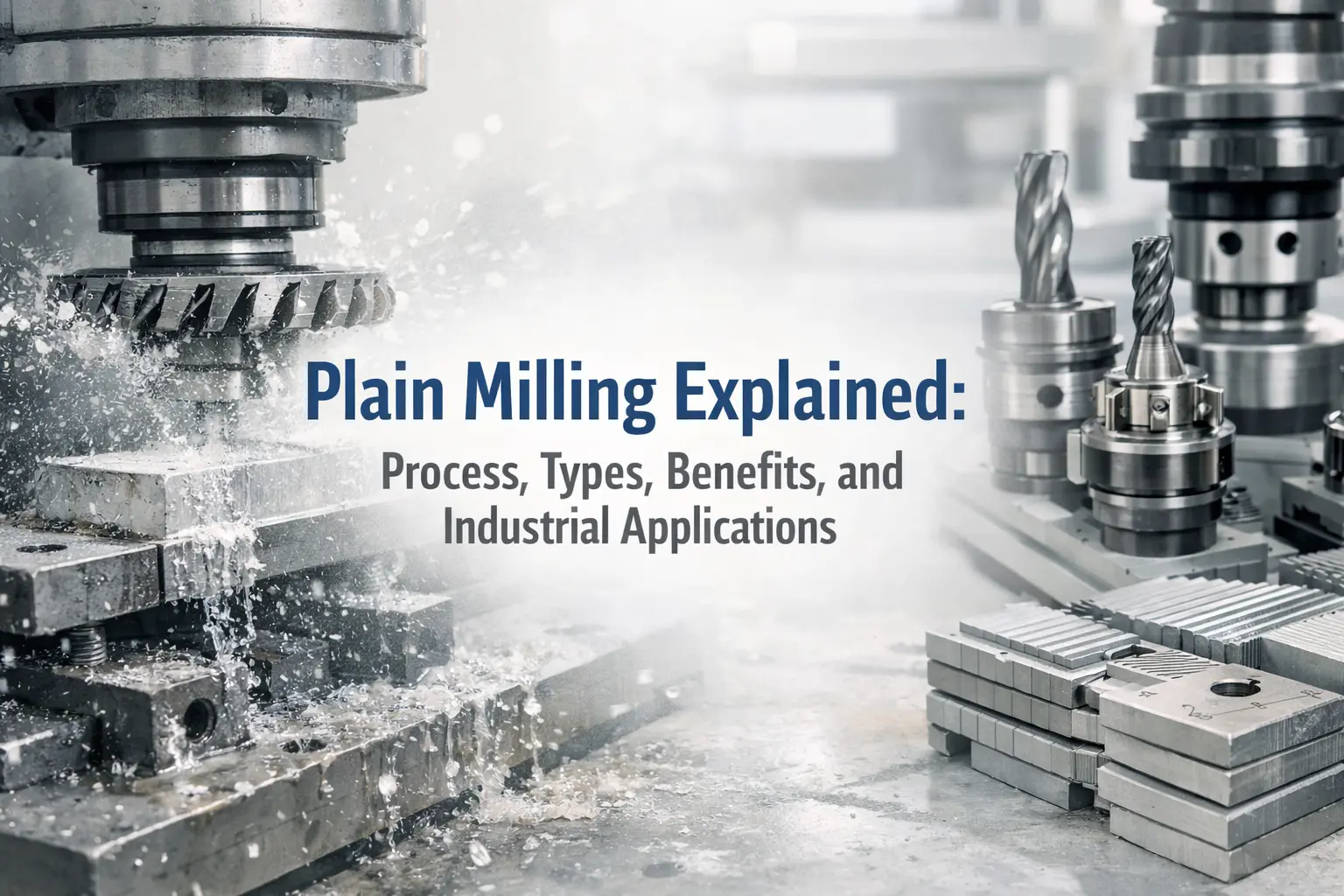
Plain milling, also commonly referred to as slab milling, is one of the most fundamental and widely used machining operations in modern manufacturing. It plays a critical role in CNC machining by enabling efficient material removal across large flat surfaces, making it an essential process for industries such as aerospace, automotive, electronics, and industrial equipment manufacturing. In this process, the cutting tool rotates with its axis parallel to the surface of the workpiece, allowing the peripheral cutting edges to remove material in a consistent and controlled manner. This orientation distinguishes plain milling from other milling operations and contributes to its high productivity and reliability in creating flat surfaces.
From a manufacturing perspective, plain milling is often used as a primary or roughing operation. Its ability to remove large volumes of material quickly makes it ideal for preparing workpieces before finishing processes such as face milling or grinding. The process is particularly valuable when working with large components where flatness and dimensional consistency are required over extended surface areas. Because of its simplicity and efficiency, plain milling is frequently one of the first operations performed after raw material preparation, helping to establish reference surfaces for subsequent machining steps.
With the advancement of CNC technology, plain milling has evolved significantly from its traditional manual origins. Modern CNC milling machines allow for precise control over cutting parameters such as spindle speed, feed rate, and depth of cut, resulting in improved surface quality and reduced cycle times. Additionally, the integration of advanced tooling materials like carbide and coated inserts has further enhanced the performance and durability of plain milling cutters. These innovations enable manufacturers to achieve higher productivity while maintaining tight tolerances and consistent quality.
Understanding plain milling is also essential for selecting the right machining strategy for a given project. While it excels in producing flat surfaces efficiently, it may not be suitable for complex geometries or intricate contours. In such cases, alternative milling processes should be considered. To gain a broader understanding of different CNC milling techniques and how they compare, you can explore this comprehensive guide: https://winsunproto.com/cnc-milling-the-complete-guide/. This resource provides valuable insights into various milling operations and helps engineers and designers choose the most appropriate process for their specific applications.
Ultimately, plain milling remains a cornerstone of CNC machining due to its versatility, cost-effectiveness, and efficiency. Whether used in prototyping or large-scale production, it provides a reliable method for achieving high material removal rates and consistent flat surfaces. By mastering the principles and applications of plain milling, manufacturers can optimize their machining processes, reduce production costs, and improve overall product quality.
Plain milling is a machining operation in which a rotating cutting tool removes material from a workpiece to produce a flat surface. The defining characteristic of this process is that the axis of the milling cutter is parallel to the surface being machined. Unlike face milling, where the cutting action primarily occurs at the end of the tool, plain milling relies on the peripheral edges of the cutter to perform the cutting. This results in a continuous cutting action that is highly efficient for removing material over large areas.
The process typically involves feeding the workpiece against the rotating cutter, allowing the cutting teeth to engage the material and shear off chips. Depending on the setup, the operation can be performed using either conventional (up milling) or climb (down milling) techniques. In conventional milling, the cutter rotates against the direction of feed, while in climb milling, it rotates in the same direction as the feed. Each method has its advantages, with climb milling generally providing better surface finish and tool life under appropriate conditions.
One of the primary characteristics of plain milling is its high material removal rate. Because multiple cutting teeth are engaged simultaneously, the process can remove significant amounts of material in a relatively short time. This makes it particularly suitable for rough machining operations where speed and efficiency are more important than surface finish. Additionally, the process is relatively simple to set up and does not require complex tool paths, making it a cost-effective option for many applications.
Another important feature is the ability to machine large flat surfaces with good dimensional accuracy. While the surface finish may not be as fine as that achieved through face milling or grinding, it is generally sufficient for many engineering applications. Furthermore, plain milling is highly adaptable and can be used with a variety of materials, including aluminum, steel, and other metals commonly used in manufacturing.
However, it is important to note that plain milling is limited in its ability to produce complex shapes or contours. For applications that require intricate geometries, specialized milling techniques such as form milling are more appropriate. If you are interested in understanding how complex profiles can be achieved, refer to this detailed guide: https://winsunproto.com/form-milling-process-tools-and-applications-explained/. This resource explains the tools and methods used in form milling and highlights its advantages over standard milling operations.
In summary, plain milling is a straightforward yet highly effective machining process that serves as the foundation for many CNC operations. Its efficiency, simplicity, and versatility make it an indispensable technique in modern manufacturing.
The plain milling process begins with proper workpiece setup and fixturing. The workpiece is securely clamped onto the machine table using a vise or specialized fixtures to ensure stability during machining. Proper alignment is crucial, as any misalignment can lead to inaccuracies in the final surface. Once the workpiece is positioned, the appropriate milling cutter is selected based on the material, required surface finish, and machining conditions.
Next, the machine parameters are configured. This includes setting the spindle speed, feed rate, and depth of cut. These parameters must be carefully optimized to achieve the desired balance between efficiency and surface quality. For example, higher feed rates can increase productivity but may result in a rougher surface finish, while lower feed rates improve finish but reduce efficiency. Modern CNC machines allow for precise control of these parameters, enabling consistent and repeatable results.
Once the setup is complete, the cutting process begins. The rotating cutter engages the workpiece, and the table feeds the material into the cutting zone. As the cutter rotates, its teeth remove material in the form of chips. This process continues until the entire surface has been machined. In many cases, multiple passes are required to achieve the desired depth and finish, especially when removing large amounts of material.
For a deeper understanding of CNC milling workflows and optimization strategies, you can refer to this comprehensive guide: https://winsunproto.com/cnc-milling-the-complete-guide/. It provides valuable insights into machine setup, tooling selection, and process optimization.
The cutting mechanics of plain milling are based on the interaction between the rotating cutter and the stationary workpiece. Each tooth of the cutter engages the material sequentially, creating a series of overlapping cuts that result in a flat surface. The thickness of the chips varies throughout the cutting cycle, starting from zero and increasing to a maximum before decreasing again. This variation affects cutting forces, tool wear, and surface finish.
Heat generation is another important aspect of the cutting process. As the cutter removes material, friction and deformation generate heat, which can affect tool life and workpiece properties. To manage this, cutting fluids or coolants are often used to dissipate heat and reduce friction. Proper cooling not only extends tool life but also improves surface quality and dimensional accuracy.
Optimizing the plain milling process involves selecting the right combination of tools, parameters, and strategies. Tool selection is critical, as different materials and coatings can significantly impact performance. Carbide tools, for example, offer higher cutting speeds and longer tool life compared to high-speed steel tools. Additionally, using the appropriate cutter geometry can help reduce cutting forces and improve chip evacuation.
Another key factor is minimizing vibration, also known as chatter. Vibration can lead to poor surface finish, increased tool wear, and even damage to the machine. This can be mitigated by ensuring proper fixturing, selecting appropriate cutting parameters, and using rigid tooling systems. Furthermore, optimizing the depth and width of cut can help maintain stable cutting conditions and improve overall efficiency.
In conclusion, the plain milling process is a well-established and highly efficient machining method that combines simplicity with high productivity. By understanding its workflow, cutting mechanics, and optimization strategies, manufacturers can achieve consistent results and maximize the performance of their CNC milling operations.
Light-duty plain milling cutters are designed for applications that require smoother cutting action and better surface finish. These cutters typically feature a higher number of teeth with smaller chip spaces, allowing for more continuous contact with the workpiece during machining. As a result, they generate less vibration and produce finer surface finishes compared to heavy-duty cutters. This makes them particularly suitable for semi-finishing and finishing operations where dimensional accuracy and surface quality are important.
In CNC machining environments, light-duty cutters are often used when working with softer materials such as aluminum or low-carbon steel. Their geometry allows for reduced cutting forces, which helps minimize deformation in thin-walled or delicate parts. Additionally, the higher tooth count ensures a more uniform distribution of cutting loads, contributing to improved tool life and process stability. However, due to their smaller chip gullets, these cutters are not ideal for removing large volumes of material in a single pass, as chip evacuation can become a limiting factor.
Another advantage of light-duty cutters is their compatibility with high-speed machining strategies. When paired with optimized spindle speeds and feed rates, they can deliver excellent results in terms of both productivity and surface finish. For manufacturers looking to balance efficiency and quality, light-duty plain milling cutters offer a reliable solution, especially in precision machining applications.
Heavy-duty plain milling cutters are specifically engineered for aggressive material removal and rough machining operations. These cutters typically have fewer teeth with larger chip spaces, enabling them to handle deeper cuts and higher feed rates without clogging. The reduced tooth count also allows each cutting edge to engage more material, resulting in higher material removal rates and increased productivity.
These cutters are commonly used in machining harder materials such as alloy steels or when working with large workpieces that require significant stock removal. Their robust design helps withstand higher cutting forces and reduces the risk of tool failure under demanding conditions. In addition, the larger chip clearance improves chip evacuation, which is critical for maintaining stable cutting conditions and preventing heat buildup.
While heavy-duty cutters excel in efficiency, they generally produce a rougher surface finish compared to light-duty cutters. Therefore, they are often used in the initial stages of machining, followed by finishing operations using finer tools. Selecting the appropriate cutter type depends on the specific requirements of the project, including material type, machining stage, and desired surface quality.
Choosing the right cutter material is a crucial aspect of plain milling. High-speed steel (HSS) cutters are known for their toughness and cost-effectiveness, making them suitable for general-purpose machining and lower-speed applications. However, they tend to wear faster when exposed to high temperatures or abrasive materials.
Carbide cutters, on the other hand, offer superior hardness and heat resistance, allowing for higher cutting speeds and longer tool life. They are widely used in modern CNC machining due to their ability to maintain performance under demanding conditions. Coated carbide tools further enhance wear resistance and reduce friction, improving overall efficiency.
The selection of cutter material should also consider the workpiece material. For example, aluminum machining benefits from sharp, polished tools that reduce material adhesion, while steel machining requires more robust and wear-resistant cutters. By carefully matching the tool material to the application, manufacturers can optimize performance and extend tool life.
The performance of a plain milling operation is largely determined by several key cutting parameters, including spindle speed, feed rate, depth of cut, and width of cut. Spindle speed refers to the rotational speed of the cutter and is typically measured in revolutions per minute (RPM). It directly affects cutting temperature, tool wear, and surface finish. Higher speeds can improve productivity but may also increase heat generation and reduce tool life if not properly managed.
Feed rate, usually expressed in millimeters per minute or inches per minute, determines how quickly the workpiece is fed into the cutter. It has a significant impact on chip load and surface finish. A higher feed rate increases material removal but can lead to rougher surfaces and higher cutting forces, while a lower feed rate improves finish at the expense of efficiency.
Depth of cut and width of cut define the size of the material engagement during machining. Increasing these values can enhance productivity by removing more material per pass, but it also raises cutting forces and the risk of vibration. Therefore, these parameters must be carefully balanced to ensure stable and efficient machining.
Optimizing cutting parameters is essential for achieving the best possible results in plain milling. One of the key goals is to find the optimal balance between productivity and surface quality. This involves selecting parameter combinations that maximize material removal while maintaining acceptable surface finish and tool life.
Reducing vibration, or chatter, is another critical aspect of optimization. Chatter can negatively affect surface quality and lead to premature tool wear. It can be minimized by adjusting cutting parameters, improving fixturing rigidity, and selecting appropriate tooling. Additionally, using climb milling instead of conventional milling can help reduce cutting forces and improve stability under certain conditions.
Thermal management is also important, as excessive heat can degrade tool performance and affect workpiece properties. The use of cutting fluids or coolants helps dissipate heat, reduce friction, and improve chip evacuation. Proper cooling strategies contribute to longer tool life and more consistent machining results.
Plain milling offers several significant advantages that make it a preferred choice for many machining applications. One of its most notable benefits is its high material removal rate. By engaging multiple cutting edges simultaneously, the process can remove large amounts of material بسرعة, making it highly efficient for rough machining operations. This efficiency translates into shorter cycle times and lower production costs, which is particularly important in high-volume manufacturing.
Another key advantage is its simplicity. The setup for plain milling is relatively straightforward, requiring less complex tool paths compared to other milling operations. This reduces programming time and makes it easier to implement in both manual and CNC machining environments. The process is also highly reliable, with predictable cutting behavior that allows for consistent results across multiple production runs.
Plain milling is also well-suited for machining large flat surfaces with good dimensional accuracy. It is commonly used to create reference planes that serve as the basis for subsequent machining operations. This makes it an essential step in many manufacturing workflows, especially when precision alignment is required.
From a cost perspective, plain milling is highly economical. The tools used are generally less expensive than specialized cutters, and the process itself requires less machining time for large surface areas. Additionally, its versatility allows it to be applied to a wide range of materials, including aluminum, steel, and other metals, further enhancing its value in manufacturing.
Despite its many advantages, plain milling also has certain limitations that must be considered when selecting a machining process. One of the primary drawbacks is its relatively lower surface finish compared to processes such as face milling or grinding. Because the cutting action occurs along the periphery of the tool, the resulting surface may exhibit visible tool marks, which may not be acceptable for high-precision or aesthetic applications.
Another limitation is its inability to produce complex geometries. Plain milling is primarily designed for machining flat surfaces and cannot easily create intricate shapes, contours, or profiles. For such applications, more advanced milling techniques, such as form milling or multi-axis CNC machining, are required. This restricts the use of plain milling to simpler geometries and limits its versatility in certain scenarios.
Tool wear and heat generation can also pose challenges, especially when machining hard materials or operating at high cutting speeds. Without proper cooling and parameter optimization, excessive heat can lead to reduced tool life and compromised workpiece quality. Additionally, the process may generate significant cutting forces, which can cause vibration or deformation in less rigid setups.
Finally, plain milling may not be the most efficient choice for finishing operations. While it excels in rough machining, achieving a high-quality surface finish often requires additional processes, increasing overall production time and cost. Therefore, it is important to evaluate the specific requirements of each project and determine whether plain milling is the most suitable approach or if it should be combined with other machining methods.
Plain milling and face milling are two of the most commonly used milling operations, but they differ significantly in tool orientation, cutting mechanics, and application scenarios. In plain milling, the cutter axis is parallel to the workpiece surface, and the cutting action occurs along the peripheral edges of the tool. This configuration makes it highly efficient for removing large amounts of material across wide, flat surfaces. In contrast, face milling uses a cutter whose axis is perpendicular to the workpiece surface, with cutting primarily occurring at the tool’s face and edges. This results in better surface finish and is often used for final machining operations.
From a productivity standpoint, plain milling is generally preferred for roughing operations due to its high material removal rate. Face milling, on the other hand, excels in achieving superior surface quality and tighter tolerances. In many real-world manufacturing workflows, these two processes are not mutually exclusive but are instead used in sequence—plain milling for initial stock removal, followed by face milling for finishing. Understanding how to combine these processes effectively can significantly improve both efficiency and product quality. For a broader comparison of milling strategies, refer to: https://winsunproto.com/cnc-milling-the-complete-guide/
The primary difference between plain milling and form milling lies in the complexity of the geometry being machined. Plain milling is designed for producing flat surfaces, while form milling is used to create intricate profiles, contours, and specialized shapes. Form milling cutters are typically custom-designed to match the desired geometry, allowing for precise replication of complex features in a single pass.
While plain milling is simpler, more cost-effective, and faster for basic surfaces, it lacks the flexibility required for advanced designs. Form milling, although more versatile, involves higher tooling costs and more complex setup. Therefore, the choice between the two depends on the specific requirements of the part. For applications involving detailed profiles or custom shapes, form milling is the better option. You can explore this process in more detail here: https://winsunproto.com/form-milling-process-tools-and-applications-explained/
Plain milling is often considered a subset of peripheral milling, as both processes involve cutting with the outer edges of the tool. However, the term “peripheral milling” is broader and includes various operations beyond simple flat surface machining. Plain milling specifically refers to machining flat surfaces with the cutter axis parallel to the workpiece, while peripheral milling may include slotting, contouring, and other edge-based operations.
This distinction is important for understanding the scope and limitations of each process. While all plain milling operations are peripheral milling, not all peripheral milling operations qualify as plain milling. Recognizing this relationship helps in selecting the most appropriate machining strategy for a given application.
Plain milling is widely used across multiple industries due to its efficiency and versatility in producing flat surfaces. One of its most common applications is the creation of reference planes. These surfaces serve as the foundation for subsequent machining operations, ensuring proper alignment and dimensional accuracy throughout the manufacturing process. In industries such as aerospace and automotive, where precision is critical, establishing reliable reference surfaces is essential.
Another key application is in the machining of large structural components. Plain milling is particularly effective for processing large metal plates, machine bases, and frames, where extensive flat surfaces are required. Its ability to remove material quickly makes it ideal for preparing these components for further finishing operations. Additionally, it is commonly used in mold and die manufacturing to create flat base surfaces before more detailed machining processes are applied.
Plain milling is also widely used in general manufacturing for producing flat surfaces on parts such as brackets, housings, and mechanical components. It plays a crucial role in ensuring proper fit and assembly, as flat mating surfaces are often required for secure connections. In high-volume production environments, its efficiency and repeatability make it a cost-effective solution for machining large batches of parts.
Furthermore, the process is frequently employed in prototyping and low-volume production, where quick turnaround times are important. Its straightforward setup and operation allow manufacturers to produce functional prototypes بسرعة, enabling faster product development cycles. For companies offering CNC services, incorporating plain milling into their capabilities is essential for meeting a wide range of customer requirements.
Achieving high-quality results in plain milling requires careful attention to several key factors, including tool selection, parameter optimization, and machine setup. One of the most important best practices is selecting the right cutter for the job. Using separate tools for roughing and finishing can significantly improve both efficiency and surface quality. Roughing cutters are designed for high material removal, while finishing cutters provide smoother surfaces and tighter tolerances.
Proper selection and optimization of cutting parameters are equally critical. Parameters such as spindle speed, feed rate, and depth of cut should be tailored to the specific material and machining conditions. Using recommended cutting data from tool manufacturers can help ensure optimal performance and reduce the risk of tool failure. Additionally, gradual adjustments and testing can further refine the process for improved results.
Another important consideration is the rigidity of the setup. Ensuring that the workpiece is securely clamped and that the machine components are stable helps minimize vibration and chatter. Vibration not only affects surface finish but also accelerates tool wear and can lead to dimensional inaccuracies. Using high-quality fixtures and maintaining proper machine alignment are essential for achieving consistent results.
Cooling and lubrication also play a vital role in plain milling. The use of cutting fluids helps reduce heat generation, improve chip evacuation, and extend tool life. In some cases, dry machining may be used, but this requires careful control of cutting conditions to avoid overheating. Proper chip management is also important, as accumulated chips can interfere with the cutting process and damage the workpiece.
Finally, regular tool inspection and maintenance are crucial for maintaining quality. Worn or damaged tools can negatively impact surface finish and dimensional accuracy. By monitoring tool condition and replacing tools as needed, manufacturers can ensure consistent performance and avoid costly rework.
Plain milling is the preferred choice in situations where large flat surfaces need to be machined efficiently and cost-effectively. It is particularly well-suited for rough machining operations, where the primary goal is to remove material quickly rather than achieve a fine surface finish. In such cases, its high material removal rate and straightforward setup make it an ideal solution.
Another scenario where plain milling is advantageous is when establishing reference surfaces. These surfaces are critical for subsequent machining operations, as they provide a stable and accurate base for positioning the workpiece. By creating precise reference planes, manufacturers can improve the overall accuracy and consistency of the final product.
Plain milling is also a good choice for projects with tight budgets or high production volumes. Its relatively low tooling costs and efficient operation help reduce overall manufacturing expenses. In addition, its simplicity makes it easier to implement and scale, which is beneficial for both small-scale and large-scale production.
However, it is important to recognize when plain milling is not the best option. For example, if the part requires complex geometries or high-quality surface finishes, alternative processes such as form milling or face milling may be more appropriate. Evaluating the specific requirements of the project, including material, geometry, and tolerance, is essential for selecting the most suitable machining method.
Plain milling remains a fundamental machining process that continues to play a vital role in modern manufacturing. Its ability to efficiently remove material and produce flat surfaces makes it an indispensable technique for a wide range of applications. From creating reference planes to machining large structural components, plain milling provides a reliable and cost-effective solution for many machining challenges.
While it has certain limitations, such as lower surface finish and limited capability for complex geometries, these can often be addressed by combining plain milling with other machining processes. By understanding its strengths and weaknesses, manufacturers can make informed decisions and optimize their machining strategies for better results.
For companies looking to improve their CNC machining capabilities, mastering plain milling is essential. It not only enhances productivity but also lays the foundation for more advanced machining operations. If you are exploring CNC milling solutions or need support for your next project, learn more here: https://winsunproto.com/cnc-milling-the-complete-guide/.
