Our Location
304 North Cardinal St.
Dorchester Center, MA 02124

304 North Cardinal St.
Dorchester Center, MA 02124

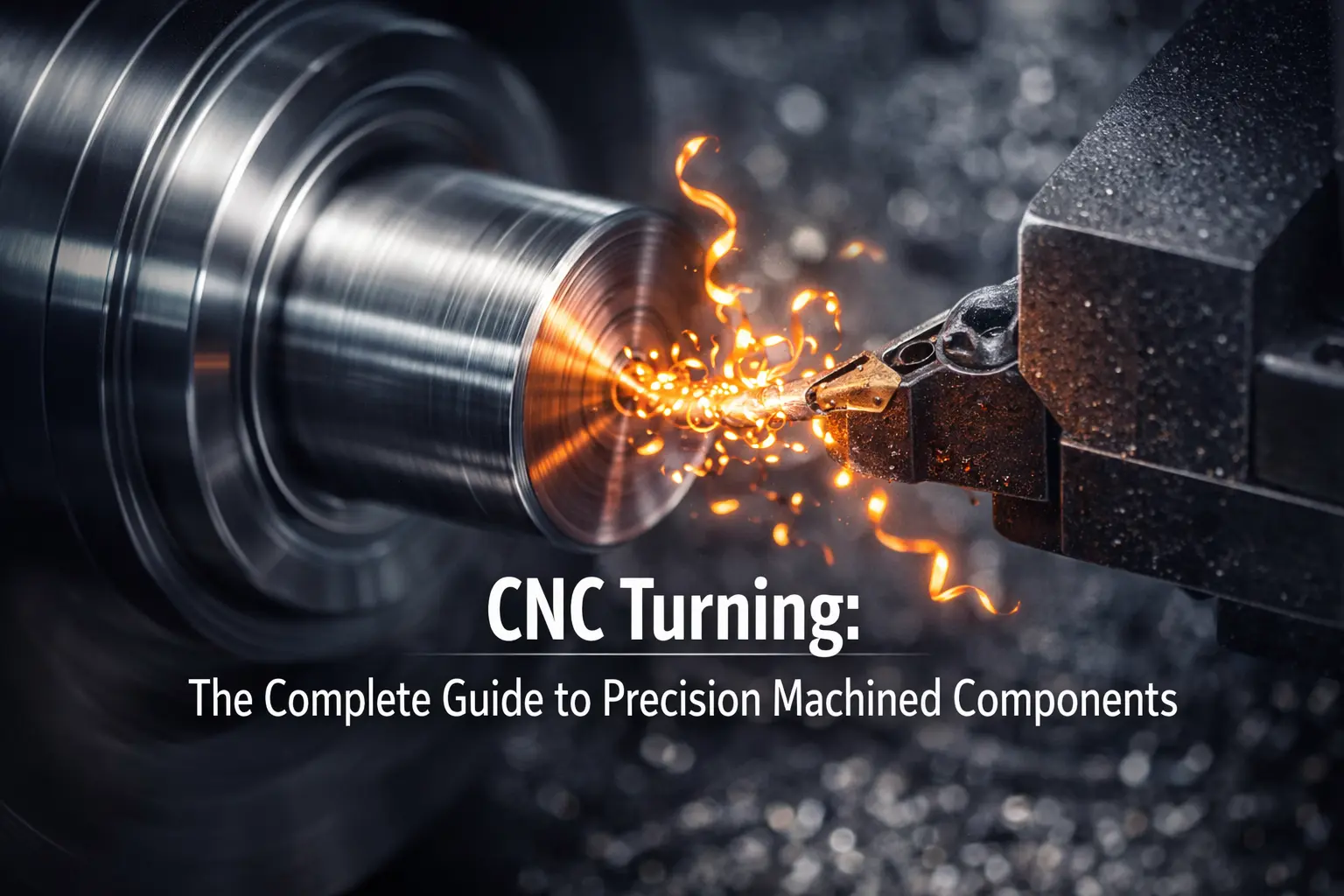
CNC turning is one of the most widely used machining processes for manufacturing precise cylindrical components. From automotive shafts to aerospace fittings and electronic connectors, many critical parts are produced using CNC turning because of its high accuracy, repeatability, and efficiency. By combining computer numerical control with advanced turning machines, manufacturers can produce complex rotational parts with tight tolerances and consistent quality.
Compared with traditional manual turning, CNC turning offers greater precision and automation. Engineers can design a component using CAD software, convert the design into machining instructions, and allow the CNC lathe to produce parts automatically with minimal human intervention. This not only improves production efficiency but also ensures consistent results across large production runs.
In this guide, we will explore how CNC turning works, the common processes involved, and why it plays a crucial role in modern precision manufacturing.
Compared with traditional manual turning, CNC turning offers greater precision and automation. Engineers can design a component using CAD software, convert the design into machining instructions, and allow the CNC lathe to produce parts automatically with minimal human intervention. This not only improves production efficiency but also ensures consistent results across large production runs.
In this guide, we will explore how CNC turning works, the common processes involved, and why it plays a crucial role in modern precision manufacturing.
CNC turning is a machining process in which a cutting tool removes material from a rotating workpiece to create cylindrical shapes and precise features. The workpiece is held and rotated by a lathe spindle, while the cutting tool moves along different axes to shape the material according to programmed instructions.
CNC turning refers to the use of computer-controlled lathes to machine parts with rotational symmetry. During the process, the workpiece rotates at high speed while a stationary cutting tool removes material to form the desired geometry. This method is particularly suitable for producing round or tubular components such as shafts, bushings, pins, and threaded parts.
Unlike conventional turning that relies heavily on manual operation, CNC turning uses digital programming to control tool movement, cutting depth, and speed. This allows manufacturers to achieve high precision, consistent tolerances, and repeatable results.
The CNC turning process typically begins with a digital 3D model created in CAD software. This model is then converted into machine-readable instructions using CAM software, which generates the toolpaths and cutting parameters required for machining.
Once the program is loaded into the CNC lathe, the workpiece is mounted on the spindle and rotated at a controlled speed. The cutting tool moves along predefined paths to remove material step by step until the final part geometry is achieved.
Because the entire process is automated, CNC turning can efficiently produce both prototypes and large production batches with minimal variation between parts.
CNC turning includes several machining operations that allow manufacturers to create different features on cylindrical parts. These operations can be combined within a single setup to produce complex components efficiently.
Straight turning is the most basic turning operation. In this process, the cutting tool moves parallel to the rotating workpiece to reduce its diameter and produce a smooth cylindrical surface. It is commonly used to create shafts, rods, and other round components.
Facing is used to create a flat surface at the end of a workpiece. The cutting tool moves perpendicular to the rotating axis, removing material from the end of the part. This process ensures that the end surface is smooth and precisely aligned.
Drilling is performed on a CNC lathe to create holes along the centerline of the rotating workpiece. A drilling tool moves into the part while it rotates, producing accurate internal holes that can be used for assembly or further machining operations.
Boring is used to enlarge and refine an existing hole. Compared with drilling, boring provides greater accuracy and better surface finish, making it suitable for parts that require tight tolerances.
Thread cutting allows CNC lathes to produce internal or external threads on cylindrical components. These threads are essential for fasteners, pipe fittings, and mechanical assemblies.
Grooving involves cutting narrow channels into the surface of a workpiece. These grooves may be used for sealing rings or functional design features. Parting, on the other hand, is the process of cutting a finished component off from the remaining bar stock, completing the machining operation.
CNC turning is compatible with a wide range of materials, allowing manufacturers to produce components for various industries such as automotive, aerospace, electronics, and medical devices. The choice of material plays a critical role in determining the strength, durability, cost, and machinability of the final part.
Metals are among the most common materials used in CNC turning due to their strength and durability.
Aluminum is widely used because it is lightweight, corrosion-resistant, and easy to machine. It is commonly used for automotive components, electronic housings, and structural parts.
Stainless steel offers excellent corrosion resistance and high strength, making it suitable for medical devices, food processing equipment, and aerospace components.
Carbon steel is valued for its strength and affordability. It is often used in mechanical parts, shafts, and industrial equipment.
Brass and copper provide excellent electrical conductivity and corrosion resistance. These materials are frequently used for connectors, fittings, and electronic components.
Titanium is known for its high strength-to-weight ratio and excellent corrosion resistance. It is widely used in aerospace and medical applications where performance and reliability are critical.
In addition to metals, many engineering plastics can also be machined using CNC turning. Plastics are often selected for their lightweight properties, chemical resistance, and electrical insulation.
ABS is commonly used for prototyping and consumer product components because it is durable and easy to machine.
Nylon offers high strength and wear resistance, making it suitable for gears, bushings, and mechanical components.
POM (Delrin) is known for its excellent dimensional stability and low friction, which makes it ideal for precision mechanical parts.
PTFE provides exceptional chemical resistance and low friction, often used in sealing and insulation applications.
PEEK is a high-performance engineering plastic that offers excellent mechanical strength and thermal stability, commonly used in aerospace and medical components.
Selecting the right material for CNC turning depends on several factors. Mechanical strength, corrosion resistance, machinability, and cost must all be evaluated to ensure the final part meets both performance and budget requirements. In many cases, the application environment and required tolerances will also influence the material selection.
Designing parts specifically for CNC turning can significantly improve manufacturing efficiency, reduce costs, and ensure better part quality. Engineers should consider several key factors when creating designs for turned components.
Uniform wall thickness helps prevent deformation during machining and ensures structural stability. Parts with highly uneven thickness may experience vibration or distortion during the turning process.
Deep holes can be challenging to machine accurately and may require specialized tooling. Designing holes with reasonable depth-to-diameter ratios helps improve machining efficiency and tool life.
Whenever possible, designers should use standard thread sizes rather than custom threads. Standardized threads simplify manufacturing, reduce tooling costs, and improve compatibility with common fasteners.
Because CNC turning tools approach the workpiece from specific directions, part features should be designed so that cutting tools can reach them easily. Complex internal features or tight spaces may increase machining time and cost.
After machining, many CNC turned components undergo additional surface finishing processes to improve their appearance, durability, and performance. The choice of finishing method depends on the material and the functional requirements of the part.
The as-machined finish is the standard surface condition directly after CNC machining. It typically features fine tool marks but provides good dimensional accuracy and is suitable for many functional components.
Polishing is used to achieve a smoother and more reflective surface. This process is often applied to parts that require improved aesthetics or reduced friction.
Anodizing is commonly used for aluminum parts. It creates a protective oxide layer that improves corrosion resistance and allows for decorative color finishes.
Metal plating processes such as nickel or chrome plating add a thin protective layer to the surface of a component. Plating can improve corrosion resistance, wear resistance, and overall durability.
Powder coating is a durable finishing method in which a dry powder is applied to the surface and cured under heat. It provides a thick, protective coating that resists corrosion, chemicals, and environmental wear.
CNC turning is widely used across many industries because of its ability to produce precise cylindrical components efficiently. The process is particularly suitable for parts that require tight tolerances, smooth surface finishes, and high repeatability.
The automotive industry relies heavily on CNC turning to manufacture critical components such as shafts, bushings, fasteners, and transmission parts. These components require consistent quality and durability to ensure vehicle performance and safety.
In the aerospace sector, precision and reliability are essential. CNC turning is used to produce high-accuracy components such as fittings, bushings, connectors, and structural parts made from materials like aluminum, stainless steel, and titanium.
Many electronic devices require small, high-precision metal components. CNC turning is commonly used to manufacture connectors, pins, housings, and other parts that require tight tolerances and excellent surface quality.
The medical industry requires highly precise and clean components. CNC turning is used to produce surgical instruments, medical fasteners, and specialized device components that meet strict quality standards.
Industrial machinery and equipment contain many rotational parts such as rollers, spacers, couplings, and bearings. CNC turning provides the precision and consistency needed to ensure reliable operation in demanding environments.
CNC turning offers several advantages that make it one of the most efficient and reliable manufacturing processes for producing cylindrical components.
Modern CNC lathes can achieve extremely tight tolerances and high dimensional accuracy. This makes CNC turning suitable for industries where precision is critical.
Because the process is computer-controlled, CNC turning can produce identical parts repeatedly with minimal variation. This consistency is essential for both prototyping and mass production.
CNC turning is specifically optimized for rotational components. It can efficiently produce shafts, pins, and other cylindrical parts faster than many other manufacturing methods.
CNC turning supports a wide range of materials, including metals such as aluminum, steel, brass, and titanium, as well as engineering plastics like POM, PTFE, and PEEK.
CNC turning is flexible enough to support both rapid prototyping and large-scale production runs. Manufacturers can quickly adjust machining programs to accommodate design changes or different production volumes.
At WinsunProto, we provide professional CNC turning services for rapid prototyping and low-to-medium volume production. Our advanced CNC lathes and experienced engineering team allow us to manufacture high-precision components that meet demanding industry standards.
We work with a wide variety of materials, including aluminum, stainless steel, brass, titanium, and engineering plastics. This flexibility enables us to support projects across industries such as automotive, aerospace, electronics, and industrial equipment.
Our CNC turning capabilities include precision machining of complex cylindrical components, tight tolerance control, and multiple surface finishing options. By combining efficient production processes with strict quality inspection, we ensure that every part meets customer specifications.
With fast lead times and reliable manufacturing expertise, WinsunProto helps customers move quickly from prototype development to production.
CNC turning rotates the workpiece while a cutting tool removes material to create cylindrical shapes. CNC milling, on the other hand, rotates the cutting tool while the workpiece remains stationary, making it better suited for complex shapes and multi-sided parts.
Depending on the material and part geometry, CNC turning can typically achieve tolerances of ±0.01 mm or tighter with advanced equipment and proper process control.
Yes. CNC turning is widely used for prototyping because it can produce functional parts quickly and accurately without requiring expensive molds or tooling.
CNC turning is ideal for components with rotational symmetry, such as shafts, pins, bushings, threaded parts, and cylindrical housings.
The cost of CNC turning depends on several factors, including material type, part complexity, tolerance requirements, production volume, and surface finishing options.
CNC turning plays a crucial role in modern precision manufacturing. By combining computer-controlled machining with advanced cutting tools, the process enables manufacturers to produce high-quality cylindrical components with excellent accuracy and consistency.
From automotive and aerospace parts to electronic connectors and medical components, CNC turning supports a wide range of industrial applications. Its ability to work with various materials, maintain tight tolerances, and efficiently produce both prototypes and production parts makes it an essential manufacturing solution.
By understanding the processes, materials, design considerations, and finishing options involved in CNC turning, engineers and product designers can make better decisions when developing precision components. Working with an experienced manufacturing partner like WinsunProto can further ensure reliable production, high quality, and faster project turnaround.
