Our Location
304 North Cardinal St.
Dorchester Center, MA 02124

304 North Cardinal St.
Dorchester Center, MA 02124

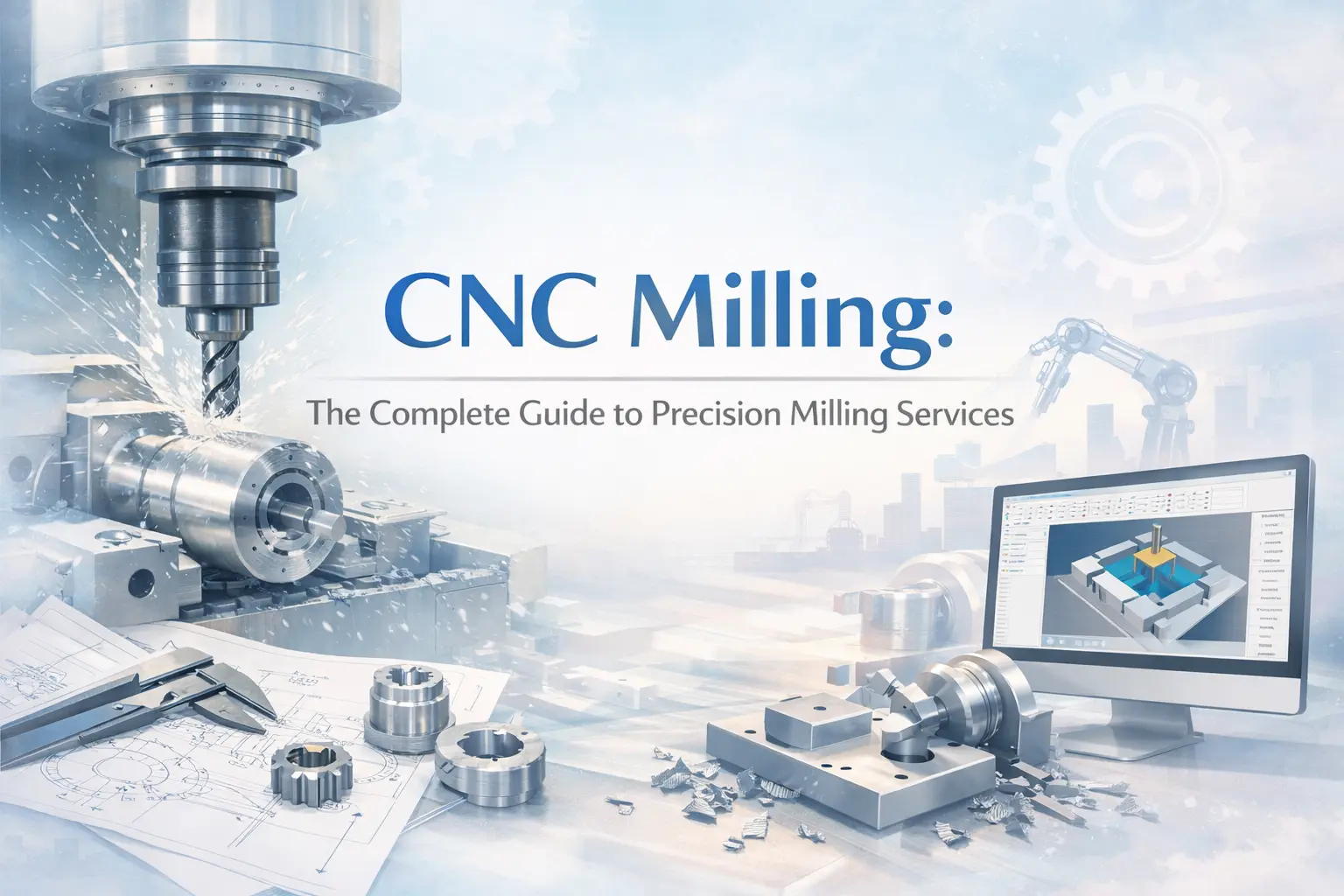
CNC milling is one of the most widely used machining processes in modern manufacturing. It uses computer-controlled cutting tools to remove material from a solid workpiece and create precise parts with complex shapes and tight tolerances. Compared with traditional manual machining, CNC milling provides higher efficiency, improved accuracy, and consistent repeatability, making it ideal for both prototyping and large-scale production.
Today, CNC milling plays a critical role in industries such as aerospace, automotive, electronics, medical devices, and industrial equipment. With advanced CNC machines and digital programming technologies, manufacturers can produce highly customized components from a wide range of materials, including metals and engineering plastics.
At WinsunProto, CNC milling services are widely used to produce high-precision components for global customers. By combining advanced machining equipment with experienced engineers, complex parts can be manufactured with excellent dimensional accuracy and surface quality.
CNC milling is a machining process in which rotating cutting tools remove material from a stationary workpiece. The process is controlled by computer numerical control (CNC) systems that follow programmed instructions created from CAD (Computer-Aided Design) models.
During CNC milling, the cutting tool rotates at high speed while the workpiece is fixed on a machine table. The machine moves the tool along multiple axes to cut the material and gradually shape the part according to the programmed design. This automated process allows manufacturers to produce complex geometries with high precision and minimal human intervention.
Unlike manual milling, CNC milling relies on digital programs to control tool movement, cutting speed, and feed rate. This ensures consistent results, reduces human error, and enables efficient production of intricate components. CNC milling can also be combined with other machining operations such as drilling, tapping, and slotting to create fully finished parts in a single setup.
Different types of CNC milling machines are used depending on the complexity of the part, the material being machined, and the required precision. Each machine configuration offers unique advantages for specific applications.
Vertical milling machines are the most common type used in CNC machining. In this configuration, the spindle is positioned vertically, and the cutting tool moves up and down while the workpiece is mounted on a horizontal table. Vertical milling machines are widely used for general machining operations such as face milling, slot cutting, and drilling.
These machines are known for their versatility, relatively simple setup, and cost-effective operation. They are commonly used in prototyping, small-batch production, and precision part manufacturing.
Horizontal milling machines feature a spindle that is oriented horizontally. This design allows the cutting tool to approach the workpiece from the side, making it ideal for heavy material removal and machining larger parts.
Because gravity helps remove chips during the cutting process, horizontal milling machines are well suited for high-volume production and machining deeper cuts. They are often used in industries such as automotive manufacturing and heavy equipment production.
Modern CNC machining centers often include multi-axis capabilities, such as 3-axis, 4-axis, or 5-axis milling. These machines allow the cutting tool to move in multiple directions, making it possible to machine complex geometries in fewer setups.
Multi-axis CNC milling greatly improves machining efficiency and accuracy while reducing production time. It is widely used for manufacturing complex aerospace components, medical devices, and precision mechanical parts.
CNC milling machines come in different configurations designed to handle various machining requirements. The choice of machine depends on factors such as part complexity, material type, production volume, and required precision. Understanding the different types of CNC milling machines can help manufacturers choose the most suitable solution for their projects.
Vertical milling machines are among the most commonly used CNC machines in modern workshops. In this setup, the spindle is positioned vertically, and the cutting tool moves up and down while the workpiece remains fixed on the machine table.
These machines are highly versatile and suitable for a wide range of operations, including face milling, drilling, slot cutting, and contouring. Vertical CNC mills are widely used for prototype development, custom components, and small to medium production runs due to their flexibility and relatively simple setup.
Horizontal milling machines feature a spindle that is oriented horizontally, allowing the cutting tool to approach the workpiece from the side. This configuration is particularly effective for heavy-duty machining and large-scale material removal.
Because chips naturally fall away from the cutting area, horizontal milling machines offer improved chip evacuation and more efficient cutting during long machining cycles. They are often used for high-volume production and machining larger components in industries such as automotive and heavy machinery manufacturing.
Multi-axis CNC milling machines expand machining capabilities by allowing movement along additional axes. In addition to the standard three axes (X, Y, and Z), these machines can include rotational axes that enable the cutting tool or workpiece to move in more complex ways.
Three-axis machines are commonly used for standard parts, while four-axis and five-axis machines are capable of producing highly complex geometries with fewer setups. Multi-axis milling is especially valuable in industries that require high precision and intricate part designs, such as aerospace, medical devices, and advanced electronics.
CNC milling involves a variety of cutting operations that allow manufacturers to create different shapes, features, and surface profiles. These operations can be combined within a single machining process to produce fully finished parts.
Face milling is used to create flat surfaces on a workpiece. The cutting tool removes material from the top of the part to produce a smooth and even surface. This operation is often used as a finishing step to achieve precise dimensions and improved surface quality.
End milling is one of the most versatile milling operations. The cutting tool has teeth on both the end and the sides, allowing it to cut in multiple directions. This operation is commonly used to create slots, pockets, contours, and complex profiles.
Slot milling is used to produce narrow grooves or slots in a workpiece. These features are commonly found in mechanical components that require keyways, guide tracks, or assembly channels.
CNC milling machines can also perform drilling and tapping operations. Drilling creates holes in the workpiece, while tapping forms internal threads that allow screws or bolts to be installed. Integrating these operations within the milling process improves efficiency and reduces the need for additional machining setups.
Profile milling is used to machine the outer contours or complex shapes of a part. By following the programmed toolpath, the cutting tool precisely removes material to create curved surfaces, edges, and detailed geometries.
One of the major advantages of CNC milling is its ability to process a wide variety of materials. From lightweight metals to engineering plastics, CNC milling can produce high-precision parts for many industrial applications.
Aluminum is one of the most commonly machined materials in CNC milling. It is lightweight, corrosion-resistant, and easy to machine, making it ideal for aerospace, automotive, and electronics components. Aluminum also offers excellent strength-to-weight ratios and good thermal conductivity.
Stainless steel is widely used for parts that require high strength, durability, and corrosion resistance. Although it is harder to machine than aluminum, modern CNC milling machines can efficiently produce precise stainless steel components for industries such as medical devices, food processing equipment, and industrial machinery.
Brass and copper are known for their excellent electrical conductivity and corrosion resistance. These materials are frequently used in electrical connectors, plumbing components, and decorative hardware. Brass, in particular, is easy to machine and provides a smooth surface finish.
Titanium is valued for its exceptional strength, lightweight properties, and resistance to extreme temperatures. It is commonly used in aerospace, medical implants, and high-performance engineering applications. However, titanium requires advanced CNC machining techniques due to its hardness and heat resistance.
CNC milling is also suitable for a variety of engineering plastics, such as ABS, POM, nylon, and polycarbonate. These materials are often used for lightweight components, prototypes, and parts that require electrical insulation or chemical resistance.
Surface finishing is an important step after CNC milling, as it improves the appearance, durability, and performance of machined parts. Different finishing processes can enhance corrosion resistance, reduce surface roughness, and provide specific functional or aesthetic properties depending on the application.
Anodizing is commonly used for aluminum CNC milled parts. This electrochemical process forms a protective oxide layer on the surface of the material, improving corrosion resistance and wear resistance. Anodizing can also provide various color options, making it popular for both functional and decorative applications.
Bead blasting uses fine glass beads or other abrasive materials to create a uniform matte surface finish. This process removes machining marks and provides a smooth, consistent texture. It is often used as a pre-treatment before anodizing or other coating processes.
Powder coating applies a durable protective layer to the surface of a machined part. The powder is electrostatically applied and then cured under heat to create a strong and even coating. This finish offers excellent resistance to corrosion, chemicals, and environmental wear.
Black oxide finishing is commonly used for steel components. It creates a dark protective layer on the metal surface, improving corrosion resistance while maintaining the part’s dimensional accuracy. This finish is frequently used in industrial machinery and precision mechanical components.
Polishing improves the surface smoothness of CNC milled parts and can create either a satin or mirror-like finish. It is often used for decorative components, consumer products, and parts that require a high-quality appearance.
CNC milling is widely used across many industries due to its ability to produce precise and complex components from various materials. Its flexibility and accuracy make it suitable for both prototyping and large-scale manufacturing.
In the aerospace sector, CNC milling is used to manufacture high-precision components such as structural parts, brackets, housings, and engine components. These parts require extremely tight tolerances and high reliability.
Automotive manufacturers rely on CNC milling to produce engine parts, transmission components, and custom mechanical parts. The process allows for efficient production of complex geometries and durable metal components.
CNC milling is commonly used to create housings, heat sinks, and structural components for electronic devices. The process ensures accurate dimensions and excellent surface finishes for sensitive electronic assemblies.
The medical industry requires highly precise and reliable components. CNC milling is used to produce surgical instruments, implant components, and medical equipment parts with strict quality standards.
Many industrial machines rely on CNC milled components such as gears, mounting plates, fixtures, and mechanical housings. CNC milling ensures these parts meet precise dimensional and performance requirements.
CNC milling offers numerous advantages compared with traditional machining methods. These benefits make it one of the most widely used manufacturing processes for precision components.
CNC milling machines operate based on programmed instructions, allowing them to produce parts with very tight tolerances and consistent accuracy.
Once a CNC program is created, the same part can be reproduced multiple times with identical quality. This is particularly valuable for batch production and large manufacturing runs.
CNC milling machines, especially multi-axis systems, can produce intricate shapes and complex features that would be difficult or impossible to achieve with manual machining.
CNC milling can process a variety of materials, including metals, alloys, and engineering plastics, making it suitable for many industrial applications.
Automated CNC systems reduce manual labor and improve production efficiency. Multiple machining operations can often be completed in a single setup, reducing overall manufacturing time.
CNC milling is often compared with other machining methods. Understanding the differences between these processes helps manufacturers choose the most suitable technique for their projects.
CNC milling uses rotating cutting tools to remove material from a stationary workpiece, while CNC turning rotates the workpiece itself against a stationary cutting tool. Milling is better suited for complex shapes and flat surfaces, while turning is typically used for cylindrical or round components.
CNC routing is similar to milling but is generally used for softer materials such as wood, plastics, and composites. CNC milling machines are designed for higher precision and are capable of machining harder materials like steel, aluminum, and titanium.
3D printing is an additive manufacturing process that builds parts layer by layer, while CNC milling is a subtractive process that removes material from a solid block. CNC milling offers higher strength, better surface finishes, and tighter tolerances, whereas 3D printing is often used for rapid prototyping and complex internal structures.
Designing parts for CNC milling requires careful planning to ensure the components can be manufactured efficiently and accurately. Proper design choices not only improve machining performance but also help reduce production costs and lead times.
Maintaining appropriate wall thickness is important for structural stability and machining efficiency. Very thin walls can deform during machining, especially when working with softer materials such as aluminum or plastics. Designers should ensure that walls are thick enough to maintain strength while still meeting weight and design requirements.
Because CNC milling uses rotating cutting tools, perfectly sharp internal corners are difficult to achieve. Designers typically include a corner radius that matches the size of the cutting tool. This helps improve machining efficiency and prevents unnecessary tool wear.
All machined features must be accessible by the cutting tool. Deep cavities, narrow slots, or complex internal shapes may require specialized tools or multi-axis machining. Designing parts with proper tool access helps simplify machining operations and reduce costs.
When designing holes for CNC milling, it is important to consider the relationship between hole depth and diameter. Extremely deep holes can be difficult to machine and may require additional operations. Standard drill sizes and reasonable depth ratios help improve machining efficiency.
Tighter tolerances often require slower machining speeds, specialized tools, and additional inspection processes. Designers should specify tolerances only where necessary to maintain functionality, as overly strict requirements can significantly increase manufacturing costs.
The cost of CNC milling depends on several factors related to the complexity of the part, the materials used, and the production volume. Understanding these factors can help businesses optimize their designs and control manufacturing expenses.
Different materials have different machining characteristics. Softer materials such as aluminum are generally easier and faster to machine, while harder materials like stainless steel or titanium require more cutting time and specialized tools, increasing overall cost.
Parts with intricate geometries, deep pockets, or multiple features typically require longer machining times and more advanced programming. Multi-axis machining may also be required for highly complex designs.
The longer a part takes to machine, the higher the production cost. Machining time depends on factors such as part size, number of features, required tolerances, and cutting speeds.
Prototype parts or small production runs usually have higher per-unit costs due to setup and programming time. Larger production volumes benefit from economies of scale, reducing the cost per part.
Additional finishing processes such as anodizing, polishing, or powder coating can increase the overall manufacturing cost. However, these treatments may be necessary to meet functional or aesthetic requirements.
WinsunProto provides professional CNC milling services for customers across a wide range of industries. With advanced machining equipment and experienced engineers, the company is capable of delivering high-quality precision parts for both prototypes and production runs.
WinsunProto operates modern CNC milling machines capable of producing complex parts with high accuracy and consistency. Multi-axis machining capabilities allow for efficient manufacturing of intricate components.
The engineering team at WinsunProto has extensive experience in CNC machining and manufacturing optimization. They work closely with customers to review designs, improve manufacturability, and ensure the best production results.
Quality control is a key priority throughout the entire production process. Each component is carefully inspected to ensure it meets the required specifications, tolerances, and surface finish standards.
Efficient production planning and advanced machining technologies allow WinsunProto to deliver parts quickly without compromising quality. This is especially important for customers who require rapid prototyping or urgent production schedules.
WinsunProto serves customers worldwide, providing reliable CNC milling solutions for companies in industries such as aerospace, electronics, automotive, and medical devices.
CNC milling is used to manufacture precision components with complex shapes and tight tolerances. It is widely used in industries such as aerospace, automotive, electronics, medical devices, and industrial equipment.
CNC milling can process a wide range of materials, including aluminum, stainless steel, brass, copper, titanium, and engineering plastics such as ABS, nylon, and polycarbonate.
CNC milling can typically achieve tolerances as tight as ±0.01 mm, depending on the material, machine capability, and part geometry.
Yes, CNC milling is commonly used for rapid prototyping because it allows manufacturers to quickly produce functional parts with high accuracy and real production materials.
Production time depends on factors such as part complexity, material type, quantity, and finishing requirements. Simple parts can often be produced within a few days, while complex components may require longer machining times.
CNC milling is a versatile and highly precise manufacturing process that plays a crucial role in modern engineering and industrial production. By using computer-controlled machining technology, manufacturers can produce complex components with excellent accuracy, consistency, and surface quality.
From aerospace and automotive components to electronics housings and medical devices, CNC milling supports a wide range of applications across many industries. With the right design considerations, material selection, and machining strategy, businesses can achieve efficient production and high-quality results.
Choosing an experienced machining partner is essential to ensure reliable performance and cost-effective manufacturing. Professional CNC milling providers such as WinsunProto combine advanced equipment, engineering expertise, and strict quality control to deliver precision parts that meet demanding industry standards.
