Our Location
304 North Cardinal St.
Dorchester Center, MA 02124

304 North Cardinal St.
Dorchester Center, MA 02124

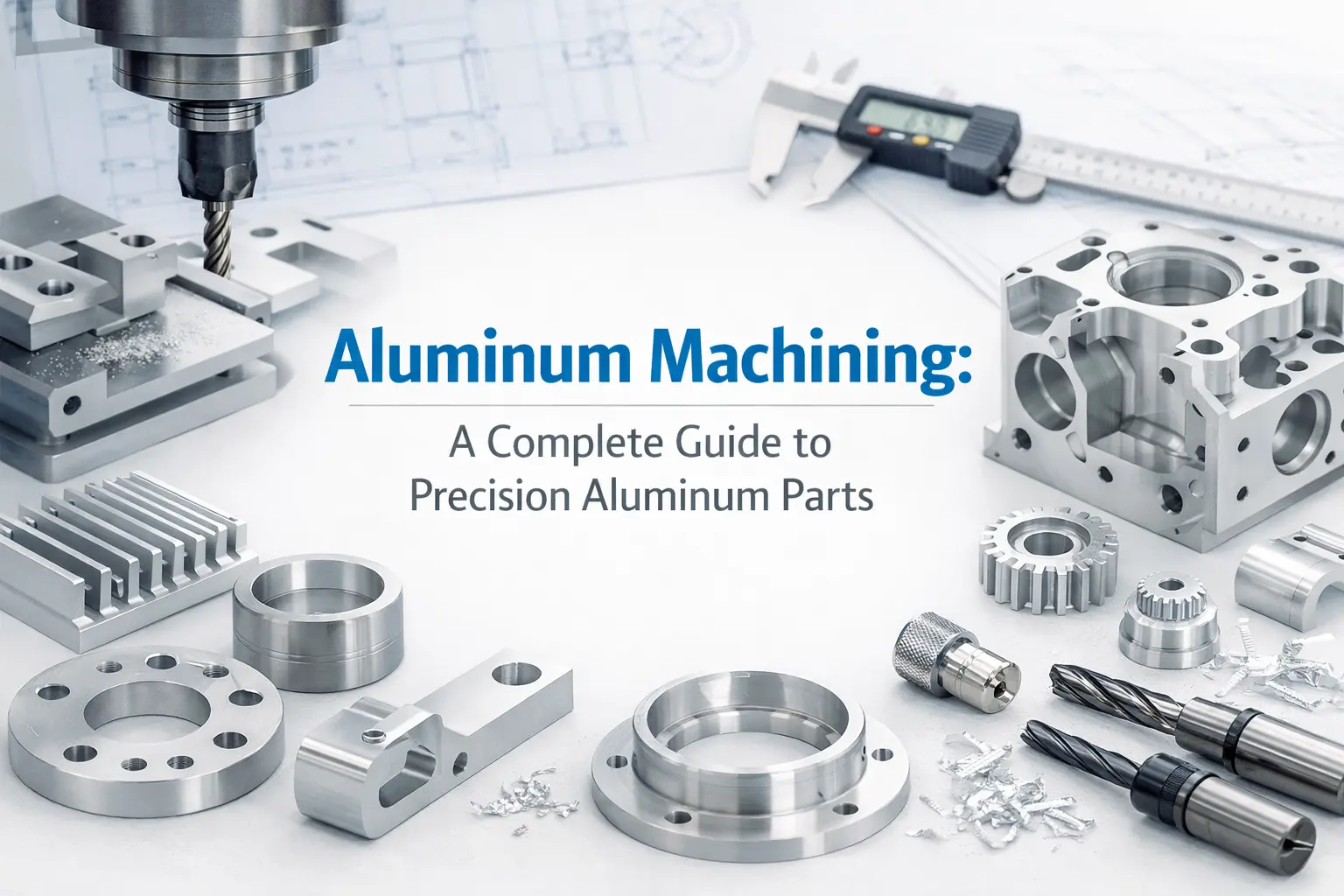
Aluminum machining is a core process in modern manufacturing, used to produce lightweight, high-precision components for a wide range of industries. With its excellent strength-to-weight ratio, corrosion resistance, and reliable mechanical performance, aluminum has become one of the most practical materials for CNC milling and turning. Compared with many other metals, it machines efficiently, supports tight tolerances, and delivers consistent surface quality. Whether for functional prototypes or full-scale production parts, aluminum offers a balanced combination of performance, cost control, and manufacturing flexibility that makes it a preferred choice for engineers and product developers.
Aluminum is one of the easiest metals to machine. It allows higher cutting speeds and efficient chip removal, which reduces cycle times and improves overall productivity. This makes it especially suitable for both rapid prototyping and production runs.
Aluminum provides impressive mechanical strength while remaining significantly lighter than steel. This balance makes it ideal for applications where weight reduction is critical without compromising structural integrity.
Many aluminum alloys naturally form a protective oxide layer that resists corrosion. When combined with anodizing or other surface treatments, aluminum parts can achieve long-term durability even in demanding environments.
Aluminum offers strong heat dissipation and electrical conductivity, making it widely used for heat sinks, electronic enclosures, and components requiring thermal management.
Compared with many other metals, aluminum is relatively affordable and faster to machine. Shorter machining times and lower tool wear contribute to reduced manufacturing costs.
Aluminum supports a wide range of surface treatments, including anodizing, sandblasting, polishing, and powder coating. It can achieve smooth, uniform finishes suitable for both functional and aesthetic requirements.
6061 is the most widely used aluminum alloy in CNC machining. It offers a good balance of strength, corrosion resistance, and machinability. This alloy is easy to cut, weld, and anodize, making it suitable for structural components, mechanical parts, and general-purpose applications.
7075 is a high-strength alloy commonly used in aerospace and high-stress applications. It provides significantly greater strength than 6061 but is slightly less corrosion-resistant. It is ideal for components that require superior mechanical performance and fatigue resistance.
2024 aluminum is known for its excellent fatigue resistance and high strength. It is frequently used in aerospace applications. However, it has lower corrosion resistance and typically requires surface treatment for long-term durability.
5052 offers excellent corrosion resistance, particularly in marine or humid environments. While not as strong as 6061 or 7075, it performs well in sheet metal applications and components that require good formability.
Selecting the appropriate aluminum alloy depends on strength requirements, environmental conditions, weight considerations, and surface finishing needs. Evaluating these factors early in the design phase helps ensure optimal performance and cost efficiency.
CNC milling is the most common method for machining aluminum. It is ideal for producing complex geometries, precision housings, pockets, slots, and 3D surfaces. Aluminum’s machinability allows high spindle speeds and smooth finishes during milling.
CNC turning is used for cylindrical or rotational parts such as shafts, bushings, sleeves, and threaded components. Aluminum performs well in turning operations, allowing tight tolerances and consistent surface quality.
Drilling and tapping processes create accurate holes and threads in aluminum components. Proper cutting parameters ensure clean threads and prevent material deformation.
5-axis machining is suitable for highly complex parts that require multi-angle cutting. It reduces setup time and improves dimensional accuracy, especially for aerospace and precision engineering components.
Because aluminum supports high cutting speeds, high-speed machining techniques can significantly reduce production time while maintaining precision and surface integrity.
Anodizing is one of the most common surface treatments for aluminum. It increases corrosion resistance, improves surface hardness, and enhances wear resistance. Anodized aluminum can also be dyed in various colors, making it suitable for both functional and aesthetic applications.
Sandblasting creates a uniform matte texture and removes minor surface imperfections. It is often used as a pre-treatment before anodizing to achieve a consistent finish.
Powder coating adds a durable protective layer to aluminum parts. It provides strong resistance to corrosion, chemicals, and impact, while also offering a wide range of color options.
Polishing produces a smooth, reflective surface. It is commonly used for decorative parts or components requiring improved surface smoothness.
Brushing creates a fine linear texture on the surface. This finish is frequently applied to visible components in consumer electronics and industrial equipment.
Aluminum is widely used in lightweight structural parts, brackets, housings, and frames where strength and weight reduction are critical.
Machined aluminum parts are used in engine components, transmission housings, mounting brackets, and performance upgrades due to their durability and weight advantages.
Aluminum’s thermal conductivity makes it ideal for heat sinks, enclosures, and precision housings used in electronic devices.
Precision aluminum components are used in equipment frames, instrument housings, and specialized medical devices that require tight tolerances and clean finishes.
Aluminum is commonly used for fixtures, custom tooling, automation components, and mechanical assemblies in industrial environments.
Avoid excessively thin walls, as they may deform during machining. Maintaining appropriate wall thickness improves structural stability and machining accuracy.
Specify tight tolerances only where necessary. Overly strict tolerances can increase machining time and cost without adding functional value.
Internal corners should include appropriate radii to match cutting tool geometry. Sharp internal corners increase machining difficulty and cost.
Use standard thread sizes whenever possible. Proper thread depth and engagement length ensure strength and reduce the risk of stripping.
Clearly define surface finish expectations early in the design phase. This helps determine whether additional processes such as anodizing or polishing are required.
Choose the aluminum alloy based on strength, corrosion resistance, and application environment. Proper alloy selection improves performance and long-term durability.
Aluminum is significantly lighter than steel or other metals, making prototype parts easier to handle, transport, and assemble. This is particularly beneficial when multiple iterations of a design need to be tested quickly.
Aluminum is soft enough to machine efficiently while still providing good strength. It allows CNC machines to achieve high precision and tight tolerances with minimal wear on cutting tools, reducing production costs and time.
Due to its ease of machining, aluminum prototypes can be produced faster than many other metals. This accelerates product development cycles, allowing designers and engineers to test form, fit, and function early in the development process.
Aluminum surfaces can be anodized, polished, or coated to simulate the final product’s look and feel. This is useful for evaluating aesthetics and functionality in prototype stages before committing to full-scale production materials.
Even though it is lightweight, aluminum offers a favorable strength-to-weight ratio, making prototypes durable enough for functional testing without adding unnecessary bulk.
Aluminum is generally more affordable than other metals like titanium or stainless steel, especially for small prototype batches. This makes it ideal for iterations and testing before mass production.
Certain aluminum alloys resist corrosion naturally or with surface treatments, allowing prototypes to withstand environmental testing without premature degradation.
Aluminum is suitable for complex geometries and intricate features, enabling designers to create prototypes with detailed features that might be challenging in other metals or plastics.
Partnering with a professional aluminum machining supplier like WinsunProto ensures your prototypes and production parts meet the highest standards of quality, precision, and reliability. Our team combines years of CNC machining expertise with advanced equipment to deliver parts that perfectly match your design specifications.
With WinsunProto, you benefit from:
Our engineers understand the unique properties of aluminum and select the right alloys, machining techniques, and tolerances to achieve optimal results.
We use state-of-the-art CNC machinery to produce parts with tight tolerances and consistent quality, essential for both functional prototypes and production runs.
We know speed is crucial in product development. Our streamlined processes allow us to deliver prototypes and small-batch parts quickly without compromising quality.
From design review to finishing options, WinsunProto provides guidance at every stage to ensure manufacturability, cost efficiency, and the best performance for your aluminum parts.
Whether you need a single prototype or hundreds of precision parts, our flexible production capacity can scale to meet your requirements, keeping timelines and costs manageable.
Choosing WinsunProto means choosing reliability, precision, and a partner who understands your project’s needs from prototype to production.
What makes aluminum a good material for CNC machining?
Aluminum offers excellent machinability, a high strength-to-weight ratio, and natural corrosion resistance. It can be machined quickly while maintaining tight tolerances, making it ideal for both prototypes and production parts.
Which aluminum alloys are commonly used in machining?
Popular alloys include 6061, 7075, and 5052. 6061 is widely used for its balance of strength, corrosion resistance, and cost-effectiveness. 7075 provides higher strength for demanding applications, while 5052 offers superior corrosion resistance and formability.
Can aluminum parts achieve tight tolerances?
Yes. Aluminum is well-suited for high-precision CNC machining. With proper tooling and process control, tolerances of ±0.01 mm (or tighter, depending on design and geometry) can be achieved.
What surface finishes are available for aluminum parts?
Aluminum can be anodized (clear or colored), powder coated, bead blasted, brushed, polished, or left as-machined. Anodizing is especially popular because it enhances corrosion resistance and improves surface hardness.
Is aluminum suitable for functional prototypes?
Absolutely. Aluminum prototypes are strong enough for mechanical testing, thermal testing, and real-world functional validation. They provide more realistic performance compared to plastic prototypes.
How fast can aluminum parts be produced?
Lead times depend on part complexity and quantity, but aluminum’s machinability allows for relatively fast production. Simple prototype parts can often be completed within a few days.
Is aluminum machining cost-effective?
Yes. Aluminum is generally more affordable than materials like titanium or stainless steel, and its fast machining speed reduces labor and tooling costs. This makes it a cost-efficient choice for both small and medium production runs.
What industries commonly use machined aluminum parts?
Industries such as aerospace, automotive, electronics, medical devices, and robotics frequently rely on precision aluminum components due to their lightweight and durable characteristics.
