Our Location
304 North Cardinal St.
Dorchester Center, MA 02124

304 North Cardinal St.
Dorchester Center, MA 02124

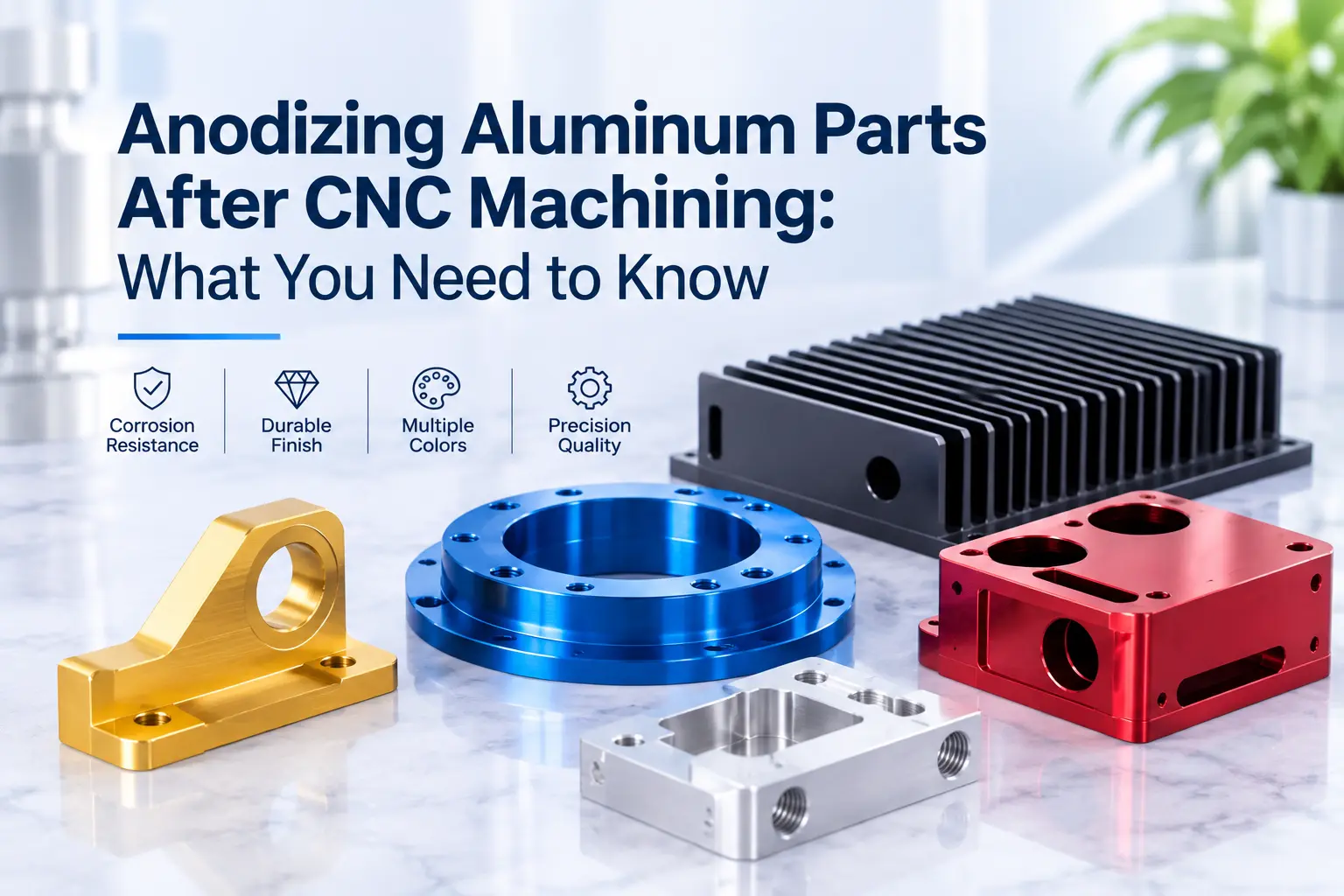
Aluminum anodizing is an electrochemical surface treatment process that improves the surface properties of aluminum parts by creating a controlled oxide layer. It is widely used in CNC machining, aerospace, automotive, electronics, medical equipment, and industrial manufacturing because it enhances corrosion resistance, surface hardness, and overall appearance.
Unlike conventional painting or powder coating, anodizing does not simply apply a separate layer of material onto the aluminum surface. Instead, it converts the aluminum surface into aluminum oxide through an electrochemical reaction. This oxide layer becomes an integral part of the metal surface, providing a durable finish that is less likely to peel, chip, or flake under normal operating conditions.
For manufacturers producing custom CNC machined aluminum parts, anodizing is often an important final step after machining. CNC milling and turning create the required geometry, dimensions, and surface features, while anodizing provides additional protection and improves the appearance of the finished components.
However, anodizing is not just a cosmetic process. It can affect dimensional tolerances, electrical conductivity, surface texture, and the performance of precision features. Therefore, understanding the anodizing process before production is essential for achieving consistent results.
The aluminum anodizing process uses an electrolytic solution, typically sulfuric acid, and an electrical current to form an aluminum oxide layer on the metal surface.
During the process, the aluminum component acts as the anode (positive electrode) in an electrolytic bath. When direct current is applied, oxygen ions react with the aluminum surface, forming a controlled layer of aluminum oxide (Al₂O₃).
The basic anodizing process generally includes the following steps:
The thickness and properties of the oxide layer depend on several factors, including the aluminum alloy, electrolyte composition, bath temperature, electrical current density, and processing time.
For CNC machined aluminum components, proper surface preparation is particularly important. Machining marks, scratches, tool marks, and differences in surface roughness may remain visible after anodizing. Anodizing generally follows the existing surface texture rather than hiding machining defects.
This means that the final appearance of an anodized aluminum part depends not only on the anodizing process but also on the quality of the original CNC machining and surface preparation.
Aluminum is widely selected for CNC machining because of its excellent machinability, lightweight properties, good strength-to-weight ratio, and corrosion resistance. However, untreated aluminum may still be vulnerable to surface scratches, wear, and environmental exposure depending on the alloy and application.
Anodizing provides several advantages that make it suitable for CNC machined aluminum parts.
1. Improved Corrosion Resistance
The aluminum oxide layer acts as a protective barrier between the aluminum substrate and the surrounding environment. This helps reduce oxidation and corrosion caused by moisture, humidity, and certain environmental conditions.
For components used in outdoor equipment, industrial machinery, and electronic enclosures, anodizing can improve long-term surface durability.
2. Increased Surface Hardness and Wear Resistance
The anodized oxide layer is harder than the underlying aluminum. This makes anodizing particularly useful for components that experience repeated contact, friction, or handling.
Hardcoat anodizing, also known as Type III anodizing, can produce a thicker and harder oxide layer than standard Type II anodizing. It is commonly used for mechanical components that require improved wear resistance.
3. Improved Appearance
Anodizing provides a clean and consistent surface finish. Depending on the process, aluminum parts can have natural silver, black, blue, red, gold, and other colors.
This is particularly useful for consumer electronics, optical equipment, industrial housings, and other products where appearance is important.
4. Electrical Insulation
Aluminum itself is electrically conductive, but the aluminum oxide layer formed during anodizing is electrically insulating under normal conditions.
This property can be beneficial for electronic housings and components where electrical isolation is required. However, masking may be necessary when electrical contact points or grounding surfaces must remain conductive.
5. Durable Surface Finish
Because anodizing converts the aluminum surface rather than simply applying a separate coating, the finish does not peel or flake in the same way as conventional paint. This makes it a practical choice for components that require both functional performance and a long-lasting appearance.
Anodizing is not the only surface treatment available for CNC machined aluminum parts. Depending on the application, manufacturers may also consider powder coating, painting, electroless nickel plating, or mechanical finishing.
Each process provides different performance characteristics, so the right choice depends on the part’s operating environment, dimensional requirements, and appearance expectations.
| Surface Finish | Main Advantages | Common Applications |
|---|---|---|
| Anodizing | Corrosion resistance, wear resistance, attractive appearance | CNC components, housings, optical equipment |
| Powder Coating | Thick protective layer, wide color selection | Industrial enclosures, structural components |
| Painting | Flexible colors and relatively low cost | Decorative parts, equipment housings |
| Electroless Nickel Plating | Uniform coating, good corrosion and wear resistance | Precision mechanical components |
| Mechanical Polishing | Smooth and reflective surface | Decorative aluminum components |
One important difference is dimensional impact. Anodizing creates an oxide layer that grows partly into the aluminum substrate and partly outward from the original surface. Powder coating and painting, on the other hand, generally add a separate coating layer on top of the substrate.
For precision CNC machined parts, this difference should be considered during the design and machining stages.
Anodizing is often a good choice when a component requires a combination of corrosion resistance, surface durability, and appearance. However, it may not be suitable for every application, particularly when specific electrical contact surfaces, extremely tight dimensional tolerances, or special coating properties are required.
Choosing the right surface treatment early in the manufacturing process can help reduce rework, improve product consistency, and avoid unnecessary production costs.
Not all aluminum anodizing processes produce the same results. Different anodizing types are designed to meet different requirements for coating thickness, corrosion resistance, wear resistance, and appearance.
The three commonly referenced anodizing types are Type I, Type II, and Type III. They differ mainly in the electrolyte used, processing conditions, and the properties of the resulting oxide layer.
For CNC machined aluminum parts, selecting the correct anodizing type is important because the surface treatment directly affects the component’s performance, appearance, and dimensional characteristics.
Type I anodizing uses chromic acid as the electrolyte to create a relatively thin aluminum oxide layer. It is commonly associated with aerospace and specialized industrial applications where corrosion protection is required without significantly changing the dimensions of the component.
Compared with sulfuric acid anodizing, Type I generally produces a thinner oxide coating. This makes it useful for aluminum components with complex geometries, precision features, and relatively tight dimensional requirements.
One of its main advantages is its ability to provide corrosion protection while maintaining relatively small dimensional changes. The thinner coating also makes it suitable for certain components where excessive oxide buildup could interfere with assembly or functionality.
However, Type I anodizing generally provides less wear resistance than Type III hardcoat anodizing because of its thinner oxide layer.
Another consideration is environmental compliance. Traditional chromic acid anodizing uses hexavalent chromium compounds, which are subject to strict environmental and workplace safety regulations. As a result, some manufacturers and industries may require alternative processes depending on their compliance requirements.
Typical applications include:
When specifying Type I anodizing, customers should confirm the applicable process standard and coating requirements with their manufacturing supplier.
Type II anodizing is one of the most widely used aluminum anodizing processes. It uses sulfuric acid as the electrolyte and produces a porous aluminum oxide layer that can be dyed in different colors before sealing.
This process offers a good balance between corrosion resistance, appearance, cost, and production efficiency. It is commonly used for CNC machined aluminum housings, brackets, covers, panels, and general industrial components.
One of the biggest advantages of Type II anodizing is its color flexibility. Black anodizing is especially popular because it provides a clean, professional appearance and is widely used in industrial and electronic applications. Other available colors may include red, blue, gold, and natural clear finishes.
Type II anodizing also improves corrosion resistance when the coating is properly sealed. Although it does not provide the same wear resistance as hardcoat anodizing, it is sufficient for many general-purpose applications.
Typical coating thicknesses are often around 5–25 μm, depending on the specification, alloy, and application. The actual thickness should always be confirmed through the applicable drawing or coating standard.
For CNC machined aluminum parts, Type II anodizing is frequently selected when both appearance and basic surface protection are important.
Typical applications include:
When selecting Type II anodizing, it is important to consider the aluminum alloy. Different alloys can produce different color shades and surface appearances, even when processed under similar conditions.
Type III anodizing, commonly known as hardcoat anodizing, is designed to produce a thicker and harder aluminum oxide layer than standard Type II anodizing.
It is generally performed under lower-temperature electrolyte conditions and controlled electrical parameters to create a dense, wear-resistant coating.
Hardcoat anodizing is particularly suitable for CNC machined aluminum components exposed to friction, abrasion, repeated contact, or demanding operating environments.
Compared with Type II anodizing, Type III generally produces a thicker coating, often in the range of approximately 25–75 μm, depending on the specification and application.
Its main advantages include:
Higher Surface Hardness: Hardcoat anodizing creates a significantly harder surface than untreated aluminum, helping improve resistance to abrasion and mechanical wear.
Improved Wear Resistance: It is suitable for sliding components, mechanical housings, fixtures, and parts exposed to repeated movement or contact.
Enhanced Corrosion Protection: When properly processed and sealed as required, hardcoat anodizing can provide good corrosion resistance.
Longer Service Life: For components operating in demanding industrial environments, the improved surface durability can help extend service life.
However, Type III anodizing also introduces additional design considerations.
The thicker oxide layer can affect dimensions, especially for precision holes, threads, bearing seats, and mating surfaces. In addition, hardcoat anodizing may produce darker or less uniform colors depending on the aluminum alloy and process conditions.
Typical applications include:
For components with tight tolerances, manufacturers should plan the anodizing allowance during CNC machining rather than treating hardcoat anodizing as an independent finishing step.
Selecting the right anodizing type depends on the component’s intended use, functional requirements, dimensional tolerances, and appearance expectations.
There is no single anodizing process that is best for every CNC machined aluminum part. A decorative aluminum enclosure may only require Type II anodizing, while a mechanical component exposed to continuous friction may benefit from Type III hardcoat anodizing.
The following table provides a practical comparison:
| Selection Factor | Type I | Type II | Type III |
|---|---|---|---|
| Electrolyte | Chromic acid | Sulfuric acid | Sulfuric acid |
| Coating Thickness | Thin | Moderate | Thick |
| Corrosion Resistance | Good | Good | Good to excellent, depending on process |
| Wear Resistance | Limited | Moderate | High |
| Color Options | Limited | Wide selection | More limited and process-dependent |
| Typical Application | Aerospace and precision parts | General industrial and decorative parts | Wear-resistant mechanical parts |
Before placing an order, consider the following questions:
Providing these details during the RFQ stage helps the CNC machining supplier select an appropriate process and avoid unnecessary adjustments after production.
Anodizing aluminum parts after CNC machining requires careful coordination between machining operations and surface finishing. Although anodizing is generally considered a secondary manufacturing process, the quality of the final component depends heavily on how the part is designed, machined, cleaned, and prepared before entering the anodizing bath.
For CNC machined aluminum parts, the anodizing process should be considered during the initial manufacturing planning stage rather than added only after machining is complete. This is especially important for components with tight dimensional tolerances, threaded holes, precision bores, and mating surfaces.
A properly controlled anodizing process can improve corrosion resistance, surface hardness, and appearance while maintaining the required functionality of the component. However, inadequate surface preparation, inconsistent processing conditions, or insufficient dimensional allowance can lead to uneven colors, coating defects, and assembly problems.
Below is a step-by-step explanation of how aluminum parts are anodized after CNC machining.
The first stage is CNC machining, where aluminum raw materials are processed into the required geometry using CNC milling, CNC turning, drilling, tapping, and other machining operations.
At this stage, manufacturers need to consider not only the dimensional requirements of the finished component but also the surface condition required for subsequent anodizing.
The quality of the machined surface has a direct influence on the final anodized appearance. Unlike painting or powder coating, anodizing does not cover machining marks or hide surface imperfections. Instead, the oxide layer follows the existing surface texture.
For example, visible tool marks, scratches, dents, and inconsistent surface finishes may become more noticeable after anodizing, particularly on black or colored aluminum parts.
Several factors should be considered during CNC machining:
Surface Roughness: The required surface roughness should be specified according to the functional and cosmetic requirements of the component. If a smooth appearance is required, additional finishing operations may be necessary before anodizing.
Machining Marks: Consistent tool paths and appropriate cutting parameters help reduce visible tool marks and improve surface uniformity.
Dimensional Allowance: Since anodizing adds an oxide layer to the aluminum surface, critical dimensions should account for the expected coating growth.
Sharp Edges and Corners: Extremely sharp edges may experience uneven coating formation or reduced coating thickness. Appropriate edge breaks and radii can help improve coating consistency.
Threads and Precision Features: Internal threads, precision holes, bearing seats, and mating surfaces should be reviewed to determine whether masking or dimensional compensation is necessary.
For example, if a CNC machined aluminum housing requires a precise internal bore for bearing installation, the machining dimensions should be planned based on the final anodized dimensions, not simply the dimensions before surface treatment.
Proper preparation during the machining stage helps prevent unnecessary rework and ensures that the anodized parts meet the customer’s engineering requirements.
Before anodizing, CNC machined aluminum parts must undergo thorough cleaning and surface preparation.
During CNC machining, components may accumulate cutting fluids, lubricants, fingerprints, metal particles, and other contaminants. If these substances remain on the surface, they can interfere with the anodizing reaction and cause defects such as uneven coloring, stains, or poor coating consistency.
The cleaning process typically involves several operations.
Degreasing
Degreasing removes machining oils, lubricants, and other organic contaminants from the aluminum surface. Depending on the material and production requirements, manufacturers may use alkaline cleaners or specialized industrial cleaning solutions.
This step is particularly important for complex CNC machined parts with deep holes, internal cavities, and narrow channels, where cutting fluids may remain trapped.
Etching
Etching is a chemical treatment used to remove a small amount of aluminum from the surface. It can help create a more uniform surface appearance and remove minor surface irregularities.
However, excessive etching may change the dimensions of precision components or affect their surface finish. Therefore, the process needs to be controlled carefully.
Desmutting
After etching, some aluminum alloys may develop dark residues or alloying-element deposits on the surface. Desmutting removes these residues and prepares the aluminum for consistent anodizing.
This step is particularly important for certain aluminum alloys containing copper, silicon, or other alloying elements.
Rinsing
Parts are thoroughly rinsed between chemical treatment stages to remove residual cleaning solutions and prevent cross-contamination between process baths.
Proper cleaning and surface preparation are essential for achieving consistent anodized finishes, especially when manufacturing precision CNC aluminum components in multiple production batches.
After cleaning and surface preparation, the aluminum components are ready for the anodizing process.
The parts are immersed in an electrolyte solution, typically sulfuric acid for Type II and Type III anodizing. They are connected to the positive terminal of a DC power supply and act as the anode, while the cathode completes the electrical circuit.
When electrical current passes through the electrolyte, an electrochemical reaction takes place on the aluminum surface, forming a controlled aluminum oxide layer.
Several processing parameters determine the final coating characteristics:
For CNC machined aluminum parts, controlling these parameters is important because the resulting oxide layer must satisfy both functional and dimensional requirements.
For example, standard Type II anodizing may be sufficient for an aluminum electronic enclosure that mainly requires corrosion protection and a black finish. However, a mechanical component exposed to repeated friction may require Type III hardcoat anodizing to achieve better wear resistance.
The anodizing process should therefore be selected according to the actual application rather than simply choosing the thickest available coating.
One of the advantages of aluminum anodizing is that the oxide layer can be colored to meet different product appearance requirements.
During anodizing, the aluminum oxide layer develops a porous structure. These pores can absorb dyes, allowing manufacturers to produce different colors before the final sealing operation.
Common anodized aluminum colors include:
Black Anodizing: Black is one of the most widely requested finishes for CNC machined aluminum components. It is commonly used for electronic enclosures, optical equipment, camera accessories, and industrial machinery.
Clear or Natural Anodizing: This finish maintains the natural metallic appearance of aluminum while providing an additional protective oxide layer.
Red and Blue Anodizing: These colors are often used for decorative components, consumer products, and equipment housings.
Gold Anodizing: Gold finishes are available for products requiring a distinctive appearance, although the final shade depends on the alloy and processing conditions.
It is important to understand that anodizing color consistency can be affected by several factors, including aluminum alloy composition, material batch, surface roughness, and anodizing parameters.
For example, two CNC machined components made from different aluminum alloys may develop slightly different shades even when they undergo the same black anodizing process.
Similarly, parts with different surface finishes may reflect light differently, resulting in visible appearance differences.
For projects requiring multiple components with matching colors, it is recommended to use the same aluminum alloy, consistent machining finishes, and controlled anodizing conditions. Sample approval before mass production can also help reduce color variation.
Sealing is generally the final stage of conventional anodizing, particularly for Type II anodizing.
After anodizing and optional coloring, the oxide layer contains microscopic pores. These pores can absorb contaminants and moisture if they remain open.
The sealing process closes or reduces the accessibility of these pores, helping improve corrosion resistance and protect the anodized finish.
Common sealing methods include:
Hot Water Sealing: The anodized aluminum parts are immersed in hot deionized water. This promotes hydration of the aluminum oxide and helps close the pores.
Nickel Acetate Sealing: A nickel-based sealing solution is used to improve the sealing performance of the anodized layer. It is commonly applied in decorative and industrial anodizing processes.
Cold Sealing: Certain chemical sealing processes operate at lower temperatures and are used in industrial anodizing production.
The appropriate sealing method depends on the anodizing specification, application, and required performance.
Sealing is particularly important for components exposed to moisture, humidity, and outdoor environments. However, some applications may require specific sealing conditions or alternative treatments depending on wear resistance, dimensional requirements, and other functional considerations.
After sealing, the parts are rinsed, dried, and inspected to verify that the final finish meets the required specifications.
Once the anodizing process is complete, CNC machined aluminum parts should undergo a final inspection before shipment.
The inspection requirements depend on the engineering drawing and the intended application of the component.
Typical inspection items include:
For precision CNC machined aluminum components, final dimensional inspection is particularly important because anodizing can affect the dimensions of the finished part.
A reliable manufacturing process should consider these inspection requirements before production begins, ensuring that machining, surface treatment, and quality control work together to deliver consistent results.
One of the main reasons manufacturers choose anodizing for CNC machined aluminum parts is its ability to provide both functional protection and an attractive surface appearance. Unlike many other surface finishing processes, aluminum anodizing allows manufacturers to create different colors while maintaining the natural metallic characteristics of the material.
Anodized aluminum is widely used in consumer electronics, automotive components, optical equipment, industrial machinery, and aerospace applications. Depending on the anodizing process, aluminum parts can achieve different colors, textures, and levels of surface protection.
However, the final appearance is influenced by several factors, including the aluminum alloy, machining surface finish, anodizing thickness, dye selection, and sealing conditions. Understanding these factors helps engineers specify the right anodized finish for their products.
Clear anodizing, also known as natural anodizing, is one of the most common surface treatments for CNC machined aluminum parts.
This process creates a transparent aluminum oxide layer that protects the underlying material while preserving its natural metallic appearance. Unlike painted finishes, clear anodizing does not completely cover the original aluminum surface with an opaque color.
Clear anodizing is commonly selected for components where manufacturers want to maintain the original appearance of aluminum while improving corrosion resistance and surface durability.
Typical applications include:
One important consideration is that clear anodizing does not always produce a perfectly uniform silver appearance. Different aluminum alloys can result in variations in brightness, color tone, and surface texture.
For example, 6061 aluminum may produce a slightly different appearance from 7075 aluminum after the same anodizing treatment. Similarly, machined surfaces, bead-blasted surfaces, and polished surfaces can reflect light differently.
If appearance consistency is important, manufacturers should confirm the material grade and surface preparation requirements before production.
Black anodizing is one of the most popular finishes for CNC machined aluminum parts, particularly in electronics, optical equipment, automotive components, and industrial applications.
The process typically involves sulfuric acid anodizing followed by the introduction of black dye into the porous oxide layer. The surface is then sealed to improve durability and help retain the color.
Black anodized aluminum offers several advantages:
Professional Appearance: Black provides a clean and consistent appearance that works well with industrial equipment, electronic housings, and precision mechanical assemblies.
Improved Corrosion Resistance: The anodized oxide layer helps protect aluminum surfaces against environmental exposure and corrosion.
Reduced Light Reflection: Black anodized surfaces can reduce unwanted reflections, making them useful for optical equipment, camera components, and instruments where stray light may affect performance.
Thermal Radiation: Black surfaces can have higher thermal emissivity than untreated bright aluminum surfaces, depending on the coating and surface condition. This can be relevant in thermal management applications, although the actual cooling performance of a component depends on its overall design and operating conditions.
For example, aluminum heat sinks used in high-performance computing systems may use black anodizing as part of their surface treatment strategy.
If you are interested in how CNC machining supports advanced thermal management components, you can also read our article on How CNC Machining Supports High-Performance AI Server Heat Sinks.
When specifying black anodizing, customers should also understand that color consistency can vary between material batches and production processes. For parts requiring a uniform appearance across multiple production runs, sample approval and consistent processing conditions are recommended.
In addition to clear and black anodizing, manufacturers can produce aluminum components in a variety of colors using different dyeing processes.
Common options include:
Red Anodizing: Red anodized aluminum is frequently used for decorative components, consumer products, custom mechanical parts, and equipment accessories. It provides a distinctive appearance while maintaining the protective properties of the oxide layer.
Blue Anodizing: Blue anodizing is commonly used for industrial accessories, electronic housings, and customized aluminum components. Different dye concentrations can produce various shades, from light blue to deep blue.
Gold Anodizing: Gold anodizing is often selected for decorative applications where a distinctive metallic appearance is required. The final shade depends on the aluminum alloy, surface preparation, and dyeing conditions.
Other Custom Colors: Depending on the anodizing supplier’s capabilities, additional colors such as green, purple, and bronze may also be available.
It is important to note that not every aluminum alloy can achieve the same color result. Some alloys contain higher levels of copper, silicon, or other elements that can influence the appearance and uniformity of the anodized surface.
For this reason, customers should provide clear color requirements and reference samples when ordering custom anodized aluminum parts.
Apart from color, the surface texture of anodized aluminum parts is another important consideration.
The final surface appearance is largely determined by the preparation process before anodizing. Common options include:
Matte Finish: A matte appearance can be achieved through controlled surface preparation, such as bead blasting, before anodizing. This creates a less reflective and more uniform surface texture. It is widely used for electronic enclosures, industrial housings, and consumer products.
Glossy Finish: Polishing or chemical brightening can produce a smoother, more reflective aluminum surface before anodizing. This finish is suitable for decorative components and products where appearance is a major consideration.
Machined Finish: Some CNC machined parts are anodized directly after cleaning and preparation without additional mechanical finishing. In this case, machining marks may remain visible through the anodized layer.
Brushed Finish: Mechanical brushing creates a directional surface texture that is often used for decorative aluminum panels and equipment housings.
When selecting an anodizing finish, engineers should consider the product’s functional requirements, appearance expectations, and manufacturing budget.
For precision CNC machined parts, it is especially important to specify the required surface finish before production. Additional polishing, blasting, or other preparation operations can affect both manufacturing cost and dimensional accuracy.
Aluminum alloy selection plays an important role in the anodizing process. Although many aluminum alloys can be anodized, the final coating quality, color consistency, corrosion resistance, and surface appearance can vary significantly depending on the alloy composition.
For CNC machined aluminum parts, engineers typically select materials based on several factors, including strength, machinability, weight, corrosion resistance, thermal conductivity, and surface finishing requirements.
Among the commonly used aluminum alloys, 6061, 6063, and 7075 are frequently considered for anodized components. However, each alloy has different characteristics and may be more suitable for certain applications.
Understanding these differences helps manufacturers recommend an appropriate material before CNC machining begins.
6061 aluminum is one of the most widely used materials for CNC machining because of its good machinability, mechanical strength, corrosion resistance, and versatility.
It is commonly used for structural components, machine parts, brackets, electronic enclosures, and custom industrial products.
One of the main advantages of 6061 aluminum is its relatively good response to sulfuric acid anodizing. It can generally achieve consistent clear, black, and other dyed anodized finishes when the process is properly controlled.
The benefits of anodizing 6061 aluminum include:
6061 aluminum is also commonly selected for applications requiring a balance between mechanical performance and manufacturing cost.
For example, CNC machined aluminum housings and mounting brackets often use 6061-T6 because it provides a practical combination of strength, machinability, and surface finishing options.
However, the final anodized appearance still depends on the alloy batch, surface preparation, and anodizing parameters. Even when using the same 6061 grade, differences in material composition and processing conditions can produce slight variations in color.
For projects requiring consistent black or clear anodizing, using the same material specification and maintaining consistent surface preparation are important.
6063 aluminum is another popular alloy for anodizing, particularly in applications where surface appearance and corrosion resistance are important.
Compared with 6061, 6063 is commonly associated with aluminum extrusion products and architectural applications. It generally provides good surface finishing characteristics and can achieve attractive anodized appearances.
6063 aluminum is frequently used for:
One of the main advantages of 6063 aluminum is its ability to produce relatively smooth and uniform anodized surfaces when the material and processing conditions are properly controlled.
This makes it a good choice for applications where appearance is important.
For example, aluminum profiles used in electronic equipment or lighting systems may require clear or black anodizing to improve surface protection and achieve a consistent visual finish.
However, 6063 and 6061 are not interchangeable in every application. Their mechanical properties, manufacturing forms, and typical uses differ. Engineers should select the material based on the actual structural and functional requirements rather than anodizing performance alone.
For CNC machined components, 6063 can be suitable when its mechanical properties meet the design requirements and the desired surface appearance is a priority.
7075 aluminum is a high-strength alloy commonly used in aerospace, automotive, sporting equipment, and demanding mechanical applications.
It offers significantly higher strength than many general-purpose aluminum alloys, making it suitable for components that require excellent mechanical performance while maintaining a relatively low weight.
7075 aluminum can undergo anodizing, including sulfuric acid anodizing and hardcoat anodizing. However, its anodized appearance may be less uniform than that of certain other aluminum alloys.
This is mainly related to its alloy composition, particularly its relatively high zinc and copper content.
Depending on the processing conditions, anodized 7075 aluminum may exhibit:
Despite these considerations, 7075 aluminum remains an important material for high-strength CNC machined components.
Typical applications include aerospace brackets, precision structural parts, mechanical fixtures, and high-load components.
When selecting 7075 aluminum for anodizing, customers should discuss the required coating type, appearance expectations, and dimensional tolerances with their manufacturing supplier before production.
If a highly consistent decorative finish is required, it may be necessary to evaluate alternative aluminum alloys or conduct sample testing before committing to mass production.
The chemical composition of aluminum alloys directly influences the characteristics of the anodized oxide layer.
Different alloying elements can affect oxide formation, surface appearance, and coating uniformity. This is why two aluminum parts processed under identical anodizing conditions may still produce different results.
Some important alloying elements include:
Silicon (Si): Silicon is commonly found in certain aluminum alloys and can affect the appearance and uniformity of the anodized surface. Higher silicon content may result in darker or less consistent finishes.
Copper (Cu): Copper can influence anodizing behavior and may reduce the uniformity of the oxide layer in certain alloys. It can also affect corrosion performance.
Magnesium (Mg): Magnesium is commonly used to improve the mechanical properties of aluminum alloys. Its influence on anodizing appearance depends on the overall alloy composition and processing conditions.
Zinc (Zn): Zinc is a major alloying element in 7xxx series aluminum alloys. High zinc content can affect the anodizing response and final coating appearance.
The following table provides a general comparison of commonly used aluminum alloys for anodizing:
| Aluminum Alloy | Machinability | Anodizing Characteristics | Typical Applications |
|---|---|---|---|
| 6061-T6 | Good | Generally good, versatile finishes | CNC components, housings, brackets |
| 6063 | Good | Good appearance and finishing characteristics | Extrusions, profiles, decorative parts |
| 7075-T6 | Good | Can show color variation | Aerospace and high-strength components |
The actual results depend on the material specification, surface preparation, and anodizing process.
For CNC machining projects, it is important to confirm the aluminum grade before requesting anodizing. If the drawing specifies a particular alloy, manufacturers should not substitute another material without customer approval.
Material selection, machining strategy, and surface treatment should be evaluated together to ensure that the finished component meets the required performance and appearance standards.
Although aluminum anodizing is a widely established surface finishing process, achieving consistent results can still be challenging, particularly for precision CNC machined components.
Several factors can affect the final coating quality, including aluminum alloy composition, machining surface condition, chemical preparation, anodizing parameters, and sealing procedures.
For manufacturers, understanding common anodizing defects is essential for reducing production risks and maintaining consistent quality. For customers, knowing what to look for can help prevent misunderstandings during inspection and avoid unnecessary rework.
Below are some common problems that may occur when anodizing CNC machined aluminum parts.
Uneven color is one of the most common appearance-related problems in aluminum anodizing.
It occurs when different areas of a component develop slightly different shades or color intensities after anodizing. This is particularly noticeable on black, blue, red, and other dyed aluminum surfaces.
Several factors can contribute to uneven coloring.
Material Composition Differences: Different aluminum alloys respond differently to anodizing. Even within the same alloy family, variations in chemical composition can affect the final color.
Inconsistent Surface Preparation: Differences in machining marks, polishing, blasting, or chemical etching may result in variations in surface appearance.
Anodizing Process Conditions: Changes in bath temperature, electrical current density, processing time, and dye concentration can influence coating formation and color consistency.
Different Production Batches: Parts processed in separate batches may show slight color variations, even when they use the same material grade and nominal anodizing specification.
To reduce these problems, manufacturers should maintain consistent material sourcing, surface preparation, and anodizing parameters.
For projects where appearance is critical, customers should request a sample for approval before mass production. Using parts from the same material batch and anodizing batch can also help improve color consistency.
It is also important to understand that anodizing does not guarantee identical color results across different aluminum alloys or surface textures.
Another common issue is the appearance of stains, pits, spots, or other surface defects after anodizing.
These defects can affect both the visual quality and, in some cases, the functional performance of CNC machined aluminum parts.
Staining: Stains may appear when machining oils, chemical residues, or contaminants remain on the aluminum surface before anodizing. Inadequate rinsing or inconsistent chemical treatment can also contribute to discoloration.
Pitting: Pitting refers to small cavities or holes on the aluminum surface. These defects may originate from material imperfections, corrosion, or excessive chemical attack during surface preparation.
Scratches: Scratches introduced during machining, handling, or transportation may remain visible after anodizing because the oxide layer does not conceal existing surface damage.
Blistering or Peeling: Although anodizing is an oxide-conversion process rather than a conventional applied coating, abnormal surface defects can occur due to poor pretreatment, contamination, or process control issues.
To minimize these problems, manufacturers should establish appropriate cleaning procedures, inspect raw materials, and protect finished surfaces during handling.
CNC machined parts should also be handled carefully before and after anodizing to prevent scratches and mechanical damage.
For parts with demanding cosmetic requirements, it is recommended to define acceptable surface defects and inspection criteria in advance.
Dimensional changes are among the most important considerations when anodizing precision CNC machined aluminum parts.
Unlike painting, anodizing converts the aluminum surface into aluminum oxide. During this process, the oxide layer grows both outward from the original surface and inward into the aluminum substrate.
This means that anodizing can change the final dimensions of a component.
For standard sulfuric acid anodizing, coating thickness is often specified within a range of approximately 5–25 μm. Hardcoat anodizing can produce significantly thicker coatings, commonly around 25–75 μm.
The actual dimensional change depends on the coating thickness, alloy, and process conditions.
For example, if a precision aluminum shaft or housing requires a tight dimensional tolerance, anodizing may cause the finished diameter to exceed the specified limit if no allowance was considered during CNC machining.
This can create problems with:
To avoid these issues, engineers should account for anodizing thickness during the design and machining stages.
For critical dimensions, manufacturers may need to adjust the pre-anodizing machining dimensions or mask selected surfaces to prevent oxide formation.
The drawing should clearly identify which dimensions apply before anodizing and which dimensions must be maintained after surface treatment.
For high-precision components, it is also important to verify the final dimensions after anodizing rather than relying only on pre-treatment inspection results.
Color consistency can become more challenging when CNC machined aluminum components are manufactured across multiple production batches.
Even when the same anodizing color and coating thickness are specified, different material batches may produce slightly different final appearances.
This is particularly common with dyed anodized finishes, where the alloy composition and surface condition can influence dye absorption.
For example, two batches of 6061 aluminum may produce slightly different black shades due to differences in material composition, surface preparation, or anodizing conditions.
This issue can become more noticeable when several components are installed next to each other in the same product assembly.
To reduce batch-to-batch variation, manufacturers should consider the following measures:
Maintain Consistent Material Grades: Use the same specified aluminum alloy and, where practical, source material from consistent suppliers or batches.
Standardize Surface Preparation: Keep machining finishes, blasting conditions, and chemical pretreatment consistent across production runs.
Control Anodizing Parameters: Maintain stable bath conditions, processing times, and dye concentrations.
Approve Reference Samples: Establish an approved anodized sample that can serve as a visual reference for subsequent production batches.
Coordinate Production Batches: Whenever possible, process components that require matching colors together.
For products with strict cosmetic requirements, these measures can significantly improve the consistency of anodized aluminum parts.
Ultimately, successful anodizing depends on more than the finishing operation itself. Material selection, CNC machining quality, surface preparation, and process control all contribute to the final result.
When designing CNC machined aluminum parts that require anodizing, engineers should consider the surface treatment requirements before manufacturing begins. Anodizing is not simply a finishing operation performed after machining. It can influence dimensional accuracy, surface appearance, electrical properties, and the functionality of assembled components.
If anodizing requirements are not considered during the design stage, manufacturers may encounter problems such as oversized holes, undersized mating clearances, coating buildup on threads, and inconsistent surface finishes.
For precision CNC machined components, coordinating the engineering drawing, machining process, and anodizing specifications is essential to achieving the required final dimensions and product performance.
One of the most important design considerations is the dimensional change caused by anodizing.
During anodizing, aluminum is converted into aluminum oxide. Part of the oxide layer grows outward from the original aluminum surface, while another part grows inward into the substrate. Therefore, the final dimensions of the component may change depending on the coating thickness and process conditions.
For example, when anodizing an aluminum shaft, the external diameter may increase because of the oxide layer formed on its surface. Similarly, anodizing an internal bore can reduce its effective diameter.
This is particularly important for CNC machined components with tight dimensional tolerances.
Consider the following examples:
To avoid these problems, engineers should specify whether dimensions refer to the condition before or after anodizing.
For critical dimensions, manufacturers can calculate an appropriate machining allowance based on the required coating thickness and expected dimensional growth.
For example, if a component requires a final external diameter of 20 mm after anodizing, the pre-anodizing machining diameter should account for the expected outward coating growth.
However, the dimensional allowance should not be estimated using coating thickness alone. The actual dimensional change depends on the anodizing process and should be confirmed with the finishing supplier.
For CNC machining projects with tight tolerances, it is recommended to review critical dimensions before production rather than making adjustments after anodizing.
Not every surface of a CNC machined aluminum component needs to be anodized.
In some applications, specific areas must remain untreated to maintain electrical conductivity, ensure accurate assembly, or prevent interference with other components.
This is where masking becomes important.
Masking involves protecting selected areas of the aluminum part during anodizing so that the oxide layer does not form on those surfaces.
Common features that may require masking include:
Threaded Holes: Anodizing can reduce thread clearance and affect the fit between internal and external threads. For precision threads, engineers should determine whether masking or an appropriate dimensional allowance is required.
Electrical Contact Surfaces: Since aluminum oxide is electrically insulating, grounding points and electrical contact areas may need to remain uncoated.
Precision Bores: Internal holes used for bearings, shafts, or other precision components may require masking to maintain their specified dimensions.
Mating Surfaces: Contact areas between assembled components may need special treatment to prevent excessive coating buildup.
Sealing Surfaces: Certain components require precise contact surfaces for gaskets, seals, or other sealing elements. These areas should be reviewed before anodizing.
When specifying masking requirements, engineering drawings should clearly identify the surfaces that must remain untreated.
For example, a CNC machined aluminum electronic housing may require black anodizing on its exterior surfaces while maintaining bare aluminum around selected grounding points.
Without clear instructions, the anodizing supplier may process all accessible surfaces according to the general coating specification, potentially affecting the functionality of the finished component.
Therefore, masking requirements should be discussed during the RFQ and engineering review stages.
Clear engineering drawings help manufacturers understand the required anodizing process and reduce the risk of production misunderstandings.
Simply writing “anodized aluminum” on a drawing may not provide enough information for a precision manufacturing project.
Different anodizing types, coating thicknesses, colors, sealing requirements, and inspection standards can produce different results.
To avoid ambiguity, engineering drawings should include the following information:
| Drawing Requirement | Information to Specify |
|---|---|
| Anodizing Type | Type I, Type II, or Type III |
| Applicable Standard | Relevant industry or customer specification |
| Coating Thickness | Required thickness or acceptable range |
| Color | Clear, black, red, blue, gold, etc. |
| Surface Appearance | Matte, glossy, natural, or other requirements |
| Masking Areas | Surfaces that must remain untreated |
| Dimensional Requirements | Critical dimensions after anodizing |
| Inspection Requirements | Coating thickness, appearance, and dimensional inspection |
For example, a drawing may specify sulfuric acid Type II black anodizing with a defined coating thickness, sealed according to the applicable specification.
For more demanding applications, customers may also specify coating hardness, corrosion testing, or other performance requirements.
It is equally important to distinguish between cosmetic requirements and functional requirements.
A component used in an industrial enclosure may primarily require corrosion resistance and a consistent black appearance. A mechanical component exposed to friction may require hardcoat anodizing with specific thickness and wear resistance requirements.
The more clearly these requirements are defined, the easier it is for CNC machining and anodizing suppliers to select the appropriate manufacturing process.
Surface roughness is another important factor that affects the final appearance and performance of anodized aluminum parts.
Anodizing generally preserves the existing surface texture rather than significantly smoothing it. This means that the surface condition before anodizing plays a major role in determining the final appearance.
Different surface preparation methods can produce different results.
CNC Machined Surface: Parts anodized directly after machining may retain visible tool marks. This is suitable for many functional components where appearance is not the primary requirement.
Bead Blasting: Bead blasting creates a uniform matte texture and can reduce the visibility of minor machining marks. It is commonly used for electronic housings and decorative aluminum components.
Mechanical Polishing: Polishing improves surface smoothness and creates a more reflective appearance before anodizing.
Chemical Brightening: Certain chemical treatments can produce a brighter aluminum surface before anodizing, depending on the alloy and process requirements.
Engineers should specify the required surface condition according to the intended application.
For example, an optical equipment housing may require a matte black anodized finish to reduce unwanted reflections, while a decorative aluminum component may require a smoother and brighter appearance.
It is also important to remember that surface preparation can remove material and affect dimensions. Therefore, additional finishing operations should be included in the manufacturing plan from the beginning.
By coordinating CNC machining, surface preparation, and anodizing requirements, manufacturers can achieve more predictable results and reduce unnecessary production costs.
Selecting the right manufacturing supplier is an important step in ensuring the quality of anodized aluminum components.
Although anodizing is a relatively common surface treatment, achieving consistent results requires experience in both precision machining and surface finishing. A supplier that understands only the machining process may overlook important coating considerations, while a finishing supplier without sufficient knowledge of the component’s engineering requirements may struggle to maintain dimensional accuracy.
For customers sourcing custom CNC machined aluminum parts, choosing a supplier with strong manufacturing coordination and quality control capabilities can help reduce communication costs, production delays, and quality risks.
One important factor when selecting a supplier is whether the company can coordinate CNC machining and anodizing within the same manufacturing supply chain.
When machining and surface finishing are handled by separate suppliers, additional communication and transportation arrangements may be required.
This can create several challenges:
Working with a supplier that coordinates machining and anodizing can help simplify the production process.
For example, during the engineering review stage, the manufacturer can identify critical dimensions, determine which surfaces require masking, and confirm whether additional machining allowances are necessary.
The machining and finishing processes can then be planned together to achieve the required final specifications.
This approach is particularly useful for complex CNC machined aluminum parts involving multiple precision features, cosmetic surfaces, and special coating requirements.
When evaluating a supplier, customers should ask about its experience with anodized aluminum components and how it manages the coordination between machining and surface finishing.
Quality control is essential for ensuring that anodized aluminum parts meet the required engineering specifications.
A professional manufacturing supplier should have a clear inspection process covering both the CNC machining stage and the final anodized condition.
Typical inspection requirements include:
Dimensional Inspection: Critical dimensions should be checked using appropriate measuring instruments, such as calipers, micrometers, height gauges, and coordinate measuring machines (CMMs), depending on the tolerance requirements.
Coating Thickness Measurement: Anodic coating thickness can be measured using suitable coating thickness instruments, following the applicable measurement standard.
Surface Appearance Inspection: Finished components should be checked for uneven colors, stains, scratches, pitting, and other visible defects.
Thread and Assembly Inspection: Threads, holes, and mating features should be verified to ensure that the anodized components can be assembled correctly.
Documentation: Depending on customer requirements, suppliers may provide dimensional inspection reports, coating thickness records, material certificates, and other quality documents.
For precision CNC machined components, inspection should focus particularly on dimensions that may be affected by anodizing.
For example, an aluminum component with a tight-tolerance bore may require inspection after anodizing to confirm that the final opening remains within the specified tolerance range.
Customers should also clarify the required inspection standards and documentation before production begins.
For projects where appearance is important, sample approval is an effective way to reduce the risk of color and surface finish disagreements.
As mentioned earlier, anodized color can vary depending on aluminum alloy composition, surface roughness, dye concentration, and processing conditions.
Even when the same nominal color is specified, different suppliers or production batches may produce slightly different results.
A sample approval process allows customers to evaluate the actual anodized appearance before proceeding with larger production quantities.
The recommended process includes:
For projects involving multiple components that must have matching appearances, it is advisable to use consistent material specifications and coordinate the anodizing batches whenever possible.
Customers should also clarify acceptable color variation in advance, particularly for decorative or consumer-facing products.
Sample approval is especially useful for new product development, prototype manufacturing, and projects transitioning from small batches to mass production.
Before selecting a CNC machining and anodizing supplier, customers should evaluate the supplier’s technical capabilities, quality control procedures, and experience with similar components.
The following questions can help during the supplier evaluation process:
1. Do you have experience manufacturing anodized CNC aluminum parts?
Ask about previous projects involving similar materials, geometries, coating specifications, and production quantities.
2. Can you recommend the appropriate anodizing type?
An experienced supplier should understand the differences between Type I, Type II, and Type III anodizing and help identify the appropriate process based on the component’s functional requirements.
3. How do you control dimensional changes after anodizing?
This is particularly important for precision components with tight tolerances, threads, and mating features.
4. Can you provide coating thickness inspection reports?
Confirm whether the supplier can measure coating thickness and provide supporting inspection records when required.
5. Can you handle masking requirements?
If certain surfaces must remain conductive or dimensionally unchanged, the supplier should understand how to manage masking during anodizing.
6. Can you provide samples before mass production?
Sample approval helps confirm the final color, surface appearance, and overall manufacturing quality.
7. What quality documents can you provide?
Depending on the project, customers may require material certificates, dimensional inspection reports, coating thickness records, or other documentation.
A reliable supplier should be able to discuss these technical requirements clearly and identify potential manufacturing risks before production begins.
For customers sourcing CNC machined aluminum components, the goal should not simply be to find the lowest machining price. It is equally important to work with a supplier that understands the complete manufacturing process, from material selection and machining to surface finishing and final inspection.
Anodizing is one of the most widely used surface finishing processes for CNC machined aluminum parts. It provides improved corrosion resistance, better surface durability, and a wide range of appearance options, making it suitable for applications across electronics, automotive, aerospace, industrial machinery, and many other industries.
However, achieving high-quality anodized aluminum components requires more than selecting a coating color or thickness.
The aluminum alloy, CNC machining quality, surface preparation, anodizing type, dimensional allowance, and sealing process all influence the final result.
For engineers and product developers, the most effective approach is to consider anodizing requirements during the design and manufacturing planning stages. Critical dimensions should account for coating growth, precision features should be reviewed for masking requirements, and surface appearance expectations should be clearly specified in engineering drawings.
For buyers, choosing a manufacturing supplier with experience in CNC machining and anodizing can help simplify production coordination, improve quality consistency, and reduce unnecessary manufacturing risks.
At WinsunProto, we provide custom CNC machining solutions for aluminum, stainless steel, engineering plastics, and other materials. From CNC milling and turning to surface finishing and precision inspection, we work with customers to manufacture components according to their drawings and project requirements.
Whether you need aluminum prototypes, small-batch CNC machined parts, or production components with anodized finishes, our team can help evaluate manufacturability and identify suitable manufacturing processes.
Have a CNC machined aluminum part that requires anodizing? Send us your 2D drawings and 3D CAD files for a manufacturing evaluation and quotation.
