Our Location
304 North Cardinal St.
Dorchester Center, MA 02124

304 North Cardinal St.
Dorchester Center, MA 02124

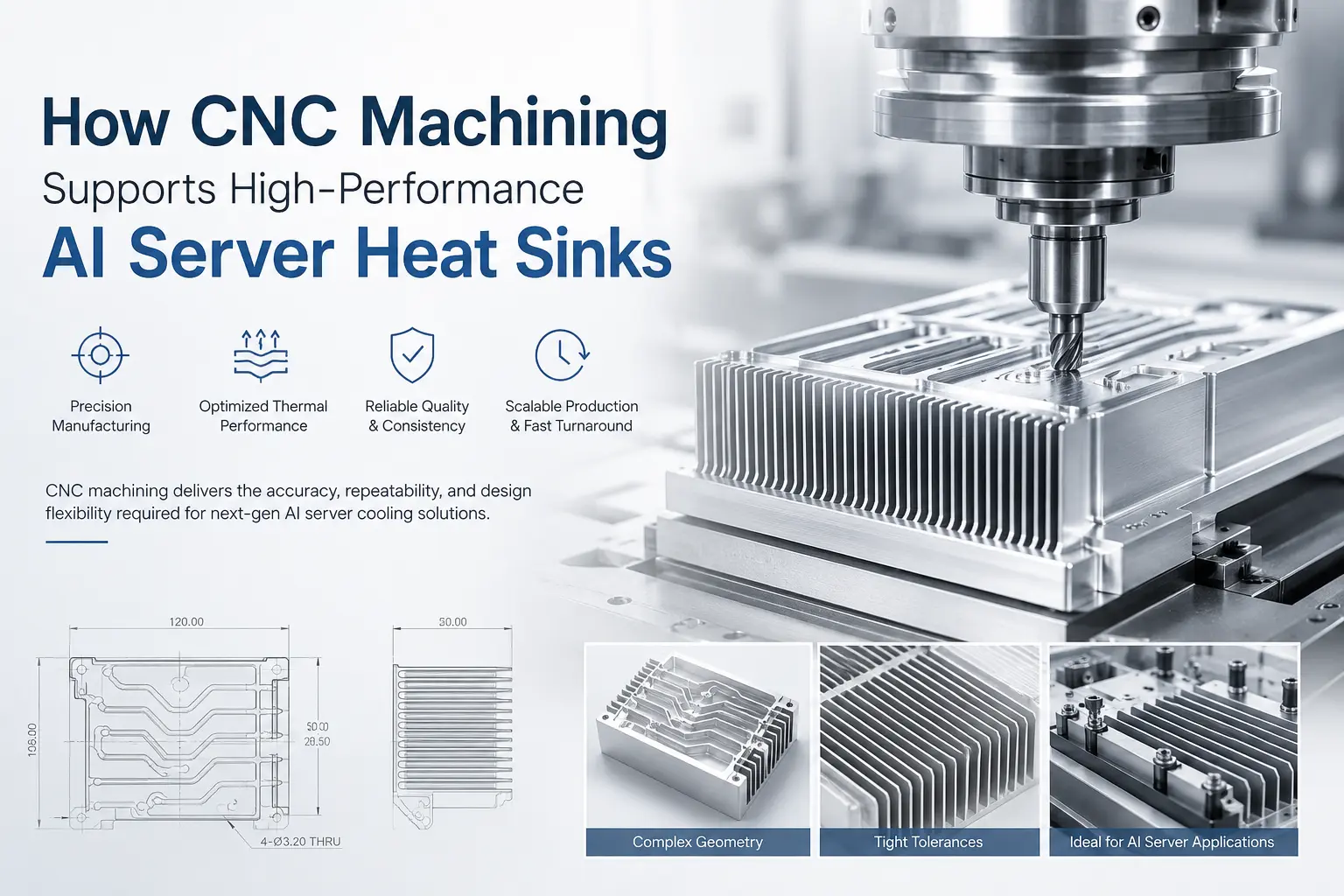
Artificial intelligence is transforming industries at an unprecedented pace, driving a massive increase in demand for high-performance computing infrastructure. From large language models and generative AI applications to autonomous systems and advanced data analytics, modern AI workloads require enormous computational resources that far exceed those of traditional enterprise applications. As organizations deploy increasingly powerful servers equipped with advanced GPUs, AI accelerators, and high-density processors, thermal management has become one of the most critical challenges facing data center operators and hardware manufacturers. Without effective cooling solutions, excessive heat can negatively impact system performance, reduce component lifespan, increase energy consumption, and lead to unexpected downtime.
Among the various thermal management technologies used in AI infrastructure, heat sinks remain one of the most fundamental and widely adopted cooling components. A heat sink is designed to absorb thermal energy generated by electronic components and transfer it into the surrounding environment. Whether used in air-cooled servers, liquid-assisted cooling systems, or hybrid thermal architectures, heat sinks play a vital role in maintaining stable operating temperatures and ensuring reliable performance. As AI hardware continues to evolve, heat sink designs have become increasingly sophisticated, incorporating complex fin geometries, optimized airflow channels, and advanced materials to improve cooling efficiency.
The manufacturing requirements for modern AI server heat sinks are significantly more demanding than those of conventional cooling components. High thermal loads require extremely accurate contact surfaces, tight dimensional tolerances, and carefully engineered fin structures capable of maximizing heat dissipation within limited installation space. Even small deviations in geometry can affect airflow, thermal resistance, and overall cooling performance. As a result, manufacturers must adopt production methods capable of delivering consistent precision and repeatability across every part.
CNC machining has emerged as one of the most effective manufacturing technologies for producing high-performance heat sinks. By utilizing computer-controlled milling and machining processes, manufacturers can create complex thermal management components with exceptional accuracy and surface quality. CNC machining also offers the flexibility to produce prototypes, low-volume production runs, and customized designs without requiring expensive tooling investments. This capability is particularly valuable in the rapidly evolving AI industry, where hardware designs frequently change and thermal solutions must adapt to new performance requirements. In this article, we explore why AI servers generate so much heat, how heat sinks function, and how CNC machining supports the production of advanced cooling solutions for next-generation AI infrastructure.
The thermal demands of AI servers are substantially greater than those of traditional computing systems. While conventional enterprise servers typically handle web hosting, database management, virtualization, and business applications, AI servers are designed to process highly complex computational tasks involving massive datasets and advanced machine learning algorithms. These workloads place sustained pressure on processors and accelerators, resulting in significantly higher power consumption and heat generation. As AI adoption continues to expand across industries, understanding the sources of this thermal output is essential for designing effective cooling systems.
One of the primary reasons AI servers generate more heat is the widespread use of high-performance GPUs and specialized AI accelerators. Unlike standard CPUs, which are optimized for sequential processing, GPUs contain thousands of processing cores capable of performing parallel calculations simultaneously. This architecture dramatically increases computational throughput but also requires considerably more electrical power. Modern AI training GPUs can consume hundreds of watts individually, while multiple GPUs are often installed within a single server. In large-scale AI clusters, the combined power consumption of these accelerators can reach several kilowatts per server, creating substantial thermal loads that must be managed continuously.
Another contributing factor is the nature of AI workloads themselves. Traditional enterprise applications often experience fluctuating utilization levels, allowing processors to operate below peak capacity for significant periods. AI training and inference workloads, however, frequently push hardware resources close to maximum utilization for extended durations. Training large neural networks may require days or even weeks of uninterrupted computation, resulting in continuous heat generation. This sustained thermal output creates challenging conditions for cooling systems and increases the importance of efficient heat transfer mechanisms.
The increasing density of modern data centers further amplifies these challenges. To maximize computational capacity and optimize facility costs, operators are packing more servers into smaller spaces. Higher rack densities mean that more heat is generated within a confined area, making thermal management increasingly difficult. Additionally, rising energy costs have encouraged operators to seek cooling solutions that improve efficiency without compromising performance. As AI hardware continues to become more powerful, traditional cooling methods may struggle to meet thermal requirements, driving demand for advanced heat sinks and precision-engineered cooling components manufactured through processes such as CNC machining.
A heat sink is a thermal management device specifically designed to remove heat from electronic components and transfer it into the surrounding environment. It serves as a critical link between heat-generating devices and cooling systems, helping maintain safe operating temperatures and ensuring stable performance. Heat sinks are widely used in computers, telecommunications equipment, industrial electronics, automotive systems, power supplies, and data center infrastructure. In AI servers, where processors and accelerators generate exceptionally high thermal loads, heat sinks play a central role in preventing overheating and maintaining operational reliability.
The basic function of a heat sink is to increase the rate at which heat can be transferred away from an electronic component. When a processor or GPU is operating, electrical energy is converted into computational work as well as heat. This heat must be removed efficiently to prevent excessive temperatures that could damage components or reduce performance. A heat sink is typically mounted directly onto the heat source using a thermal interface material that improves heat conduction. Thermal energy flows from the processor into the heat sink base and is then distributed throughout the structure before being released into the surrounding air or cooling fluid.
One of the most important features of a heat sink is its fin structure. Fins significantly increase the available surface area for heat transfer, allowing more thermal energy to be dissipated into the environment. The effectiveness of a heat sink depends heavily on fin geometry, including fin height, thickness, spacing, orientation, and overall layout. Engineers carefully optimize these parameters to balance airflow resistance, manufacturing feasibility, and thermal performance. In AI server applications, where space is limited and heat loads are extremely high, advanced fin designs are often required to maximize cooling efficiency.
Material selection also plays a crucial role in heat sink performance. Aluminum is commonly used because it offers a favorable combination of thermal conductivity, lightweight characteristics, corrosion resistance, and cost-effectiveness. Copper provides significantly higher thermal conductivity and is often selected for applications requiring maximum heat transfer performance. Some heat sinks combine both materials to achieve an optimal balance between cooling capability, weight, and manufacturing cost. As thermal requirements continue to increase within AI infrastructure, engineers are developing increasingly sophisticated heat sink designs that rely on precision manufacturing processes to achieve the required performance levels. CNC machining enables the production of these advanced geometries while maintaining the accuracy and consistency necessary for demanding thermal management applications.
The performance of a heat sink depends not only on its design but also on the accuracy with which that design is manufactured. Modern AI server heat sinks often feature intricate fin structures, tight dimensional tolerances, and highly engineered thermal interfaces that require exceptional manufacturing precision. CNC machining has become one of the most preferred production methods for these components because it combines accuracy, flexibility, repeatability, and material compatibility. These advantages make CNC machining particularly valuable for producing advanced cooling solutions used in AI servers and data center equipment.
One of the most significant benefits of CNC machining is its ability to achieve extremely high dimensional accuracy. Heat sinks must maintain precise contact surfaces where they interface with processors, GPUs, or other heat-generating components. Any irregularities in flatness or surface quality can increase thermal resistance and reduce heat transfer efficiency. CNC machining allows manufacturers to achieve tight tolerances and excellent surface finishes, ensuring optimal thermal contact and consistent performance. This level of precision is especially important for AI hardware, where even small temperature reductions can contribute to improved computational stability and energy efficiency.
CNC machining also enables the production of complex fin geometries that would be difficult or impossible to achieve using many traditional manufacturing methods. Modern AI heat sinks frequently incorporate thin fins, deep channels, intricate airflow pathways, and customized designs tailored to specific cooling requirements. Advanced multi-axis CNC milling machines can create these features with exceptional repeatability while maintaining structural integrity. This capability allows engineers to optimize heat sink performance without being limited by manufacturing constraints.
Another major advantage is material flexibility. CNC machining supports a wide range of thermally conductive materials, including aluminum, copper, brass, and specialized thermal management alloys. Manufacturers can select the most appropriate material based on performance targets, weight requirements, corrosion resistance, and budget considerations. Furthermore, CNC machining is highly suitable for rapid prototyping and low-volume production, allowing engineers to test multiple design iterations before committing to large-scale manufacturing. In the fast-moving AI industry, where hardware architectures evolve rapidly and thermal requirements continue to increase, this flexibility provides a significant competitive advantage. By enabling precise, efficient, and customizable manufacturing, CNC machining plays a vital role in supporting the development of high-performance heat sinks for next-generation AI servers and data center cooling systems.
Selecting the right material is one of the most important decisions when designing a heat sink for AI server applications. Material properties directly influence thermal conductivity, weight, manufacturability, durability, and overall system cost. As AI processors continue to increase in power density, engineers must carefully balance cooling performance with practical manufacturing considerations. The most common materials used in AI server heat sinks are aluminum and copper, although hybrid solutions are becoming increasingly popular in high-performance computing environments.
Aluminum is the most widely used heat sink material due to its excellent combination of thermal performance, lightweight properties, corrosion resistance, and affordability. Aluminum alloys such as 6061 and 6063 are commonly selected for cooling applications because they offer good machinability while maintaining sufficient thermal conductivity for most server environments.
Another advantage of aluminum is its low density. Compared with copper, aluminum weighs approximately one-third as much, making it particularly attractive for large data center deployments where equipment weight can become a significant consideration. Lower component weight also reduces stress on mounting structures and simplifies installation.
In addition, aluminum can be anodized to improve corrosion resistance and provide an attractive surface finish. Black anodized heat sinks are commonly used because the coating can enhance thermal radiation while also protecting the material from environmental degradation.
For applications requiring maximum thermal performance, copper is often the preferred choice. Copper offers significantly higher thermal conductivity than aluminum, allowing heat to spread more rapidly throughout the heat sink structure. This characteristic is especially valuable in AI servers equipped with high-power GPUs and AI accelerators that generate substantial localized heat.
Copper heat sinks can reduce thermal resistance and improve cooling efficiency, helping processors maintain higher performance levels without thermal throttling. However, copper is considerably heavier and more expensive than aluminum, which can increase manufacturing costs and system weight.
Because copper is softer than many aluminum alloys, machining complex fin structures may require additional processing considerations. Nevertheless, the thermal advantages often justify the increased cost in mission-critical AI infrastructure.
To balance performance and cost, many modern heat sinks combine copper and aluminum within a single assembly. A common approach involves using a copper base to maximize heat absorption from the processor while utilizing aluminum fins to reduce weight and manufacturing expenses.
This hybrid design leverages the strengths of both materials and has become increasingly popular in high-performance servers, AI training systems, and advanced data center cooling applications. CNC machining plays an important role in producing these assemblies with the precision necessary to ensure effective thermal transfer between materials.
Manufacturing high-performance heat sinks requires more than simply shaping a block of metal. The cooling efficiency of a heat sink depends heavily on geometric accuracy, fin quality, surface finish, and dimensional consistency. CNC milling provides the level of precision necessary to meet these demanding requirements while supporting a wide range of heat sink designs.
One of the most critical features of a heat sink is the mounting surface that contacts the processor or GPU. Any irregularities in this area can increase thermal resistance and reduce cooling effectiveness. Face milling is commonly used to create exceptionally flat and smooth surfaces that promote efficient heat transfer.
Advanced CNC machines can achieve tight flatness tolerances across large surfaces, ensuring uniform contact pressure and improved thermal performance. This process is particularly important for AI servers, where high-power processors generate significant thermal loads.
Heat sink fins are responsible for increasing surface area and facilitating heat dissipation. CNC slot milling allows manufacturers to create narrow channels and thin fin structures that maximize cooling efficiency within limited installation space.
As AI hardware becomes more powerful, heat sink designs increasingly incorporate taller fins, thinner walls, and more complex airflow geometries. Multi-axis CNC machining enables the production of these intricate structures while maintaining dimensional accuracy and structural integrity.
Many heat sink manufacturers utilize high-speed CNC machining to improve production efficiency while maintaining precision. High spindle speeds and optimized toolpaths help reduce machining time, improve surface quality, and lower manufacturing costs.
For prototype development and low-volume production, high-speed machining offers a significant advantage by allowing rapid design iterations without the need for dedicated tooling.
Modern heat sink designs often include features that cannot be efficiently produced using traditional three-axis machining. Five-axis CNC machines provide greater flexibility by allowing tools to approach the workpiece from multiple angles.
This capability enables manufacturers to create complex cooling channels, optimized airflow paths, and customized geometries tailored to specific AI server architectures. As cooling requirements continue to evolve, multi-axis machining is becoming increasingly important for advanced thermal management solutions.
As AI processors become more powerful, heat sink designs must deliver greater cooling performance within increasingly limited spaces. One of the most effective ways to increase heat dissipation is by incorporating high-density fin structures. However, manufacturing these features presents significant engineering and production challenges.
Modern AI heat sinks often contain extremely thin fins designed to maximize surface area. While these structures improve cooling efficiency, they can also become vulnerable to deformation during machining. Excessive cutting forces may cause fins to bend, vibrate, or break, leading to dimensional inaccuracies and reduced performance.
Manufacturers must carefully optimize machining parameters, cutting tools, and fixturing methods to maintain structural integrity throughout the production process.
As fin spacing becomes narrower, tool accessibility becomes increasingly restricted. Standard cutting tools may struggle to reach deep channels without causing interference or compromising accuracy. Specialized tooling and advanced machining strategies are often required to produce these features successfully.
The challenge becomes even greater when heat sinks incorporate complex internal geometries or customized airflow channels designed for specific AI server configurations.
Machining dense fin structures generates significant heat and produces large quantities of metal chips. If chips become trapped between fins, they can damage delicate features and affect surface quality. Effective coolant delivery and chip evacuation strategies are therefore essential to maintaining machining accuracy.
Proper thermal control during manufacturing also helps minimize material distortion and ensures consistent dimensional stability across the entire component.
Engineers frequently face trade-offs between thermal performance and manufacturing practicality. While thinner fins and narrower spacing may improve heat transfer, these features also increase machining complexity and production costs.
CNC machining provides the flexibility needed to evaluate multiple design options and identify solutions that deliver the best balance between cooling efficiency, manufacturability, and overall cost-effectiveness.
下面接前面的内容,建议继续用这四个章节:
Selecting the right material is one of the most important decisions when designing a heat sink for AI server applications. Material properties directly influence thermal conductivity, weight, manufacturability, durability, and overall system cost. As AI processors continue to increase in power density, engineers must carefully balance cooling performance with practical manufacturing considerations. The most common materials used in AI server heat sinks are aluminum and copper, although hybrid solutions are becoming increasingly popular in high-performance computing environments.
Aluminum is the most widely used heat sink material due to its excellent combination of thermal performance, lightweight properties, corrosion resistance, and affordability. Aluminum alloys such as 6061 and 6063 are commonly selected for cooling applications because they offer good machinability while maintaining sufficient thermal conductivity for most server environments.
Another advantage of aluminum is its low density. Compared with copper, aluminum weighs approximately one-third as much, making it particularly attractive for large data center deployments where equipment weight can become a significant consideration. Lower component weight also reduces stress on mounting structures and simplifies installation.
In addition, aluminum can be anodized to improve corrosion resistance and provide an attractive surface finish. Black anodized heat sinks are commonly used because the coating can enhance thermal radiation while also protecting the material from environmental degradation.
For applications requiring maximum thermal performance, copper is often the preferred choice. Copper offers significantly higher thermal conductivity than aluminum, allowing heat to spread more rapidly throughout the heat sink structure. This characteristic is especially valuable in AI servers equipped with high-power GPUs and AI accelerators that generate substantial localized heat.
Copper heat sinks can reduce thermal resistance and improve cooling efficiency, helping processors maintain higher performance levels without thermal throttling. However, copper is considerably heavier and more expensive than aluminum, which can increase manufacturing costs and system weight.
Because copper is softer than many aluminum alloys, machining complex fin structures may require additional processing considerations. Nevertheless, the thermal advantages often justify the increased cost in mission-critical AI infrastructure.
To balance performance and cost, many modern heat sinks combine copper and aluminum within a single assembly. A common approach involves using a copper base to maximize heat absorption from the processor while utilizing aluminum fins to reduce weight and manufacturing expenses.
This hybrid design leverages the strengths of both materials and has become increasingly popular in high-performance servers, AI training systems, and advanced data center cooling applications. CNC machining plays an important role in producing these assemblies with the precision necessary to ensure effective thermal transfer between materials.
Manufacturing high-performance heat sinks requires more than simply shaping a block of metal. The cooling efficiency of a heat sink depends heavily on geometric accuracy, fin quality, surface finish, and dimensional consistency. CNC milling provides the level of precision necessary to meet these demanding requirements while supporting a wide range of heat sink designs.
One of the most critical features of a heat sink is the mounting surface that contacts the processor or GPU. Any irregularities in this area can increase thermal resistance and reduce cooling effectiveness. Face milling is commonly used to create exceptionally flat and smooth surfaces that promote efficient heat transfer.
Advanced CNC machines can achieve tight flatness tolerances across large surfaces, ensuring uniform contact pressure and improved thermal performance. This process is particularly important for AI servers, where high-power processors generate significant thermal loads.
Heat sink fins are responsible for increasing surface area and facilitating heat dissipation. CNC slot milling allows manufacturers to create narrow channels and thin fin structures that maximize cooling efficiency within limited installation space.
As AI hardware becomes more powerful, heat sink designs increasingly incorporate taller fins, thinner walls, and more complex airflow geometries. Multi-axis CNC machining enables the production of these intricate structures while maintaining dimensional accuracy and structural integrity.
Many heat sink manufacturers utilize high-speed CNC machining to improve production efficiency while maintaining precision. High spindle speeds and optimized toolpaths help reduce machining time, improve surface quality, and lower manufacturing costs.
For prototype development and low-volume production, high-speed machining offers a significant advantage by allowing rapid design iterations without the need for dedicated tooling.
Modern heat sink designs often include features that cannot be efficiently produced using traditional three-axis machining. Five-axis CNC machines provide greater flexibility by allowing tools to approach the workpiece from multiple angles.
This capability enables manufacturers to create complex cooling channels, optimized airflow paths, and customized geometries tailored to specific AI server architectures. As cooling requirements continue to evolve, multi-axis machining is becoming increasingly important for advanced thermal management solutions.
As AI processors become more powerful, heat sink designs must deliver greater cooling performance within increasingly limited spaces. One of the most effective ways to increase heat dissipation is by incorporating high-density fin structures. However, manufacturing these features presents significant engineering and production challenges.
Modern AI heat sinks often contain extremely thin fins designed to maximize surface area. While these structures improve cooling efficiency, they can also become vulnerable to deformation during machining. Excessive cutting forces may cause fins to bend, vibrate, or break, leading to dimensional inaccuracies and reduced performance.
Manufacturers must carefully optimize machining parameters, cutting tools, and fixturing methods to maintain structural integrity throughout the production process.
As fin spacing becomes narrower, tool accessibility becomes increasingly restricted. Standard cutting tools may struggle to reach deep channels without causing interference or compromising accuracy. Specialized tooling and advanced machining strategies are often required to produce these features successfully.
The challenge becomes even greater when heat sinks incorporate complex internal geometries or customized airflow channels designed for specific AI server configurations.
Machining dense fin structures generates significant heat and produces large quantities of metal chips. If chips become trapped between fins, they can damage delicate features and affect surface quality. Effective coolant delivery and chip evacuation strategies are therefore essential to maintaining machining accuracy.
Proper thermal control during manufacturing also helps minimize material distortion and ensures consistent dimensional stability across the entire component.
Engineers frequently face trade-offs between thermal performance and manufacturing practicality. While thinner fins and narrower spacing may improve heat transfer, these features also increase machining complexity and production costs.
CNC machining provides the flexibility needed to evaluate multiple design options and identify solutions that deliver the best balance between cooling efficiency, manufacturability, and overall cost-effectiveness.
When manufacturing heat sinks for AI servers, several production methods are available, including CNC machining, die casting, and aluminum extrusion. Each process offers unique advantages and limitations depending on performance requirements, production volume, and design complexity.
CNC machining is widely regarded as the most flexible manufacturing method for high-performance heat sinks. It allows engineers to produce complex geometries, tight tolerances, and customized designs without requiring expensive tooling. CNC machining is ideal for prototypes, low-volume production, and specialized AI cooling applications where performance is the highest priority.
Die casting is often used for high-volume production of complex metal components. The process offers excellent repeatability and lower unit costs at large production quantities. However, tooling costs can be substantial, and thermal conductivity may be reduced due to material porosity. Design modifications can also be expensive once tooling has been produced.
Extrusion is one of the most cost-effective methods for manufacturing simple heat sink profiles. Large quantities can be produced efficiently, making extrusion attractive for standardized cooling solutions. However, extrusion is limited in terms of geometric complexity and may not be suitable for advanced AI heat sinks requiring customized fin structures or optimized airflow pathways.
For next-generation AI servers, thermal performance requirements are becoming increasingly demanding. While extrusion and die casting remain valuable for certain applications, CNC machining offers unmatched design freedom, precision, and customization capabilities. As AI infrastructure continues to evolve, CNC-machined heat sinks are expected to play an increasingly important role in supporting high-density computing environments and advanced thermal management systems.
As artificial intelligence applications continue to expand, cooling requirements are becoming increasingly diverse. A standard off-the-shelf heat sink may perform adequately for conventional computing equipment, but AI servers often operate under unique thermal conditions that require customized cooling solutions. Different processors, GPUs, power modules, airflow configurations, and installation environments create varying thermal management challenges. As a result, custom heat sinks have become an important component in modern AI infrastructure.
Every AI system generates heat differently. Training clusters designed for large language models may prioritize maximum cooling capacity, while edge AI systems may require compact and lightweight thermal solutions. Custom heat sinks allow engineers to optimize dimensions, fin geometry, mounting features, and airflow characteristics based on specific operating conditions.
By tailoring the design to the application, manufacturers can reduce thermal resistance, improve cooling efficiency, and maximize hardware performance. This level of optimization is often impossible with standard heat sink products.
Modern AI data centers continue to increase rack density to maximize computing power within limited floor space. However, higher density also means greater thermal challenges. Custom heat sinks can be engineered to fit confined spaces while maintaining sufficient cooling capacity.
Advanced designs may incorporate taller fins, specialized airflow channels, integrated mounting features, or hybrid copper-aluminum structures. These customized solutions help data center operators maintain reliable performance even under demanding workloads.
Thermal management designs often require multiple iterations before reaching optimal performance. CNC machining enables rapid prototyping without expensive tooling investments, allowing engineers to evaluate and refine designs quickly.
Prototype heat sinks can be tested under real operating conditions, providing valuable thermal performance data that supports further optimization. This approach shortens development cycles and accelerates product deployment for AI infrastructure projects.
As AI hardware continues to evolve, thermal management technologies are advancing beyond traditional air cooling. Many liquid cooling systems, cold plates, and hybrid thermal solutions rely on precision-machined components to achieve their performance objectives.
Custom CNC-machined heat sinks provide the flexibility required to support these emerging technologies. By combining advanced engineering with precision manufacturing, companies can develop cooling solutions capable of meeting the thermal demands of next-generation AI systems.
Producing high-performance heat sinks requires more than advanced equipment. It demands a combination of engineering expertise, precision manufacturing capabilities, material knowledge, and strict quality control procedures. At WinsunProto, we help customers transform thermal management concepts into reliable, production-ready components for AI servers, data centers, telecommunications equipment, and other high-performance applications.
Our facility is equipped with modern CNC milling and turning equipment capable of producing complex heat sink geometries with exceptional accuracy. Whether the project requires thin fins, deep channels, intricate mounting features, or customized thermal structures, our team can manufacture components that meet demanding performance requirements.
We support both prototype and production quantities, providing flexibility throughout the product development process.
Heat sink performance depends heavily on material selection and manufacturing quality. WinsunProto has extensive experience machining aluminum alloys, copper alloys, and hybrid thermal management components.
Our engineering team understands the challenges associated with producing high-density fin structures and can recommend manufacturing solutions that balance thermal performance, manufacturability, and cost efficiency.
AI infrastructure projects often operate under aggressive development schedules. Our rapid prototyping services enable customers to validate designs quickly and accelerate time-to-market.
By leveraging efficient CNC machining processes and streamlined project management, we help reduce development delays while maintaining strict quality standards.
Every heat sink must meet precise dimensional and thermal performance requirements. Our quality control procedures include dimensional inspection, process verification, and detailed production monitoring to ensure consistent results.
From prototype development to full-scale production, we focus on delivering components that meet customer specifications and perform reliably in demanding environments.
WinsunProto serves customers worldwide, providing CNC machining, sheet metal fabrication, injection molding, and rapid manufacturing services. With extensive export experience and flexible logistics solutions, we help customers simplify sourcing while maintaining competitive pricing and dependable delivery schedules.
Whether you need a single prototype or ongoing production support, our team is ready to assist with your thermal management manufacturing requirements.
The rapid advancement of artificial intelligence is driving unprecedented growth in computing power, creating new challenges for thermal management throughout the data center industry. As processors, GPUs, and AI accelerators continue to increase in performance, efficient cooling solutions have become essential for maintaining system reliability, energy efficiency, and long-term operational stability.
Heat sinks remain one of the most important components in modern cooling systems. By transferring heat away from critical electronic devices, they help prevent overheating and support consistent performance under demanding workloads. However, the increasing thermal density of AI hardware requires heat sinks with more sophisticated designs, tighter tolerances, and higher manufacturing precision than ever before.
CNC machining has become a key enabling technology for producing these advanced thermal management solutions. Its ability to create complex geometries, maintain exceptional dimensional accuracy, support a variety of materials, and facilitate rapid design iterations makes it ideally suited for AI server heat sink manufacturing. From aluminum and copper heat sinks to customized cooling components for high-density computing environments, CNC machining provides the flexibility and precision required to meet evolving industry demands.
As AI infrastructure continues to expand, the importance of efficient thermal management will only increase. Manufacturers capable of delivering high-quality, precision-machined heat sinks will play a critical role in supporting the next generation of artificial intelligence, high-performance computing, and data center technologies.
