Our Location
304 North Cardinal St.
Dorchester Center, MA 02124

304 North Cardinal St.
Dorchester Center, MA 02124

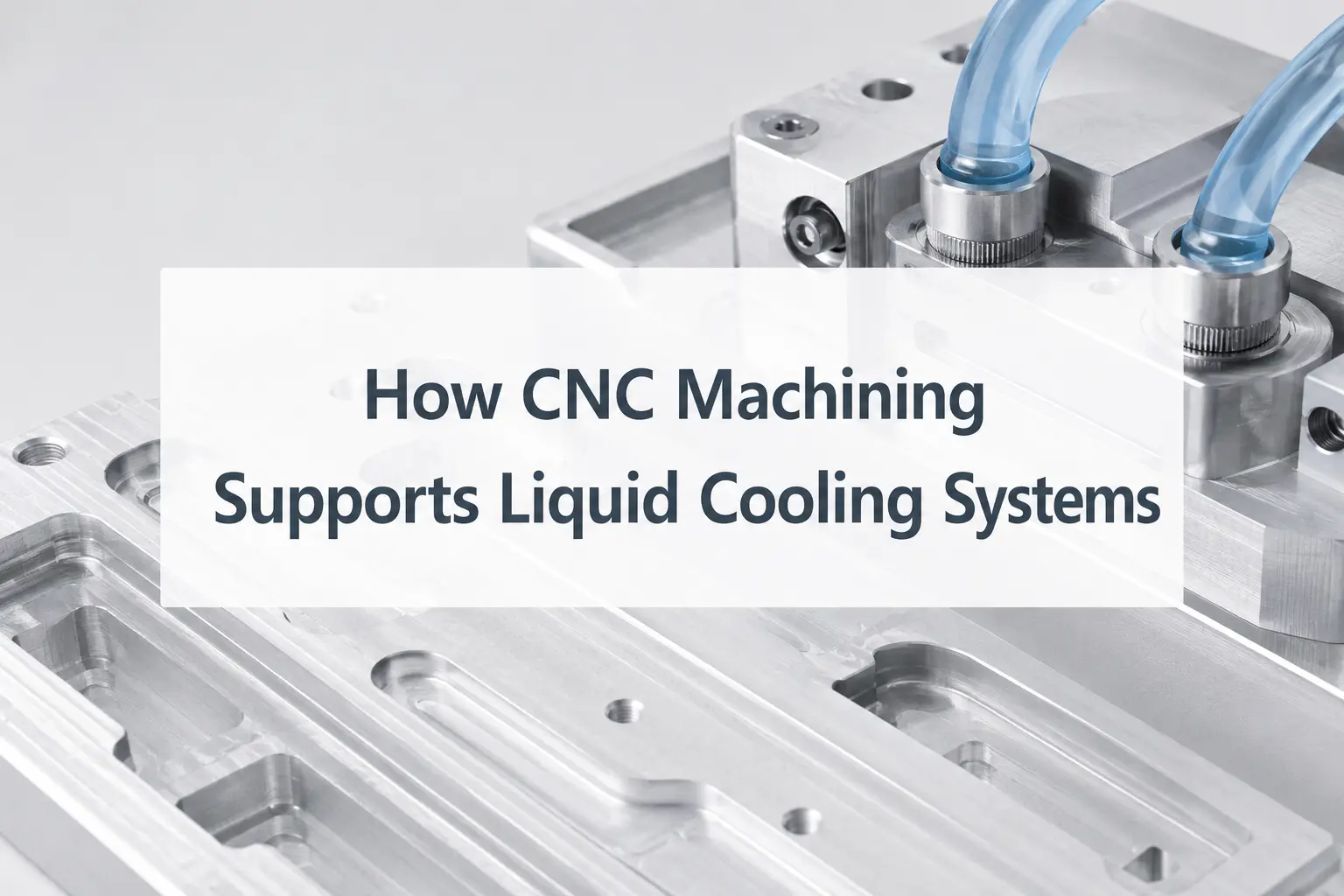
Artificial intelligence is rapidly transforming industries across the world, from autonomous driving and cloud computing to advanced robotics, medical research, and large language models. As AI applications continue to expand, the demand for high-performance computing infrastructure has grown at an unprecedented rate. Modern AI workloads require enormous computational power, especially during model training and real-time inference processes. This surge in computing demand has significantly increased the power density of servers and data centers, creating major thermal management challenges for the industry.
Traditional air-cooling systems are no longer sufficient for many advanced AI environments. High-performance GPUs, AI accelerators, and dense server racks generate tremendous amounts of heat during operation. If this heat is not effectively removed, system performance can decline rapidly due to thermal throttling, while long-term reliability and hardware lifespan may also be negatively affected. As a result, liquid cooling systems have become one of the most important technologies supporting the next generation of AI infrastructure.
The rapid adoption of artificial intelligence has accelerated the construction of hyperscale data centers worldwide. AI companies, cloud service providers, and high-performance computing facilities are investing heavily in GPU clusters capable of handling increasingly complex computational tasks. Compared with traditional computing workloads, AI training requires significantly higher processing power and energy consumption. Modern AI servers often operate continuously under heavy loads, generating heat levels that exceed the practical limits of conventional air cooling systems.
This shift has created a strong demand for more efficient thermal management solutions. Liquid cooling technology offers far superior heat transfer performance compared with air cooling because liquids can absorb and transport heat much more effectively. By circulating coolant directly near high-temperature components such as CPUs and GPUs, liquid cooling systems can maintain stable operating temperatures even under extreme workloads. This allows AI infrastructure to operate more efficiently while supporting higher rack densities and improved overall system reliability.
As liquid cooling adoption continues to increase, the importance of precision manufacturing technologies has also grown significantly. Liquid cooling systems rely on highly engineered components such as cold plates, manifolds, connectors, and cooling channels. These components require extremely accurate dimensions, smooth surface finishes, and reliable sealing interfaces to ensure optimal cooling performance and leak-free operation.
This is where CNC machining becomes essential. CNC machining provides the precision, repeatability, and flexibility required to manufacture complex liquid cooling components for AI applications. Through advanced CNC milling, turning, drilling, and multi-axis machining processes, manufacturers can create highly detailed coolant pathways and thermal management structures that would be difficult or impossible to achieve using traditional manufacturing methods.
In modern AI infrastructure, CNC machining is not simply a manufacturing method; it is a critical enabling technology that directly impacts cooling efficiency, system stability, and long-term reliability. As AI hardware continues evolving toward higher power densities and more compact system designs, the role of precision CNC machining in liquid cooling systems will only become more important.
The artificial intelligence industry is pushing computing hardware to unprecedented performance levels. Advanced AI applications such as machine learning, deep learning, natural language processing, and generative AI require massive computational resources that generate enormous amounts of heat. As AI servers become more powerful and compact, thermal management has emerged as one of the most critical challenges facing data center operators and hardware manufacturers. This is why liquid cooling has become an essential technology in modern AI infrastructure.
Modern AI servers rely heavily on high-performance GPUs and specialized AI accelerators designed to process enormous volumes of data simultaneously. These processors consume significantly more power than traditional CPUs, especially during AI model training. In large AI clusters, hundreds or even thousands of GPUs may operate continuously under maximum load conditions. This creates extremely high thermal output within server racks.
Traditional air cooling systems struggle to handle these increasing heat loads efficiently. As power density rises, airflow becomes more difficult to manage, and cooling fans must work harder to maintain acceptable operating temperatures. This increases overall energy consumption while also generating additional noise and operational costs. In many high-density AI environments, air cooling alone can no longer provide sufficient thermal performance.
Liquid cooling addresses this challenge by transferring heat more efficiently than air. Coolants can absorb and transport large amounts of thermal energy directly from critical components such as GPUs and CPUs. This allows liquid cooling systems to maintain lower and more stable temperatures even during demanding AI workloads.
Energy efficiency has become a major concern for modern AI data centers. As AI infrastructure scales globally, electricity consumption continues to increase rapidly. Cooling systems account for a significant portion of total data center energy usage, making thermal management efficiency extremely important.
Liquid cooling systems can greatly improve overall energy efficiency because they reduce the need for high-speed fans and excessive air circulation. By removing heat more effectively at the source, liquid cooling lowers the overall cooling load within the facility. Many advanced AI data centers use direct-to-chip liquid cooling or immersion cooling technologies to achieve better thermal efficiency and lower Power Usage Effectiveness (PUE) values.
In addition to reducing energy consumption, liquid cooling can also help lower operational costs over time. Improved thermal management reduces the risk of hardware overheating and failure, helping extend component lifespan and improve system reliability. Stable operating temperatures are particularly important for expensive AI hardware investments, where downtime or thermal damage can result in substantial financial losses.
One of the biggest advantages of liquid cooling is its ability to support higher rack densities. AI infrastructure providers are constantly seeking ways to maximize computing performance within limited physical space. However, higher rack density also means greater heat concentration, which traditional air cooling systems may not be able to manage effectively.
Liquid cooling enables much denser server configurations by removing heat more efficiently from high-power components. This allows data centers to deploy more computing power within the same footprint while maintaining stable thermal conditions. As AI models continue growing larger and more computationally demanding, liquid cooling will become increasingly necessary to support future infrastructure requirements.
The rapid growth of AI is also driving innovation in cooling technologies. Advanced cooling solutions such as cold plates, liquid-cooled manifolds, and immersion cooling systems require highly precise manufacturing processes to ensure performance and reliability. As a result, industries such as CNC machining play a critical role in enabling the continued expansion of AI infrastructure worldwide.
CNC machining, short for Computer Numerical Control machining, is a highly precise manufacturing process used to produce complex parts and components through automated machine tools. CNC technology allows manufacturers to control cutting tools and machining operations using computer-generated instructions, enabling extremely accurate and repeatable production. Today, CNC machining is widely used across industries such as aerospace, automotive, medical devices, electronics, robotics, and increasingly, liquid cooling systems for AI infrastructure.
In CNC machining, digital design files created using CAD software are converted into machine-readable instructions known as G-code. These instructions guide the movement of cutting tools and machine axes with exceptional precision. CNC machines can perform various manufacturing operations including milling, turning, drilling, tapping, and surface finishing.
Unlike manual machining, CNC machining minimizes human error while delivering consistent production quality. Modern CNC machines are capable of operating on multiple axes simultaneously, allowing manufacturers to create highly complex geometries and internal structures. This level of precision is especially important in liquid cooling applications where even minor dimensional deviations can affect thermal performance, coolant flow, and sealing reliability.
CNC machining is also highly flexible. Manufacturers can efficiently produce both prototypes and large production volumes while maintaining tight tolerances and excellent repeatability. This makes CNC machining ideal for industries where performance, reliability, and customization are critical.
Liquid cooling systems require precision-engineered components capable of handling coolant flow, heat transfer, and sealing under demanding operating conditions. Components such as cold plates, manifolds, pump housings, connectors, and cooling channels often contain highly detailed internal structures that must be manufactured with exceptional accuracy.
CNC machining enables manufacturers to create these complex thermal management components with precise dimensions and smooth surface finishes. For example, CNC milling can produce intricate coolant channels inside cold plates, optimizing fluid flow and maximizing heat dissipation efficiency. Tight machining tolerances help ensure proper sealing between components, reducing the risk of coolant leakage in critical AI systems.
Material compatibility is another important advantage of CNC machining. Liquid cooling components are commonly manufactured from aluminum, copper, stainless steel, and specialty alloys selected for their thermal conductivity and corrosion resistance. CNC machining provides the flexibility to process these materials while maintaining high dimensional accuracy and surface quality.
As AI computing power continues increasing, the performance requirements for liquid cooling systems are becoming more demanding. Modern AI hardware generates significantly higher thermal loads than traditional computing systems, requiring more advanced cooling technologies and more precise manufacturing solutions.
CNC machining plays a direct role in supporting the reliability and efficiency of AI infrastructure. Precision-manufactured cooling components help improve heat transfer efficiency, reduce thermal resistance, and ensure stable long-term system operation. In many cases, the quality of CNC machining directly affects the overall performance of the liquid cooling system itself.
Additionally, the fast-paced development cycle of AI hardware creates strong demand for rapid prototyping and customized manufacturing solutions. CNC machining allows manufacturers to quickly develop and modify cooling components based on evolving customer requirements and hardware architectures. This flexibility is particularly valuable in the AI industry, where new server designs and thermal challenges continue emerging at a rapid pace.
As liquid cooling adoption expands across AI data centers and high-performance computing environments, CNC machining will remain a foundational manufacturing technology enabling the next generation of advanced thermal management solutions.
As liquid cooling technology becomes increasingly important in AI infrastructure and high-performance computing environments, the demand for precision-manufactured cooling components continues to grow rapidly. Modern liquid cooling systems rely on highly engineered parts that must maintain excellent thermal conductivity, leak-free sealing performance, and long-term reliability under demanding operating conditions. CNC machining plays a critical role in manufacturing these advanced components with the accuracy and consistency required for modern AI cooling applications.
Cold plates are among the most important components in liquid cooling systems. In AI servers and GPU clusters, cold plates are mounted directly onto high-power processors such as CPUs, GPUs, and AI accelerators. Their primary function is to transfer heat away from the chip and into the circulating coolant as efficiently as possible.
Manufacturing high-performance cold plates requires exceptional machining precision. Internal coolant channels must be carefully designed to optimize coolant flow and maximize heat transfer efficiency. CNC milling enables manufacturers to create highly complex channel geometries, including microchannels and turbulence-enhancing structures that improve cooling performance.
Surface flatness is also critical for cold plate manufacturing. The contact surface between the cold plate and the processor must maintain tight tolerances to ensure efficient thermal transfer. Even minor dimensional variations can reduce cooling efficiency or create sealing problems. CNC machining provides the precision necessary to achieve these demanding specifications consistently.
In addition, many cold plates are manufactured using materials such as aluminum and copper because of their excellent thermal conductivity. CNC machining allows these materials to be processed accurately while maintaining smooth surface finishes and structural integrity.
Manifolds are another essential component in liquid cooling systems. They are responsible for distributing coolant evenly throughout the cooling loop and directing fluid flow between multiple cold plates or server modules. In large AI data centers, liquid cooling systems often require highly customized manifold designs to accommodate dense server configurations and complex cooling architectures.
CNC machining enables the production of manifolds with intricate internal passages and highly accurate fluid routing structures. These components often require multiple threaded ports, sealing grooves, and precise alignment features that must be manufactured within tight tolerances.
Leak prevention is especially important in manifold manufacturing. Poor machining quality can result in coolant leakage, pressure loss, or uneven coolant distribution, all of which can negatively impact cooling performance and system reliability. CNC machining ensures dimensional accuracy and sealing precision, helping maintain stable operation in mission-critical AI infrastructure.
Liquid cooling systems also rely on various connectors, fittings, and pump components to maintain efficient coolant circulation. These parts must withstand continuous fluid pressure while maintaining reliable sealing performance over long operating periods.
CNC turning and milling processes are commonly used to manufacture threaded connectors, quick-disconnect fittings, pump housings, and valve components. Precision machining is essential because improper thread tolerances or surface imperfections may cause coolant leakage or assembly problems.
Many liquid cooling connectors are produced from corrosion-resistant materials such as stainless steel, brass, or anodized aluminum. CNC machining allows manufacturers to maintain excellent dimensional consistency while processing these materials efficiently.
As AI infrastructure becomes more advanced, many cooling systems now require highly customized fluid connection solutions designed for compact server layouts and high-density rack environments. CNC machining offers the flexibility needed to support these evolving design requirements.
Although liquid cooling systems primarily rely on fluid-based heat transfer, many designs still incorporate heat sinks and hybrid thermal management structures to improve overall cooling performance. CNC machining enables the production of highly detailed fin structures and integrated cooling assemblies that combine both liquid and passive cooling methods.
Advanced multi-axis CNC machining can produce complex thermal geometries that improve airflow, increase surface area, and enhance overall heat dissipation efficiency. These structures are particularly valuable in AI hardware environments where thermal loads continue increasing rapidly.
The growing complexity of AI cooling systems is driving greater demand for precision CNC machining capabilities. As thermal management requirements continue evolving, CNC machining remains one of the most important manufacturing technologies supporting the development of reliable and efficient liquid cooling solutions.
The performance of a liquid cooling system depends heavily on the quality and precision of its components. In AI servers, high-performance computing systems, and advanced data center infrastructure, even small manufacturing inaccuracies can negatively impact thermal efficiency, coolant flow, and long-term reliability. CNC machining plays a critical role in ensuring that liquid cooling components meet the demanding performance requirements of modern AI applications.
One of the greatest advantages of CNC machining is its ability to achieve extremely tight tolerances and highly consistent production quality. In liquid cooling systems, precision directly affects thermal performance. Components such as cold plates must maintain excellent contact with processors to maximize heat transfer efficiency.
CNC machining ensures that mating surfaces remain flat and dimensionally accurate, reducing thermal resistance between the cooling component and the heat source. Accurate machining also improves sealing performance, helping prevent coolant leakage and maintaining stable system pressure.
In AI environments where processors generate enormous amounts of heat continuously, maintaining efficient thermal transfer is essential for preventing thermal throttling and preserving hardware performance. Precision CNC machining helps liquid cooling systems operate more effectively under these demanding conditions.
Modern liquid cooling systems often use highly engineered coolant channel designs to optimize fluid flow and improve heat dissipation. These internal structures can include microchannels, serpentine pathways, and turbulence-generating features designed to maximize coolant contact with heated surfaces.
CNC machining enables manufacturers to produce these complex geometries with exceptional accuracy. Multi-axis CNC milling technology allows intricate internal channels to be machined directly into cold plates and cooling components while maintaining smooth surface finishes and precise dimensional control.
Optimized coolant flow paths improve heat transfer efficiency while minimizing pressure drop within the system. This helps maintain stable coolant circulation and reduces the workload on pumps, improving overall energy efficiency within AI cooling infrastructure.
Liquid cooling systems require materials with excellent thermal conductivity, corrosion resistance, and structural stability. CNC machining supports a wide range of materials commonly used in cooling applications, including aluminum, copper, stainless steel, titanium, and specialty alloys.
Copper is particularly valuable for liquid cooling because of its superior thermal conductivity. However, copper machining presents challenges such as burr formation and tool wear. Advanced CNC machining processes allow manufacturers to process copper components accurately while maintaining smooth channel surfaces and tight tolerances.
Aluminum is also widely used because it offers a good balance between thermal performance, weight, and cost. CNC machining allows manufacturers to rapidly produce lightweight aluminum cooling components suitable for large-scale AI infrastructure deployments.
The AI industry evolves extremely quickly, with new server architectures and processor designs emerging regularly. Liquid cooling manufacturers must continuously adapt cooling solutions to meet changing thermal requirements.
CNC machining provides excellent flexibility for rapid prototyping and customized production. Engineers can quickly modify CAD designs and produce updated cooling components without requiring expensive tooling changes. This enables faster product development cycles and allows manufacturers to respond rapidly to customer requirements.
Customization is especially important in AI infrastructure because different server platforms may require unique cooling geometries, connector layouts, or manifold configurations. CNC machining supports both low-volume prototype production and scalable manufacturing for commercial deployment.
As AI hardware continues advancing, the importance of precision machining in liquid cooling performance will continue growing. CNC machining remains one of the most effective manufacturing technologies for delivering the accuracy, flexibility, and reliability required in modern thermal management systems.
Although CNC machining offers many advantages for liquid cooling manufacturing, producing high-performance cooling components also presents several technical challenges. AI infrastructure demands increasingly complex cooling designs, tighter tolerances, and higher reliability standards. As liquid cooling systems become more advanced, CNC manufacturers must overcome a variety of machining difficulties to ensure optimal product performance.
One of the biggest challenges in liquid cooling manufacturing is machining intricate internal coolant channels. Modern cold plates often contain narrow microchannels and highly detailed flow structures designed to maximize heat transfer efficiency.
Machining these features requires advanced CNC capabilities and specialized tooling strategies. Deep or narrow channels can create chip evacuation problems during machining, increasing the risk of tool breakage or poor surface finish quality. Maintaining dimensional consistency throughout complex internal geometries is also difficult, especially when working with thermally conductive materials such as copper.
Multi-axis CNC machining and precision toolpath optimization are often necessary to achieve the required level of accuracy. Manufacturers must carefully balance machining speed, tool wear, and surface quality to maintain consistent production standards.
Liquid cooling systems operate under continuous fluid pressure, making leak prevention one of the most important quality requirements. Even very small machining defects can compromise sealing performance and result in coolant leakage.
CNC-machined sealing grooves, threaded connections, and mating surfaces must maintain extremely tight tolerances to ensure reliable assembly. Surface roughness is also critical because irregular surfaces may reduce gasket effectiveness or create microscopic leakage paths.
To ensure leak-free operation, manufacturers often perform extensive quality inspections including pressure testing, coordinate measuring machine (CMM) verification, and surface finish analysis. CNC machining processes must remain highly stable and repeatable to meet these strict reliability requirements.
Copper is widely used in liquid cooling applications because of its excellent thermal conductivity. However, machining copper is more difficult than machining many other metals. Copper is relatively soft and ductile, which increases the risk of burr formation and material deformation during machining.
Excessive burrs inside coolant channels can negatively affect coolant flow and thermal performance. In some cases, loose burr particles may even contaminate the cooling system. Achieving clean edges and smooth internal surfaces requires careful tooling selection and optimized machining parameters.
Copper also generates higher cutting temperatures and can accelerate tool wear, increasing manufacturing costs. CNC manufacturers must use advanced machining strategies to maintain both efficiency and product quality when processing copper cooling components.
Another major challenge is balancing machining complexity with production cost. High-performance liquid cooling components often require intricate geometries, tight tolerances, and extensive finishing operations. These requirements increase machining time and overall manufacturing expenses.
AI infrastructure customers demand cooling systems that offer excellent thermal performance while remaining cost-effective for large-scale deployment. Manufacturers must carefully optimize component design and machining processes to achieve this balance.
In many cases, engineers work closely with CNC machining teams to simplify manufacturability without compromising cooling efficiency. Design optimization, tooling improvements, and advanced automation technologies all play important roles in reducing production costs while maintaining high product quality.
As AI computing continues evolving toward higher power densities and more demanding thermal requirements, CNC machining challenges will become even more complex. Manufacturers that can deliver high-precision, reliable, and scalable machining solutions will play a key role in the future growth of liquid cooling technology.
As artificial intelligence continues to scale across industries, the thermal requirements of computing systems will keep increasing at a rapid pace. Large-scale AI models, especially generative AI and real-time inference systems, require enormous computational power, which directly translates into higher heat output from GPUs, CPUs, and AI accelerators. This trend is pushing data center operators toward more advanced cooling strategies, with liquid cooling becoming the industry standard for high-density AI workloads.
Future AI servers are expected to operate at even higher power densities than today’s systems, making traditional air cooling increasingly impractical. As a result, technologies such as direct-to-chip liquid cooling and full immersion cooling will continue to expand. These advanced systems require highly precise and complex components, including microchannel cold plates, multi-layer manifolds, and integrated thermal modules. CNC machining will remain essential in enabling these innovations, as it provides the precision and flexibility required to manufacture next-generation cooling hardware.
The increasing complexity of liquid cooling systems is also driving the evolution of CNC machining itself. Future manufacturing processes will rely more heavily on multi-axis machining, high-speed precision milling, and hybrid manufacturing techniques that combine CNC machining with additive processes. These advancements allow manufacturers to produce even more complex internal cooling structures with improved efficiency and reduced production time.
Micro-scale channel machining will become more important as AI chips continue to shrink in size while increasing in power density. CNC machines capable of ultra-precise control will be required to achieve consistent performance in these advanced cooling designs. In addition, automation and digital manufacturing systems will play a larger role in improving repeatability and reducing production costs.
Sustainability will also become a key focus in both AI infrastructure and manufacturing. CNC machining processes will increasingly prioritize material efficiency, reduced waste, and energy optimization. These improvements will help support the growing demand for environmentally friendly data center solutions while maintaining high-performance thermal management capabilities.
Liquid cooling has become a foundational technology for modern AI infrastructure, enabling data centers to handle the extreme heat generated by high-performance computing systems. As AI workloads continue to grow in scale and complexity, efficient thermal management is no longer optional but essential for maintaining system stability, performance, and energy efficiency.
CNC machining plays a critical role in making liquid cooling systems possible. From cold plates and manifolds to connectors and hybrid cooling structures, precision machining ensures that every component meets strict requirements for accuracy, durability, and thermal performance. Without CNC machining, the level of complexity and reliability required in modern AI cooling systems would not be achievable at scale.
As the AI industry continues to evolve, the integration of advanced liquid cooling technologies and high-precision CNC manufacturing will become even more important. Companies that can deliver both engineering expertise and manufacturing capability will be well positioned to support the next generation of AI infrastructure worldwide.
Liquid cooling is a thermal management method that uses coolant fluids to absorb and transfer heat away from high-performance computing components such as GPUs and CPUs. It is widely used in AI data centers because it is more efficient than traditional air cooling, especially in high-density server environments.
Liquid cooling provides significantly higher heat transfer efficiency compared to air cooling. It allows AI servers to operate at lower temperatures, supports higher rack density, reduces energy consumption, and improves overall system reliability. This makes it ideal for modern AI workloads that generate extreme heat.
CNC machining enables the production of highly precise components such as cold plates, manifolds, and connectors. These components require tight tolerances, smooth surface finishes, and complex internal channels to ensure optimal coolant flow and thermal performance. CNC machining ensures accuracy, repeatability, and reliability.
Common materials include aluminum, copper, stainless steel, and specialty alloys. Copper is often used for its high thermal conductivity, while aluminum is popular for its lightweight and cost-effective properties. CNC machining can precisely process all these materials for liquid cooling applications.
Key challenges include machining complex internal channels, maintaining leak-free sealing, processing copper efficiently, and balancing cost with performance. These components require extremely high precision to ensure reliable operation in demanding AI environments.
The future will involve more advanced CNC technologies, including multi-axis machining, micro-channel fabrication, and hybrid manufacturing methods. As AI hardware continues to evolve, CNC machining will play an even more important role in producing next-generation liquid cooling solutions.
