Our Location
304 North Cardinal St.
Dorchester Center, MA 02124

304 North Cardinal St.
Dorchester Center, MA 02124

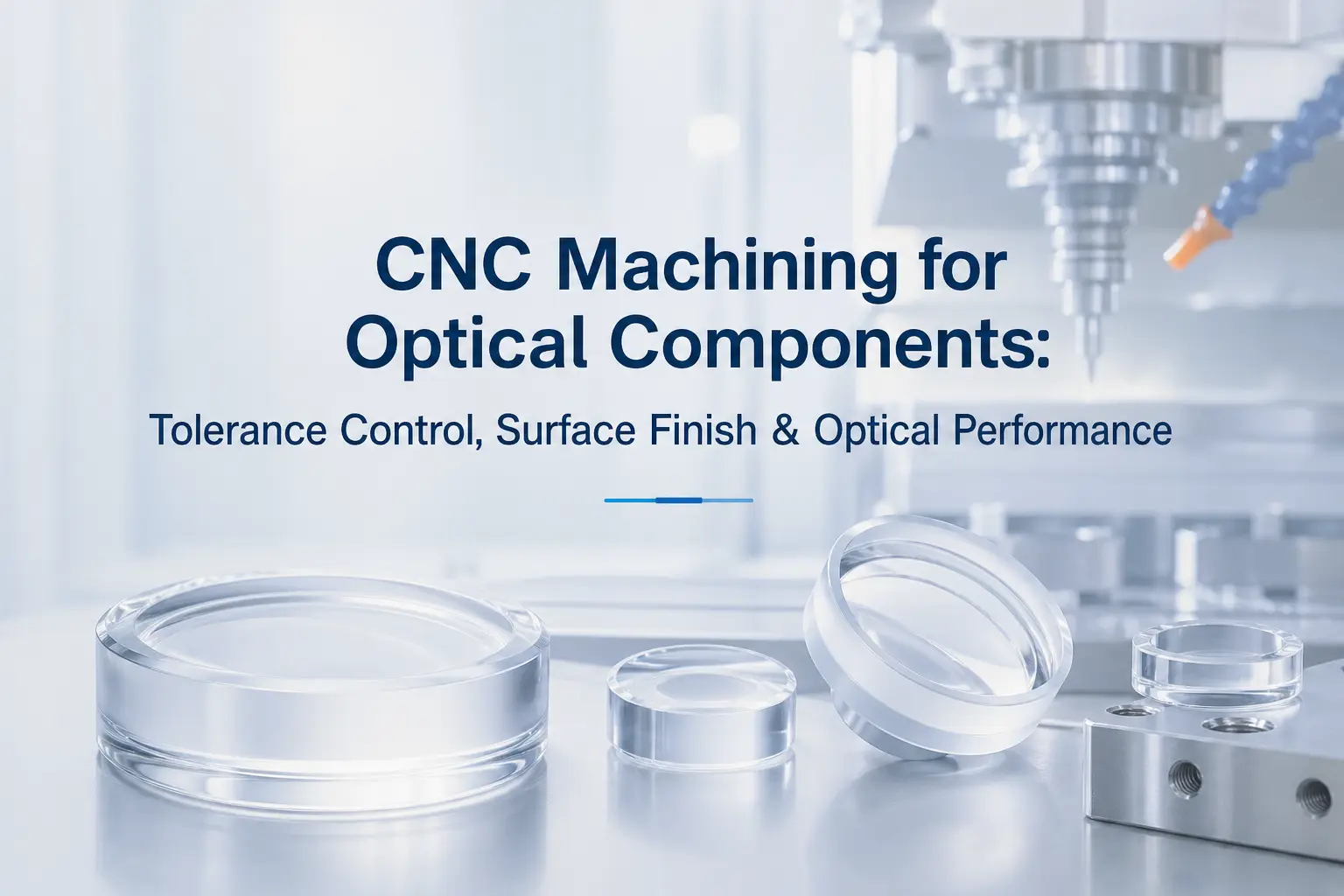
CNC machining for optical components refers to the use of computer-controlled precision manufacturing processes to produce parts that support, align, or house optical systems. Unlike traditional machining, CNC (Computer Numerical Control) allows for extremely high repeatability and precision, which is essential when dealing with optical assemblies where even microns of deviation can impact system performance. Optical components themselves may include lenses or mirrors, but CNC machining is most commonly used to manufacture the mechanical structures that hold and position these elements, such as lens mounts, optical housings, brackets, and alignment fixtures.
In modern industries such as aerospace, medical imaging, laser systems, and photonics, the demand for high-precision optical assemblies is increasing rapidly. CNC machining plays a crucial role in ensuring that these components meet strict dimensional tolerances and geometric accuracy requirements. For a deeper look at how precision machining supports optical applications, you can refer to this detailed guide: https://winsunproto.com/cnc-machining-for-optical-components/.
CNC machined optical components are widely used across multiple high-tech industries. In laser systems, precision-machined housings ensure that optical paths remain stable and aligned. In medical devices such as endoscopes or imaging systems, CNC components provide the structural integrity required for consistent performance. Aerospace and defense applications rely heavily on CNC machining for optical targeting systems, sensors, and surveillance equipment, where reliability and precision are non-negotiable.
Additionally, consumer electronics such as cameras and AR/VR devices also utilize CNC machined optical parts. These applications require not only tight tolerances but also excellent surface finishes to ensure proper fitting and alignment. The versatility of CNC machining allows manufacturers to produce both prototypes and high-volume production parts with consistent quality.
One of the primary benefits of CNC machining for optical components is its ability to achieve tight tolerances with high repeatability. This ensures that every part fits perfectly within an optical assembly, reducing the risk of misalignment. Another major advantage is material flexibility. CNC machining supports a wide range of materials, including aluminum, stainless steel, and high-performance plastics, allowing engineers to select the most suitable material based on application requirements.
Surface finish is another critical advantage. CNC machining can produce smooth surfaces that are essential for minimizing light scattering and improving overall optical performance. Furthermore, CNC processes can be combined with secondary finishing techniques such as anodizing, polishing, or coating to enhance both functional and aesthetic properties.
Finally, CNC machining offers scalability. Whether you need a single prototype or thousands of production parts, the process can be adapted to meet different production volumes without compromising quality. This makes it an ideal solution for companies developing advanced optical systems that require both precision and flexibility.
Precision is not just a desirable feature in optical components—it is absolutely critical. Optical systems rely on the precise alignment of lenses, mirrors, and other elements to function correctly. Even a slight deviation in the positioning of these components can result in significant performance degradation, such as image distortion, reduced resolution, or signal loss.
Mechanical components produced through CNC machining serve as the foundation for maintaining this alignment. If a lens mount is off by just a few microns, it can cause the optical axis to shift, leading to errors that propagate throughout the system. This is especially important in high-precision applications such as laser optics or scientific instruments, where accuracy is paramount.
For manufacturers looking to achieve consistent optical performance, understanding the relationship between machining precision and optical alignment is essential. More insights on this topic can be found here: https://winsunproto.com/cnc-machining-for-optical-components/.
Another critical factor is tolerance stack-up. In an optical assembly, multiple components are combined, each with its own dimensional tolerance. When these tolerances accumulate, they can lead to significant deviations from the intended design. This phenomenon, known as tolerance stack-up, can severely impact optical performance if not properly managed.
For example, if several components each have a tolerance of ±0.01 mm, the cumulative effect could result in a much larger misalignment. This can affect focal length, beam direction, and overall system efficiency. To mitigate this issue, engineers must carefully design components with appropriate tolerances and work closely with CNC machining providers to ensure high precision.
In high-end optical systems such as aerospace sensors, medical imaging devices, and semiconductor inspection equipment, precision requirements are even more stringent. These systems often require tolerances in the range of ±0.005 mm or tighter, along with strict geometric tolerances such as flatness and concentricity.
Achieving this level of precision requires not only advanced CNC machines but also expertise in process control, tooling, and quality inspection. Factors such as thermal expansion, material stability, and machining strategy all play a role in determining the final accuracy of a component.
Ultimately, precision in CNC machining directly translates to better optical performance. It ensures that components fit together seamlessly, maintain alignment under varying conditions, and deliver consistent results over time. This is why investing in high-quality CNC machining is essential for any company working with optical components.
Tolerance requirements for optical components are generally much tighter than those for standard mechanical parts. While general CNC machining may allow tolerances of ±0.01 mm, optical applications often require tolerances of ±0.005 mm or even tighter. These stringent requirements are necessary to ensure proper alignment and optimal optical performance.
Different industries may have specific standards for tolerance, depending on the application. For example, aerospace and defense applications typically demand higher precision than consumer electronics. Understanding these standards is crucial for selecting the right manufacturing process and ensuring that components meet performance requirements.
If you are exploring tolerance capabilities in more detail, this resource provides a comprehensive overview: https://winsunproto.com/cnc-machining-for-optical-components/.
Several factors can influence the achievable tolerance in CNC machining. Machine accuracy is one of the most important factors, as high-end CNC machines are capable of maintaining tighter tolerances. Tooling also plays a critical role—sharp, high-quality cutting tools reduce variation and improve consistency.
Material selection is another key factor. Metals like aluminum are easier to machine with high precision, while plastics may deform under cutting forces, making tight tolerances more challenging to achieve. Environmental conditions, such as temperature fluctuations, can also affect machining accuracy due to thermal expansion.
Additionally, the complexity of the part design can impact tolerance. Features such as deep cavities, thin walls, or intricate geometries may require special machining strategies to maintain precision.
To achieve tight tolerances in optical CNC machining, several best practices should be followed. First, it is important to optimize the machining process by using appropriate cutting parameters, such as feed rate and spindle speed. Multi-stage machining, including roughing and finishing passes, can help improve accuracy.
Second, proper fixturing is essential. Stable and precise fixtures ensure that the workpiece remains securely positioned during CNC machining. Third, in-process inspection techniques, such as probing, can be used to monitor and adjust the machining process in real time.
Finally, collaboration between design engineers and machining experts is critical. By considering manufacturability during the design phase, it is possible to reduce complexity and improve tolerance control. This collaborative approach not only enhances precision but also reduces production costs and lead times.
In conclusion, achieving tight tolerances in CNC machining for optical components requires a combination of advanced equipment, skilled expertise, and careful planning. By following best practices and understanding the factors that influence precision, manufacturers can produce high-quality components that meet the demanding requirements of optical applications.
Surface finish is one of the most critical factors in the performance of optical components, especially in systems where light transmission, reflection, or alignment must be precisely controlled. Unlike general mechanical parts, where surface roughness may only affect aesthetics or friction, optical components are highly sensitive to even microscopic surface irregularities. A poor surface finish can scatter light, reduce reflectivity, introduce noise, and ultimately degrade the performance of the entire optical system.
In applications such as laser systems, imaging devices, and photonics equipment, surface imperfections can cause beam distortion or energy loss. For example, a rough internal surface in an optical housing may reflect stray light, leading to reduced image clarity or signal interference. This is why achieving a high-quality surface finish is not optional but essential in optical CNC machining.
To better understand how machining quality impacts optical performance, you can refer to this detailed guide: https://winsunproto.com/cnc-machining-for-optical-components/. It highlights how precision machining and finishing processes work together to meet the strict requirements of optical applications.
Surface roughness is typically measured using the parameter Ra (average roughness), expressed in micrometers (μm). In standard CNC machining, a surface finish of Ra 1.6 μm is considered acceptable for general parts. However, optical components often require much smoother surfaces.
For precision optical applications, Ra values commonly range from 0.8 μm to 0.4 μm, while high-end optical-grade components may require Ra values below 0.2 μm. In ultra-precision applications, even lower values may be necessary, depending on the function of the component and its interaction with light.
Industry standards may vary depending on the sector. For example, aerospace and medical optics often require stricter surface finish specifications compared to consumer electronics. Engineers must carefully define surface roughness requirements based on the intended application to avoid over-specification, which can significantly increase manufacturing costs.
Achieving the required surface finish for optical components involves both optimized machining processes and appropriate post-processing techniques. During CNC machining, factors such as cutting speed, feed rate, tool geometry, and machine stability all influence the final surface quality. Using sharp, high-quality cutting tools and maintaining stable machining conditions are essential for minimizing surface roughness.
In addition to machining parameters, post-processing plays a crucial role in achieving optical-grade finishes. Common methods include polishing, which removes microscopic peaks and valleys to create a smooth surface; anodizing, which can improve surface durability and appearance; and bead blasting, which provides a uniform texture for non-optical surfaces. For metal components, electropolishing can further enhance surface smoothness by removing a thin layer of material.
Selecting the right combination of machining and finishing techniques is key to meeting both functional and aesthetic requirements. Manufacturers must also consider the trade-off between surface quality and cost, as achieving ultra-smooth finishes often requires additional time and resources.
Material selection is a critical decision in the design and manufacturing of optical components. The choice of material directly affects machinability, dimensional stability, thermal behavior, and ultimately, optical performance. CNC machining supports a wide range of materials, making it possible to tailor components to specific application requirements.
Aluminum is one of the most commonly used materials for optical components due to its excellent machinability, lightweight properties, and good thermal conductivity. It is widely used for optical housings, mounts, and structural components. Stainless steel is another popular option, offering superior strength and corrosion resistance, making it suitable for harsh environments.
Engineering plastics such as PEEK, Delrin (acetal), and polycarbonate are also frequently used, particularly in applications where weight reduction or electrical insulation is important. These materials are often used in medical devices and consumer electronics.
For a more detailed overview of material options and their applications, you can explore this guide: https://winsunproto.com/cnc-machining-for-optical-components/.
Different materials behave differently during CNC machining, which directly impacts achievable tolerances and surface finish. Aluminum, for example, is relatively easy to machine and can achieve excellent surface finishes with minimal effort. This makes it ideal for components requiring both precision and smooth surfaces.
In contrast, plastics can be more challenging to machine due to their tendency to deform under cutting forces. This can make it difficult to maintain tight tolerances, especially for thin or complex parts. Stainless steel, while strong and durable, is harder to machine and may require specialized tooling and slower cutting speeds to achieve the desired finish.
Thermal stability is another important consideration. Materials with high thermal expansion coefficients may change dimensions with temperature fluctuations, which can affect alignment in optical systems. Selecting materials with stable thermal properties is essential for maintaining consistent performance.
Selecting the right material involves balancing multiple factors, including mechanical properties, thermal behavior, cost, and manufacturability. Engineers must consider the specific requirements of the application, such as load-bearing capacity, environmental conditions, and compatibility with optical elements.
For example, aluminum may be the best choice for lightweight optical housings, while stainless steel may be preferred for high-strength applications. Plastics may be suitable for cost-sensitive or weight-critical designs but require careful consideration of tolerance and stability.
Collaboration with CNC machining experts can help ensure that the chosen material meets both design and manufacturing requirements. By considering material properties early in the design process, it is possible to optimize performance, reduce costs, and improve overall product quality.
One of the biggest challenges in CNC machining optical components is maintaining tight tolerances consistently across multiple parts. While achieving high precision on a single prototype may be relatively straightforward, ensuring repeatability in batch production is much more difficult.
Factors such as tool wear, machine drift, and environmental conditions can all contribute to variation in part dimensions. Over time, even small deviations can accumulate, leading to parts that fall outside the specified tolerance range. This is particularly problematic in optical applications, where precision is critical.
To address this challenge, manufacturers must implement strict process control measures, including regular tool calibration, machine maintenance, and environmental monitoring. In-process inspection techniques can also help detect deviations early and prevent defects.
Another major challenge is achieving the required surface finish for optical components. As discussed earlier, surface roughness has a direct impact on optical performance, making it essential to achieve smooth, consistent finishes.
However, factors such as material properties, tool condition, and machining parameters can all affect surface quality. For example, machining hard materials like stainless steel may result in tool marks or surface irregularities if not properly controlled.
The solution involves optimizing machining parameters, using high-quality tooling, and incorporating appropriate post-processing techniques. In some cases, multiple finishing steps may be required to achieve the desired surface quality.
Optical components are often part of complex assemblies, where multiple parts must fit together with high precision. Misalignment during assembly can lead to performance issues, even if individual components meet their specifications.
Tolerance stack-up is a common issue in such assemblies, where the combined effect of individual tolerances leads to significant deviation. This can affect optical alignment, resulting in reduced performance or system failure.
To mitigate these issues, engineers must carefully design components with appropriate tolerances and consider assembly requirements during the design phase. Working closely with CNC machining providers can also help ensure that components are manufactured to the required specifications.
For more insights into overcoming machining challenges in optical applications, you can refer to this resource: https://winsunproto.com/cnc-machining-for-optical-components/.
Design for Manufacturability (DFM) is a critical concept when developing CNC machined optical components. Unlike standard mechanical parts, optical components require extremely high precision, tight tolerances, and excellent surface finishes. If these requirements are not considered during the design phase, it can lead to increased manufacturing complexity, higher costs, and even functional failure in the final optical system.
DFM focuses on simplifying part geometry, optimizing tolerances, and selecting appropriate materials to ensure that components can be manufactured efficiently without compromising performance. For example, avoiding unnecessarily tight tolerances on non-critical features can significantly reduce machining time and cost. Similarly, designing features that are accessible with standard cutting tools can improve machining efficiency and consistency.
Engineers should also consider how the component will be fixtured during machining. Poorly designed parts may require complex fixtures, increasing setup time and the risk of errors. By integrating DFM principles early in the design process, manufacturers can achieve better accuracy, reduce lead times, and improve overall product quality. For more insights into machining strategies for optical components, visit: https://winsunproto.com/cnc-machining-for-optical-components/.
Geometry plays a significant role in the manufacturability and performance of optical components. Complex geometries, thin walls, and deep cavities can introduce challenges during machining, such as vibration, deformation, and tool deflection. These issues can negatively impact both dimensional accuracy and surface finish.
To improve precision, designers should aim for simple, robust geometries whenever possible. Adding fillets instead of sharp internal corners, maintaining consistent wall thickness, and avoiding overly deep features can help improve machining stability. Additionally, symmetric designs can reduce stress and improve dimensional consistency during machining.
Another important consideration is tolerance allocation. Critical features that directly affect optical alignment should have tighter tolerances, while less critical features can have looser tolerances. This selective approach helps balance performance requirements with manufacturing efficiency.
Effective communication between design engineers and CNC machining providers is essential for achieving optimal results. Early collaboration allows manufacturers to provide feedback on design feasibility, material selection, and machining strategies. This can help identify potential issues before production begins, reducing the risk of costly redesigns.
For example, a CNC machining expert may सुझाव alternative design approaches that simplify machining while maintaining functionality. They may also recommend specific materials or finishing processes that improve performance. By working together, design and manufacturing teams can ensure that optical components meet both technical and economic requirements.
Ultimately, applying DFM principles and fostering collaboration can significantly enhance the accuracy and reliability of CNC machined optical components.
The cost of CNC machining for optical components can vary significantly depending on several factors. One of the most important factors is tolerance requirements. Tighter tolerances require more precise machining, additional finishing passes, and more rigorous inspection, all of which increase production time and cost.
Material selection also plays a major role in cost. Aluminum is generally more cost-effective due to its ease of machining, while stainless steel and high-performance plastics may require specialized tooling and longer machining times. Part complexity is another key factor. Complex geometries, tight internal features, and intricate designs can increase machining difficulty and cost.
Production volume also affects cost. While CNC machining is highly efficient for both prototyping and low-volume production, higher volumes can benefit from optimized setups and reduced per-unit costs. For a deeper understanding of cost factors in optical CNC machining, you can refer to: https://winsunproto.com/cnc-machining-for-optical-components/.
Reducing CNC machining costs without compromising quality requires a strategic approach to design. One effective method is to avoid over-specifying tolerances. Only critical features that directly impact optical performance should have tight tolerances, while non-critical features can be relaxed.
Simplifying part geometry is another important strategy. Reducing the number of features, avoiding deep cavities, and minimizing complex contours can significantly reduce machining time. Standardizing hole sizes and using common tool dimensions can also improve efficiency.
Material optimization is equally important. Selecting materials that are easier to machine can reduce both machining time and tool wear. Additionally, considering alternative materials that offer similar performance at a lower cost can further improve cost efficiency.
Achieving the right balance between cost and performance is essential in optical component manufacturing. While it may be tempting to aim for the highest possible precision and surface finish, this can lead to unnecessary costs if those specifications are not required for the application.
Engineers must carefully evaluate the performance requirements of the optical system and determine the appropriate level of precision. In many cases, optimizing design and manufacturing processes can achieve the desired performance without excessive cost.
Working with an experienced CNC machining provider can help identify cost-saving opportunities while maintaining high quality. By understanding the key cost drivers and applying optimization strategies, manufacturers can produce high-performance optical components in a cost-effective manner.
Improving optical performance begins with achieving precise alignment of all optical elements. CNC machined components play a critical role in maintaining this alignment by providing accurate positioning and stable support for lenses, mirrors, and other elements.
High-precision machining ensures that components fit together perfectly, minimizing gaps and misalignment. Features such as concentricity, flatness, and perpendicularity must be carefully controlled to ensure optimal performance. Even small deviations can affect the optical path and reduce system efficiency.
By using advanced CNC machines and precise machining strategies, manufacturers can achieve the level of accuracy required for high-performance optical systems. More details on precision machining techniques can be found here: https://winsunproto.com/cnc-machining-for-optical-components/.
Surface finish has a direct impact on how light interacts with a component. Rough surfaces can scatter light, reduce reflectivity, and introduce noise into the system. By improving surface finish, it is possible to enhance light transmission and overall optical performance.
Techniques such as fine machining, polishing, and coating can significantly improve surface quality. Selecting the right combination of processes is essential for achieving the desired results. For example, polishing may be required for critical surfaces, while anodizing can improve durability and appearance.
Optical components must maintain their performance over time, even under varying environmental conditions. Factors such as temperature changes, mechanical stress, and material aging can affect alignment and performance.
Selecting materials with good thermal stability and using precise machining techniques can help ensure long-term reliability. Additionally, proper assembly and quality control processes are essential for maintaining consistent performance.
By focusing on precision, surface finish, and material stability, manufacturers can significantly improve the optical performance of CNC machined components.
Tolerance requirements for optical components depend on the application but are generally much tighter than those for standard mechanical parts. Typical tolerances range from ±0.01 mm for general applications to ±0.005 mm or tighter for high-precision systems. In ultra-precision applications, even tighter tolerances may be required.
Optical-grade surface finishes typically require Ra values below 0.2 μm. However, the exact requirement depends on the application and how the component interacts with light. Non-critical surfaces may have higher Ra values, while critical surfaces require smoother finishes.
Yes, CNC machining can achieve optical-level precision when combined with proper design, material selection, and finishing processes. Advanced CNC machines, high-quality tooling, and strict process control are essential for achieving the required accuracy and surface finish.
Common materials include aluminum, stainless steel, and engineering plastics such as PEEK and Delrin. The choice of material depends on factors such as strength, weight, thermal stability, and cost. Selecting the right material is essential for achieving optimal performance.
For more detailed answers and technical insights, you can explore: https://winsunproto.com/cnc-machining-for-optical-components/.
