Our Location
304 North Cardinal St.
Dorchester Center, MA 02124

304 North Cardinal St.
Dorchester Center, MA 02124

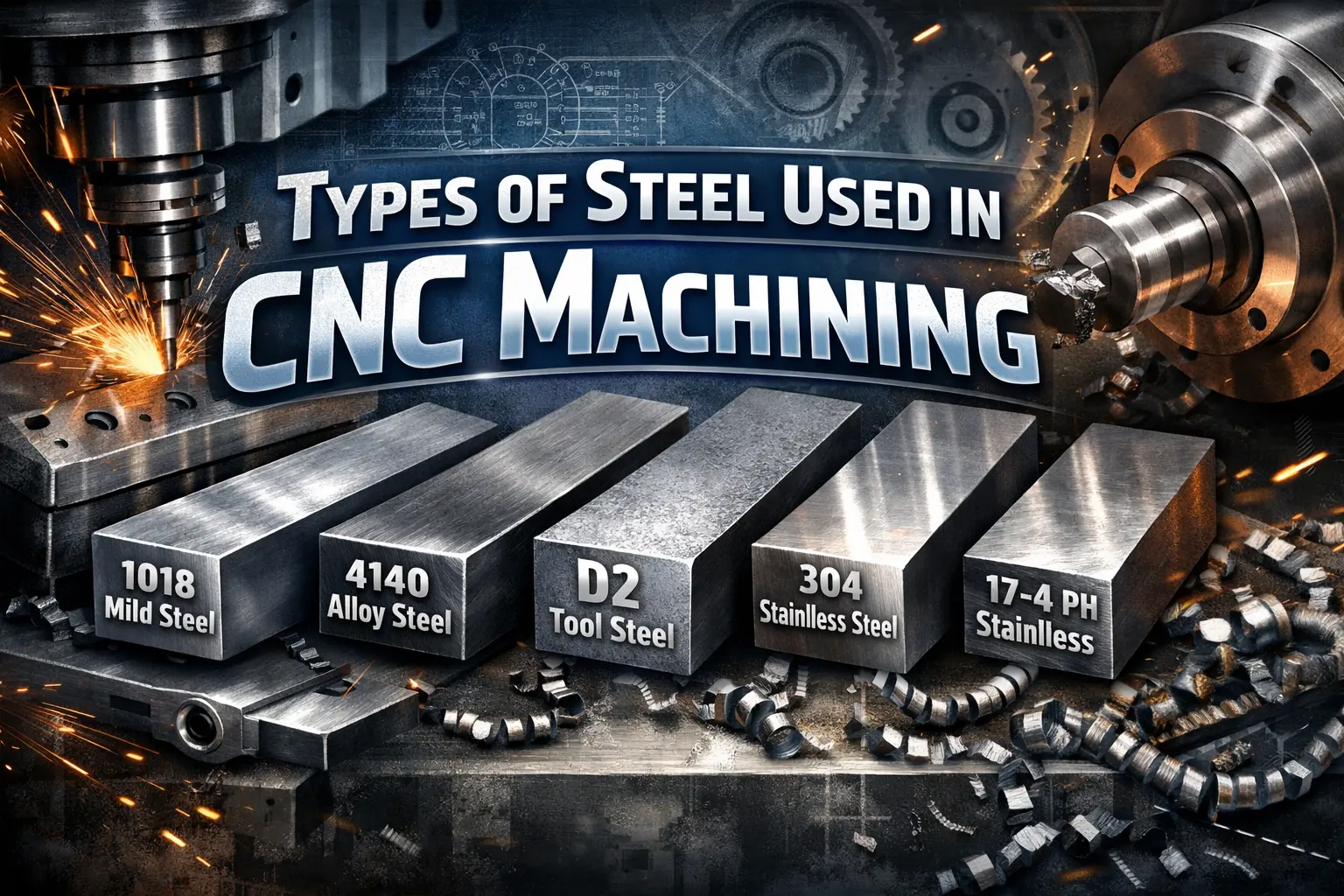
CNC machining has revolutionized modern manufacturing by offering precision, repeatability, and efficiency in producing complex components. Among the wide range of materials available, steel stands out as one of the most versatile and widely used due to its strength, durability, and adaptability. From automotive and aerospace components to industrial machinery and tooling, steel is often the material of choice for engineers and manufacturers who require both performance and reliability.
One of the primary reasons steel is favored in CNC machining is its combination of mechanical properties. It can offer high tensile strength, toughness, and wear resistance, while also being available in grades that are relatively easy to machine. Different types of steel can be tailored to specific applications through alloying elements and heat treatment processes, allowing manufacturers to meet precise performance requirements.
The versatility of steel also extends to its surface finishing capabilities. CNC machining can achieve tight tolerances, smooth surfaces, and intricate geometries on steel, which makes it ideal for components where both functional and aesthetic qualities are critical. Furthermore, steel can often undergo secondary processes such as heat treatment, coating, or plating, enhancing its corrosion resistance, hardness, and longevity.
Understanding the different types of steel and their characteristics is essential for optimizing the CNC machining process. Selecting the right steel not only improves manufacturing efficiency but also ensures the final product meets design requirements and performs reliably in its intended application. This article explores the classification of steel for CNC machining, key properties that affect machining performance, and the advantages and limitations of each steel type, helping engineers, designers, and manufacturers make informed material choices.
Steel used in CNC machining can be broadly classified into several categories based on composition, hardness, corrosion resistance, and intended applications. Understanding these classifications is crucial for selecting the appropriate material for a specific project.
Carbon Steel is one of the most common categories, consisting primarily of iron and carbon. Low-carbon steel (less than 0.3% carbon) is soft, ductile, and easy to machine, making it suitable for parts with simple geometries. Medium-carbon steel (0.3–0.6% carbon) offers higher strength and wear resistance, while high-carbon steel (0.6–1.0% carbon) is very hard and durable, typically used in tools, dies, and industrial machinery components.
Alloy Steel contains additional elements such as chromium, nickel, and molybdenum, enhancing mechanical properties like toughness, hardness, and fatigue resistance. These steels are ideal for structural parts, automotive components, and high-stress applications where superior performance is required.
Tool Steel is specifically designed for manufacturing cutting tools, molds, and dies. Common types include High-Speed Steel (HSS) and grades such as D2, O1, and A2. Tool steels are extremely wear-resistant and can maintain hardness at high temperatures, but they are more challenging to machine and often require specialized tooling.
Stainless Steel is an alloy steel containing a significant percentage of chromium, which provides excellent corrosion resistance. Austenitic stainless steels (304, 316) are highly ductile and corrosion-resistant, martensitic types (410, 420) offer high strength and hardness, and ferritic types (430) are moderately strong with good corrosion resistance. These steels are widely used in medical instruments, food processing equipment, and chemical industries.
Specialty Steels include maraging steel, spring steel, and pre-hardened grades. These steels are designed for high-performance applications where strength, fatigue resistance, or dimensional stability under stress is critical. Selecting the correct steel classification directly impacts machinability, tool life, and overall production efficiency.
When machining steel with CNC equipment, understanding the material’s properties is critical to ensure precision, efficiency, and tool longevity. Several key properties directly influence how steel behaves during cutting, shaping, and finishing processes.
Hardness is a fundamental factor. Harder steels tend to wear down cutting tools more quickly and require slower feed rates and specialized tooling to avoid damage. Conversely, softer steels are easier to machine but may deform under stress if not supported correctly.
Tensile strength and toughness affect a material’s resistance to breaking or deforming during machining. High-strength steels may require additional power, slower cutting speeds, or incremental passes to achieve the desired shape without damaging the workpiece.
Machinability is a measure of how easily a material can be cut. Low-carbon steels and certain pre-hardened alloys offer excellent machinability, while stainless steels and high-carbon or tool steels present more challenges, often necessitating lubricants or specific cutting tools.
Thermal conductivity impacts heat buildup during cutting. Steels with low thermal conductivity can overheat quickly, leading to tool wear or part warping. Coolants and proper cutting parameters are critical when machining such materials.
Corrosion resistance is important for maintaining surface quality during machining and in the final application. Stainless steels, for example, resist corrosion but can cause work-hardening on the cutting edge, requiring precise tool selection and feed rates.
Surface finish potential determines the achievable smoothness of the machined part. Some steels produce excellent finishes with minimal post-processing, while others may require polishing or additional finishing steps.
Considering these properties in combination allows machinists to optimize cutting speeds, feed rates, tooling, and cooling strategies, ensuring high-quality outcomes, longer tool life, and efficient CNC operations.
Each steel type used in CNC machining offers distinct advantages and limitations, making material selection a critical decision based on application requirements.
Carbon Steel is widely used due to its affordability, availability, and ease of machining. Low and medium-carbon steels are particularly easy to cut and shape, making them ideal for components with simple geometries. However, carbon steel is prone to corrosion and may require coatings or post-machining treatments for durability in harsh environments.
Alloy Steel enhances mechanical properties through added elements such as chromium, nickel, and molybdenum. These steels offer higher strength, toughness, and fatigue resistance than carbon steel, making them suitable for structural components, automotive parts, and high-stress applications. The trade-off is slightly reduced machinability and increased tooling wear.
Tool Steel excels in wear resistance, high hardness, and thermal stability, making it indispensable for molds, dies, and cutting tools. While these properties enable superior performance, tool steels are challenging to machine, require careful heat treatment, and often need specialized tooling and slow cutting speeds.
Stainless Steel is prized for its corrosion resistance and aesthetic qualities, commonly used in medical instruments, food processing equipment, and chemical applications. Austenitic stainless steels are easier to machine, whereas martensitic and ferritic grades provide higher hardness but require careful tool selection. Work-hardening during machining can increase tool wear and necessitate precise cutting strategies.
Specialty Steels, such as maraging or spring steels, provide exceptional strength, fatigue resistance, and dimensional stability, often critical in aerospace, defense, and high-performance engineering. Their limitations include high cost, specialized machining requirements, and potential for tool wear if standard machining methods are applied.
In summary, selecting the right steel type requires balancing machinability, cost, mechanical properties, and application-specific needs. Understanding each steel’s advantages and limitations ensures efficient CNC machining, high-quality finishes, and optimal component performance.
Steel types for CNC machining are chosen based on mechanical properties, corrosion resistance, and intended application. Each steel category has specific applications where its characteristics provide optimal performance.
Low-carbon steel is commonly used in structural components, frames, and enclosures where machinability and cost-effectiveness are prioritized. Medium-carbon steel is preferred for gears, shafts, axles, and other components subjected to moderate stress and wear. High-carbon steel, with its superior hardness, is often used for springs, cutting tools, industrial machinery parts, and components that must withstand high loads or repeated stress.
Alloy steels, enhanced with elements like chromium, nickel, and molybdenum, are designed for applications demanding higher strength and toughness. They are ideal for automotive engine components, heavy machinery parts, aerospace structures, and other high-stress environments. Alloy steels also perform well in applications where fatigue resistance is critical, such as drive shafts, connecting rods, and structural brackets.
Tool steels are used where wear resistance, hardness, and heat stability are crucial. Typical applications include cutting tools, punches, molds, dies, and extrusion components. High-speed steel and D2, O1, or A2 grades ensure that the tooling maintains precision under extreme conditions. These steels are essential for manufacturing environments that require repeatable, high-precision parts.
Stainless steel is widely applied where corrosion resistance is a priority. Austenitic grades like 304 and 316 are ideal for medical instruments, food processing equipment, chemical industry components, and architectural applications. Martensitic and ferritic grades are used in tools, knives, and machinery parts where hardness and corrosion resistance are both important.
Specialty steels, such as maraging and spring steels, are employed in aerospace, defense, and high-performance engineering applications. These steels provide exceptional strength, fatigue resistance, and dimensional stability. They are suitable for components like aircraft fittings, precision instrumentation, and high-stress mechanical parts.
Machining steel efficiently requires careful attention to tooling, cutting parameters, and cooling methods. Optimizing these factors ensures precision, improves tool life, and maintains surface quality.
Selecting appropriate cutting speeds and feed rates is essential. Softer steels, like low-carbon grades, can be machined at higher speeds with standard tools. Harder steels, such as high-carbon, tool, or stainless steels, require slower cutting speeds and specialized tools, often carbide or coated inserts. Proper tool geometry, including rake angles, flute count, and coatings, improves cutting efficiency and reduces chatter.
Coolants and lubricants play a vital role in machining steel. They prevent overheating, reduce tool wear, and improve surface finish. Water-soluble coolants, cutting oils, or synthetic fluids can be selected depending on steel type and cutting operation. Continuous monitoring of temperature during cutting is recommended to maintain dimensional accuracy.
Proper fixturing prevents workpiece deformation, especially with thin or long components. Secure clamping and support reduce vibrations and ensure dimensional accuracy. Machinists should account for thermal expansion and cutting forces when selecting fixtures.
Deburring, heat treatment, and surface finishing may be required to achieve desired properties. Hardening can improve strength and wear resistance, while polishing or coating enhances corrosion resistance and aesthetics. Following best practices ensures high-quality parts and extends tool life.
Selecting the proper steel for CNC machining involves evaluating mechanical requirements, machinability, cost, and environmental conditions.
The intended use of the component dictates steel selection. If strength, wear resistance, and fatigue tolerance are critical, alloy or tool steels may be ideal. For corrosion resistance or sanitary applications, stainless steel is preferred. Carbon steel is suitable when cost-effectiveness and ease of machining are priorities.
Understanding machining characteristics is crucial. Softer steels allow faster production and longer tool life, while harder steels may require specialized tooling, slower cutting, and increased lubrication. Complex geometries and tight tolerances also influence steel choice.
Low-carbon steels are economical and widely available in various shapes, while specialty steels and tool steels are more expensive and may require longer lead times. Ensuring material availability prevents project delays and reduces overall production costs.
Consider post-machining processes such as heat treatment, surface coating, or finishing. These processes can improve hardness, wear resistance, and corrosion protection but may affect the machinability of certain steel types.
Balancing these factors ensures the chosen steel meets mechanical requirements, machining efficiency, and project budget while delivering high-quality finished components.
Steel is a versatile and widely used material in CNC machining, offering a balance of strength, durability, and adaptability. Selecting the appropriate steel type—carbon, alloy, tool, stainless, or specialty—is essential to meet performance, machinability, and cost requirements.
Understanding mechanical properties, corrosion resistance, thermal characteristics, and surface finish potential allows manufacturers to optimize cutting parameters, tooling, and fixturing. Proper steel selection ensures high-quality components, extended tool life, and efficient machining processes. By considering application needs, material characteristics, and post-machining treatments, engineers and manufacturers can achieve precise, reliable, and cost-effective results.
Which steel is easiest to machine?
Low-carbon steel is generally the easiest due to its softness and high ductility, allowing faster cutting speeds and reduced tool wear.
Can all steels be hardened after machining?
Not all steels can be hardened. Tool steels and certain alloy steels are suitable for heat treatment, while low-carbon steels typically require alloying or specialized processes.
How can surface finish be improved on stainless steel?
Using sharp cutting tools, proper feed rates, sufficient lubrication, and multiple finishing passes improves surface quality. Coated carbide tools and coolant application reduce work hardening.
What factors should be considered when choosing steel for CNC machining?
Key considerations include mechanical performance, corrosion resistance, machinability, cost, material availability, and post-machining processes like heat treatment or surface finishing.
