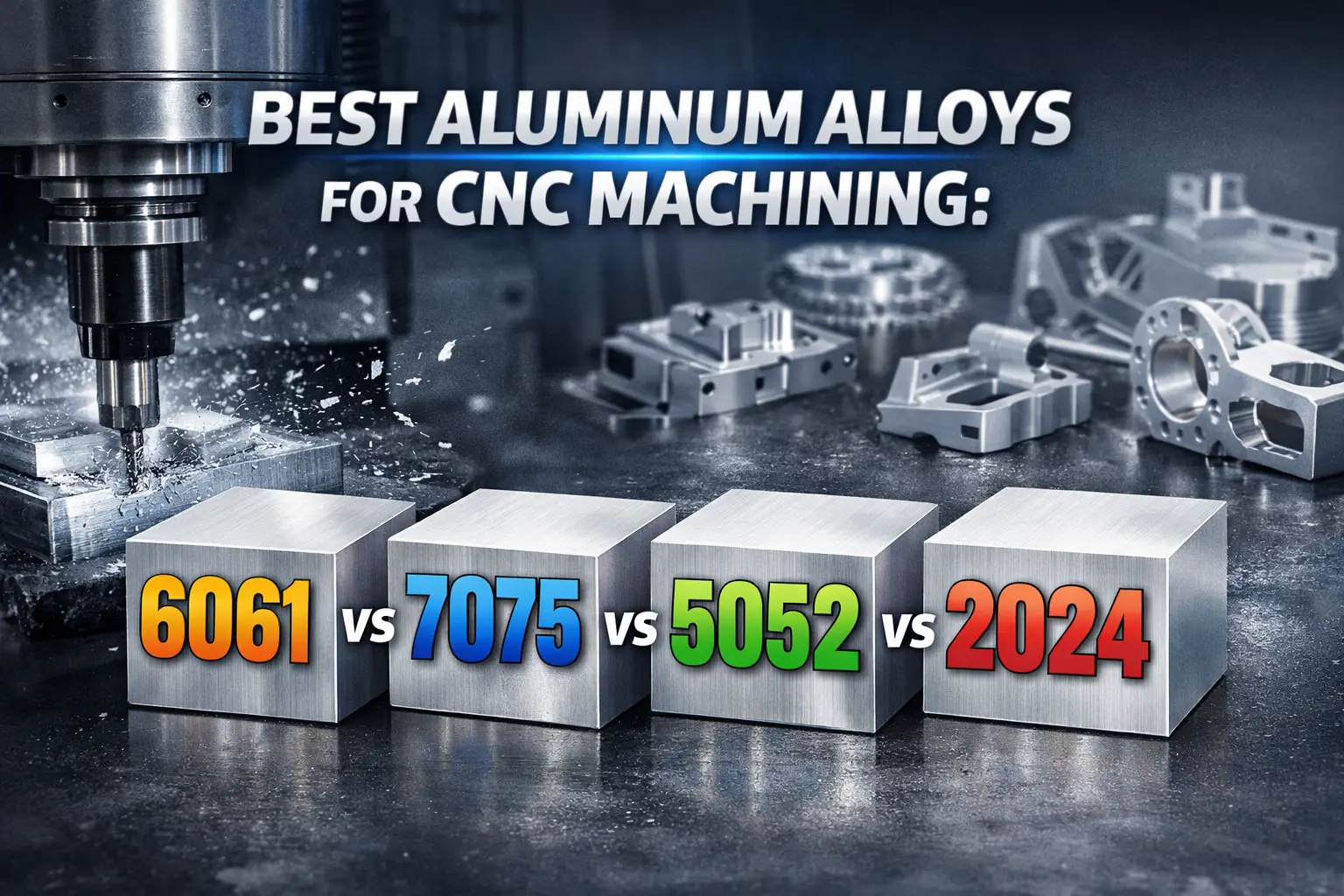
Aluminum alloys are among the most widely used materials in CNC machining due to their excellent balance of strength, weight, and machinability. From aerospace and automotive components to consumer electronics and industrial equipment, aluminum plays a critical role in modern manufacturing.
However, not all aluminum alloys perform the same. Choosing the right grade can significantly impact machining efficiency, part performance, and overall cost. Among the most commonly used alloys, 6061, 7075, 5052, and 2024 each offer distinct advantages depending on the application.
In this guide, we compare these four popular aluminum alloys to help engineers, designers, and buyers select the best material for their CNC machining projects.
Why Aluminum Is Ideal for CNC Machining
Aluminum is one of the most CNC-friendly metals, making it a top choice for both prototyping and production. Its popularity comes from several key advantages:
Excellent Machinability Aluminum is easy to cut, drill, and mill, allowing for faster production cycles and reduced tool wear compared to harder metals like steel.
High Strength-to-Weight Ratio Many aluminum alloys provide impressive strength while remaining lightweight, making them ideal for aerospace, automotive, and UAV applications.
Corrosion Resistance Certain alloys, such as 5052 and 6061, offer strong resistance to corrosion, especially in marine and outdoor environments.
Thermal and Electrical Conductivity Aluminum is highly conductive, making it suitable for heat sinks, electronic housings, and thermal management components.
Cost-Effective Material Compared to materials like titanium, aluminum offers a strong balance between performance and affordability.
Excellent Surface Finishing Options Aluminum supports anodizing, polishing, and coating processes, enhancing both aesthetics and durability.
Overview of Each Alloy
Aluminum 6061
6061 is the most commonly used aluminum alloy in CNC machining. It offers a well-balanced combination of strength, corrosion resistance, and machinability. This versatility makes it ideal for a wide range of applications, including structural components, prototypes, and general engineering parts.
Aluminum 7075
7075 is a high-strength aluminum alloy often used in aerospace and high-performance applications. It provides strength comparable to some steels but is significantly lighter. However, it has lower corrosion resistance and is more expensive than 6061.
Aluminum 5052
5052 is known for its excellent corrosion resistance, especially in marine environments. It is not heat-treatable and has lower strength than 6061 and 7075, but it offers superior formability. It is commonly used for sheet metal parts, enclosures, and fuel tanks.
Aluminum 2024
2024 is a high-strength alloy with excellent fatigue resistance, making it a preferred choice in aerospace applications. While it machines well, it has relatively poor corrosion resistance and is not ideal for welding. Protective coatings are often required for durability.
Key Properties Comparison
Below is a comparison of the key properties of 6061, 7075, 5052, and 2024 aluminum alloys:
Property
6061
7075
5052
2024
Strength
Medium
Very High
Low–Medium
High
Machinability
Excellent
Very Good
Fair–Poor
Good
Corrosion Resistance
Good
Moderate–Poor
Excellent
Poor
Weldability
Excellent
Poor
Very Good
Poor
Cost
Moderate
High
Low–Moderate
Medium–High
Typical Use
General CNC parts
Aerospace, high-stress parts
Marine, sheet metal
Aerospace, fatigue-critical parts
This comparison highlights that no single alloy is universally “best.” Instead, the right choice depends on your specific requirements, such as strength, environment, machinability, and budget.
Machinability Comparison
Machinability is a critical factor in CNC machining, as it directly affects production efficiency, tool life, and surface quality. Among the four alloys, there are clear differences:
6061 – Excellent Machinability 6061 is one of the easiest aluminum alloys to machine. It produces clean chips, maintains good dimensional stability, and supports high cutting speeds. This makes it ideal for both prototyping and large-scale production.
7075 – Very Good but Tool-Intensive 7075 offers high machinability but is significantly harder than 6061. This can lead to increased tool wear, requiring optimized cutting parameters and high-quality tooling. It is well-suited for precision, high-strength parts.
5052 – Lower Machinability 5052 is softer and more ductile, which can cause material to stick to cutting tools (built-up edge). This makes it less suitable for complex CNC machining and better for bending or sheet metal fabrication.
2024 – Good Machinability 2024 machines well and is commonly used in aerospace machining. However, it may produce burrs and requires careful tool selection and finishing processes to achieve high-quality results.
Strength and Fatigue Performance
Strength and fatigue resistance are key considerations for load-bearing and dynamic applications:
7075 – Highest Strength 7075 is one of the strongest aluminum alloys available, with strength comparable to some steels. It is ideal for high-stress and structural components.
2024 – Fatigue Resistance 2024 stands out for its excellent fatigue resistance, making it a top choice for components subjected to repeated stress cycles, such as aircraft structures.
6061 – Balanced Performance 6061 provides moderate strength and good durability, suitable for general engineering applications where extreme strength is not required.
5052 – Lower Strength 5052 has relatively low strength but performs well in applications where flexibility and corrosion resistance are more important than load capacity.
Corrosion Resistance Comparison
Corrosion resistance varies significantly between these alloys and is crucial for outdoor or harsh environments:
5052 – Excellent Corrosion Resistance Ideal for marine and chemical environments, 5052 performs exceptionally well without requiring additional coatings.
6061 – Good General Resistance 6061 offers solid corrosion resistance and performs well in most environments, especially when anodized.
7075 – Moderate to Poor 7075 is more prone to corrosion and typically requires protective treatments such as anodizing or coating.
2024 – Poor Corrosion Resistance 2024 is highly susceptible to corrosion and almost always requires surface treatment, especially in humid or outdoor conditions.
Weldability and Surface Finishing
Weldability and finishing options can influence both manufacturing processes and final appearance:
6061 – Excellent Weldability & Finishing Easily weldable and highly compatible with anodizing, polishing, and coating. It provides a clean and aesthetic finish.
5052 – Very Good Weldability 5052 is also highly weldable and performs well in fabricated assemblies. It supports various surface treatments.
7075 – Poor Weldability 7075 is generally not recommended for welding due to cracking risks. Surface finishing options are more limited but anodizing is still possible.
2024 – Poor Weldability Similar to 7075, 2024 is difficult to weld and often requires mechanical fastening instead. Surface protection (such as anodizing or coating) is essential.
Typical Applications
Each alloy is suited for specific industries and use cases:
6061 – General Engineering Applications Widely used for CNC machined parts, automotive components, structural frames, and consumer products. Ideal for versatile, cost-effective solutions.
7075 – High-Performance & Aerospace Parts Common in aerospace components, UAV/drone parts, and high-stress mechanical structures where maximum strength is required.
5052 – Marine & Sheet Metal Applications Used in marine equipment, fuel tanks, enclosures, and sheet metal components where corrosion resistance is critical.
2024 – Aerospace & Fatigue-Critical Components Frequently used in aircraft structures, rivets, and components exposed to cyclic stress. A preferred material for fatigue-sensitive applications.
Cost Comparison
Cost is an important factor when selecting aluminum alloys for CNC machining, especially for large-scale production.
5052 – Lower Cost Option 5052 is generally more affordable due to its lower strength and simpler processing requirements. It is a cost-effective choice for non-structural and sheet metal applications.
6061 – Best Value for Performance 6061 offers an excellent balance between cost, machinability, and performance. Its widespread availability also helps keep pricing stable, making it the most cost-effective option for general CNC machining.
2024 – Medium to High Cost 2024 is more expensive than 6061 due to its higher strength and aerospace-grade properties. Additional surface treatments may also increase overall cost.
7075 – Highest Cost 7075 is typically the most expensive among the four alloys due to its superior strength and performance. It is best reserved for high-stress applications where performance justifies the cost.
How to Choose the Right Alloy
Selecting the right aluminum alloy depends on your specific application requirements. Here’s a quick guide:
Choose 6061 If you need a versatile, easy-to-machine material for general-purpose parts with good strength and corrosion resistance.
Choose 7075 If your application requires maximum strength and performance, especially for aerospace or high-load components.
Choose 5052 If corrosion resistance and formability are more important than strength, particularly in marine or outdoor environments.
Choose 2024 If your parts will experience repeated stress or fatigue and require high durability, such as aerospace structures.
👉 Pro Tip: Always balance performance requirements with budget and machining complexity to achieve the most cost-effective solution.
Quick Comparison Table
Alloy
Strength
Machinability
Corrosion Resistance
Weldability
Cost
Best Use
6061
Medium
Excellent
Good
Excellent
Moderate
General CNC parts
7075
Very High
Very Good
Moderate–Poor
Poor
High
Aerospace, high-stress parts
5052
Low–Medium
Fair–Poor
Excellent
Very Good
Low–Moderate
Marine, sheet metal
2024
High
Good
Poor
Poor
Medium–High
Aerospace, fatigue-critical parts
CNC Machining Tips for Each Alloy
6061
Supports high-speed machining
Produces clean chips and smooth finishes
Ideal for tight tolerances and complex geometries
7075
Use high-quality cutting tools to reduce wear
Optimize feeds and speeds to maintain surface quality
Consider coolant for heat control
5052
Use sharp tools to reduce material sticking
Apply proper lubrication to avoid built-up edge
Avoid overly aggressive cutting parameters
2024
Pay attention to burr formation and deburring processes
Use appropriate coatings for corrosion protection
Optimize tool paths for consistent surface finish
Why Choose WinsunProto
At WinsunProto, we specialize in precision CNC machining for a wide range of aluminum alloys, including 6061, 7075, 5052, and 2024.
Extensive Industry Experience We have rich experience in machining aerospace, UAV, and high-precision components.
Advanced CNC Capabilities Equipped with high-performance CNC machines to handle complex geometries and tight tolerances.
Material Expertise We understand the machining characteristics of different aluminum alloys and optimize processes accordingly.
Strict Quality Control Every part undergoes rigorous inspection to ensure consistency and performance.
Fast Turnaround & Global Support From rapid prototyping to mass production, we deliver reliable solutions with quick lead times.
👉 Need help selecting the right aluminum alloy? Contact our engineering team today for expert support and a fast quote.
FAQ
1. Which aluminum alloy is easiest to machine? 6061 is widely considered the easiest aluminum alloy to machine due to its excellent chip formation and stability.
2. Is 7075 stronger than 6061? Yes, 7075 offers significantly higher strength than 6061, making it suitable for high-stress applications.
3. Can 5052 be CNC machined? Yes, but it is less ideal than 6061 or 7075 due to its lower machinability and tendency to stick to tools.
4. Is 2024 better than 7075? It depends on the application. 2024 has better fatigue resistance, while 7075 offers higher overall strength.
5. Which aluminum alloy is best for corrosion resistance? 5052 provides the best corrosion resistance, especially in marine environments.
Conclusion
Choosing the right aluminum alloy for CNC machining is essential to achieving optimal performance, cost efficiency, and manufacturability.
6061 is the best all-around choice for most applications
7075 excels in high-strength, high-performance environments
5052 is ideal for corrosion-resistant applications
2024 stands out in fatigue-critical aerospace components
There is no one-size-fits-all solution—the best alloy depends on your specific project requirements.
👉 Looking for reliable CNC machining services for aluminum parts? Contact WinsunProto today to get a fast quote and expert engineering support. 🚀