Our Location
304 North Cardinal St.
Dorchester Center, MA 02124

304 North Cardinal St.
Dorchester Center, MA 02124

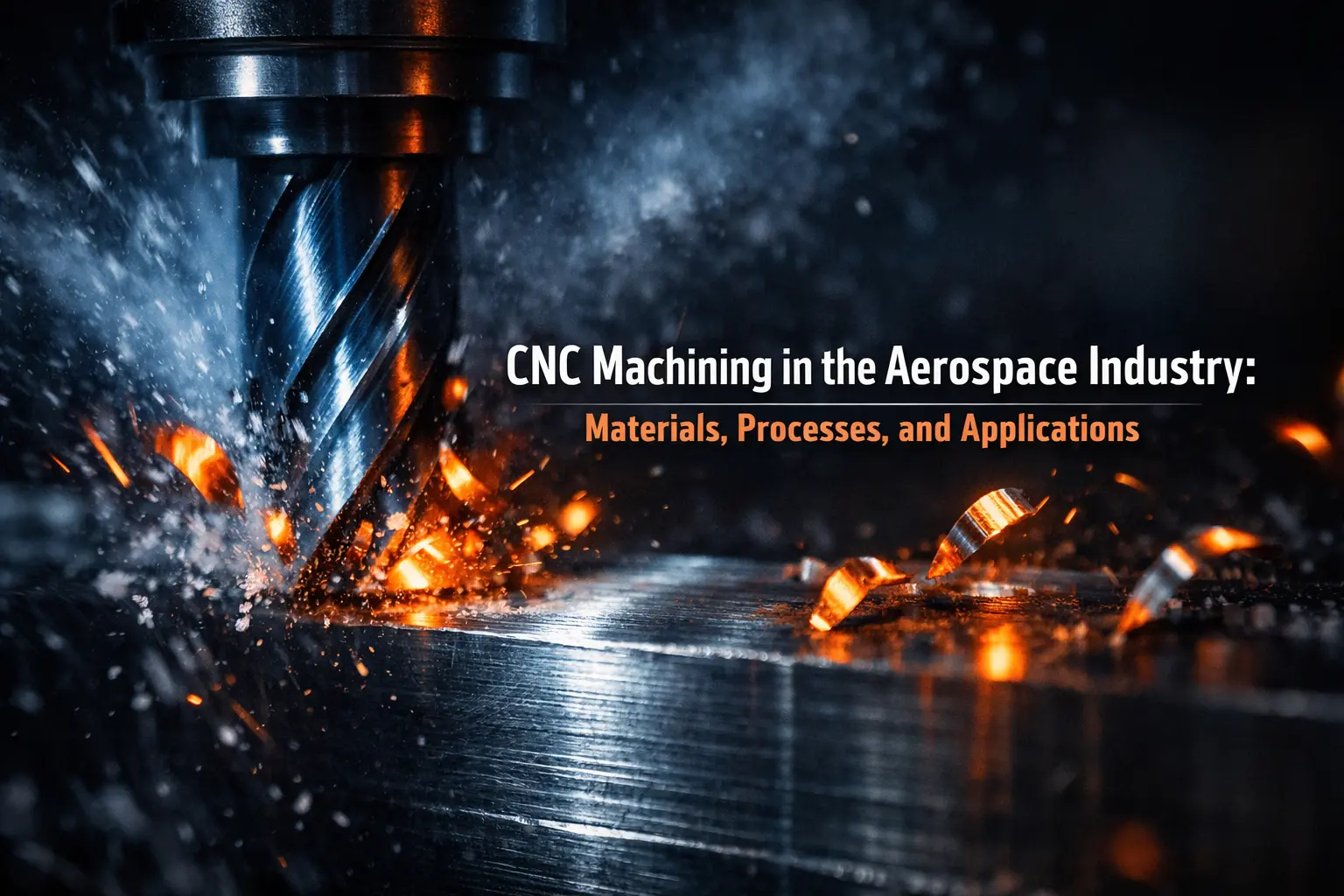
The aerospace industry demands exceptional precision, reliability, and performance from every component used in aircraft, satellites, and spacecraft. Even the smallest manufacturing error can compromise safety, efficiency, or mission success. As a result, advanced manufacturing technologies play a crucial role in producing high-quality aerospace parts.
CNC machining has become one of the most important manufacturing methods in the aerospace sector. By using computer-controlled tools, manufacturers can produce complex components with extremely tight tolerances and consistent accuracy, meeting the strict standards required for aerospace applications.
Another key advantage of CNC machining is its ability to work with a wide range of high-performance materials, including aluminum alloys, titanium, stainless steel, and engineering plastics. These materials are commonly used in aerospace because they offer an excellent balance of strength, weight, and durability.
In this article, we will explore how CNC machining is used in the aerospace industry, including the common machining processes, materials used for aerospace components, key design considerations, and typical applications across modern aircraft and space systems.
CNC machining in aerospace manufacturing refers to the use of computer-controlled machine tools to produce high-precision components for aircraft, spacecraft, and related systems. CNC (Computer Numerical Control) technology allows manufacturers to automate cutting, drilling, milling, and turning operations with exceptional accuracy and repeatability.
In the aerospace industry, parts often feature complex geometries, tight tolerances, and demanding performance requirements. CNC machining makes it possible to manufacture these components with consistent quality while maintaining strict dimensional accuracy. Modern CNC machines can operate on multiple axes simultaneously, enabling the production of intricate shapes that would be difficult or impossible to achieve using conventional machining methods.
Another important aspect of CNC machining in aerospace is its ability to support both prototyping and production. Engineers can rapidly produce prototypes to test designs and then scale up to low- or medium-volume production without compromising precision. This flexibility makes CNC machining a critical process throughout the aerospace product development cycle.
CNC milling is one of the most widely used machining processes in aerospace manufacturing. It involves rotating cutting tools that remove material from a workpiece to create complex shapes and features. Multi-axis CNC milling machines can produce intricate components such as brackets, housings, and structural parts used in aircraft assemblies.
CNC turning is typically used to manufacture cylindrical or rotational components. In this process, the workpiece rotates while a cutting tool removes material to achieve the desired dimensions. Aerospace components such as shafts, bushings, and precision fasteners are commonly produced using CNC turning.
5-axis CNC machining allows the cutting tool to move along five different axes simultaneously. This capability enables manufacturers to machine complex aerospace parts with fewer setups, improving both accuracy and efficiency. Many high-performance aerospace components with complex contours rely on 5-axis machining.
Electrical Discharge Machining (EDM) is used to machine extremely hard materials or produce intricate internal features that traditional cutting tools cannot easily achieve. In aerospace manufacturing, EDM is often applied to create detailed geometries in high-strength alloys and other difficult-to-machine materials.
Aluminum alloys are widely used in aerospace manufacturing due to their excellent strength-to-weight ratio. They are lightweight, corrosion-resistant, and relatively easy to machine, making them ideal for structural components, housings, and brackets.
Titanium is one of the most important materials in aerospace applications. It offers exceptional strength, corrosion resistance, and high temperature resistance while remaining relatively lightweight. Although titanium is more difficult to machine than aluminum, it is commonly used for critical components such as engine parts and structural elements.
Stainless steel provides excellent durability, strength, and resistance to corrosion. It is often used in aerospace components that require high mechanical strength or must operate in harsh environments.
Engineering plastics such as PEEK and PTFE are increasingly used in aerospace components. These materials offer excellent chemical resistance, lightweight properties, and thermal stability, making them suitable for specialized applications where metal parts may not be necessary.
Selecting the right material is a critical step in aerospace manufacturing. Aerospace components must withstand extreme temperatures, mechanical stress, and harsh operating environments while maintaining minimal weight. CNC machining supports a wide range of high-performance materials that meet these demanding requirements.
Aluminum alloys are among the most commonly used materials in aerospace machining. They offer an excellent strength-to-weight ratio, making them ideal for aircraft structures where weight reduction is essential. Aluminum is also relatively easy to machine and provides good corrosion resistance, which makes it suitable for brackets, housings, frames, and structural components.
Titanium alloys are widely used in aerospace because of their exceptional strength, corrosion resistance, and high-temperature stability. These properties make titanium ideal for critical aerospace components such as engine parts, airframe structures, and fasteners. Although titanium is more challenging to machine due to its hardness and heat resistance, CNC machining technologies can achieve the required precision.
Stainless steel is used in aerospace applications where high strength, durability, and corrosion resistance are required. It is commonly found in components that must withstand heavy loads or operate in demanding environments. CNC machining allows manufacturers to produce stainless steel parts with tight tolerances and reliable performance.
Engineering plastics such as PEEK, PTFE, and other advanced polymers are increasingly used in aerospace systems. These materials offer advantages such as lightweight properties, chemical resistance, and thermal stability. They are often used for insulation components, seals, and specialized structural parts.
Designing parts for aerospace CNC machining requires careful attention to performance, weight, and manufacturability. Engineers must ensure that components meet strict industry standards while maintaining structural integrity and efficiency.
Aerospace components often require extremely tight tolerances to ensure proper fit and function. Even minor dimensional deviations can affect the performance of an aircraft system. CNC machining enables manufacturers to achieve high precision and maintain consistent tolerances across multiple parts.
Weight reduction is a major priority in aerospace engineering because lighter aircraft consume less fuel and improve overall performance. Designers often incorporate lightweight structures, thin walls, and optimized geometries to reduce weight while maintaining strength.
Aerospace components must withstand vibration, pressure, and extreme temperatures during operation. Proper material selection, wall thickness, and structural design are essential to ensure durability and long-term reliability.
Surface finish is another important factor in aerospace components. Processes such as anodizing, passivation, polishing, and protective coatings can improve corrosion resistance, wear resistance, and overall durability of CNC machined parts.
CNC machining is widely used throughout the aerospace industry to manufacture precision components for aircraft, satellites, and space exploration systems. Its ability to produce complex geometries and maintain tight tolerances makes it an essential manufacturing method for many aerospace applications.
Many structural components used in aircraft are produced through CNC machining. These include brackets, frames, housings, and support structures that must maintain high strength while keeping weight to a minimum.
Aircraft engines require highly durable and precisely manufactured components to operate efficiently under extreme conditions. CNC machining is used to produce parts such as turbine housings, compressor components, and precision fittings.
Landing gear systems experience significant mechanical stress during takeoff and landing. CNC machining is used to manufacture strong and reliable components such as shafts, bushings, and support parts that ensure safe operation.
CNC machining also plays a crucial role in the production of satellite and spacecraft components. These parts must meet strict precision standards and function reliably in the harsh environment of space, making CNC machining an ideal manufacturing solution.
CNC machining offers several advantages that make it an essential manufacturing method for aerospace components. Its ability to deliver precision, consistency, and flexibility makes it particularly suitable for producing parts used in aircraft and space systems.
Aerospace parts often require extremely tight tolerances and precise geometries. CNC machining uses computer-controlled tools to ensure consistent dimensional accuracy, reducing the risk of errors and ensuring components meet strict aerospace standards.
Modern aerospace components frequently feature intricate designs and complex shapes. Multi-axis CNC machines, including 5-axis systems, allow manufacturers to produce these complex geometries with fewer setups and higher efficiency.
Aerospace manufacturing requires materials with high strength, corrosion resistance, and thermal stability. CNC machining can effectively process a wide range of materials, including aluminum alloys, titanium, stainless steel, and high-performance engineering plastics.
CNC machining ensures that every part is produced with the same level of precision. This repeatability is crucial in aerospace manufacturing, where components must consistently meet strict quality and safety standards.
CNC machining supports both rapid prototyping and low- to medium-volume production. Engineers can quickly test new designs and make adjustments before moving to full production, reducing development time and improving overall efficiency.
At WinsunProto, we provide high-precision CNC machining services designed to meet the demanding requirements of aerospace manufacturing. Our advanced machining capabilities and experienced engineering team enable us to produce complex aerospace components with exceptional accuracy and reliability.
We offer multi-axis CNC milling and turning services capable of machining complex geometries and tight-tolerance parts. Our equipment supports a wide range of aerospace-grade materials, including aluminum alloys, titanium, stainless steel, and engineering plastics.
From rapid prototyping to low-volume production, our team works closely with customers to ensure that every component meets the required specifications and quality standards. We also provide various surface finishing options to enhance corrosion resistance, durability, and overall performance.
With a strong focus on precision, quality control, and efficient production, WinsunProto is committed to delivering reliable CNC machined parts for aerospace applications. If you are looking for a trusted partner for aerospace machining projects, our team is ready to support your manufacturing needs.
CNC machining is essential in the aerospace industry because it provides the high precision and consistency required for critical components. Aerospace parts must meet strict safety and performance standards, and CNC machining allows manufacturers to produce complex geometries with tight tolerances and reliable repeatability.
Common materials include aluminum alloys, titanium alloys, stainless steel, and high-performance engineering plastics such as PEEK and PTFE. These materials are selected for their strength, lightweight properties, corrosion resistance, and ability to withstand extreme operating conditions.
CNC machining can typically achieve tolerances as tight as ±0.005 mm or even higher precision depending on the equipment and part design. Aerospace components often require very tight tolerances to ensure proper fit, alignment, and reliable performance.
Yes, CNC machining is widely used for aerospace prototyping. It allows engineers to quickly produce accurate prototypes using the same materials intended for final production, making it easier to test designs, verify performance, and refine components before mass production.
CNC machining plays a vital role in modern aerospace manufacturing by enabling the production of high-precision components with exceptional reliability. Its ability to machine complex geometries, maintain tight tolerances, and process advanced materials makes it one of the most important technologies used in the aerospace industry.
From aircraft structural components to engine parts and spacecraft systems, CNC machining supports a wide range of aerospace applications. As aerospace technology continues to evolve, the demand for precise and efficient manufacturing solutions will only grow.
By partnering with an experienced CNC machining provider, aerospace companies can ensure their components meet strict industry standards while maintaining efficiency and quality throughout the production process.

Rapid Prototyping & CNC Machining Expert
Freja specializes in CNC machining, rapid prototyping, injection molding, and metal finishing. She helps global companies transform product designs into high-precision parts and production solutions.



