Our Location

304 North Cardinal St.
Dorchester Center, MA 02124

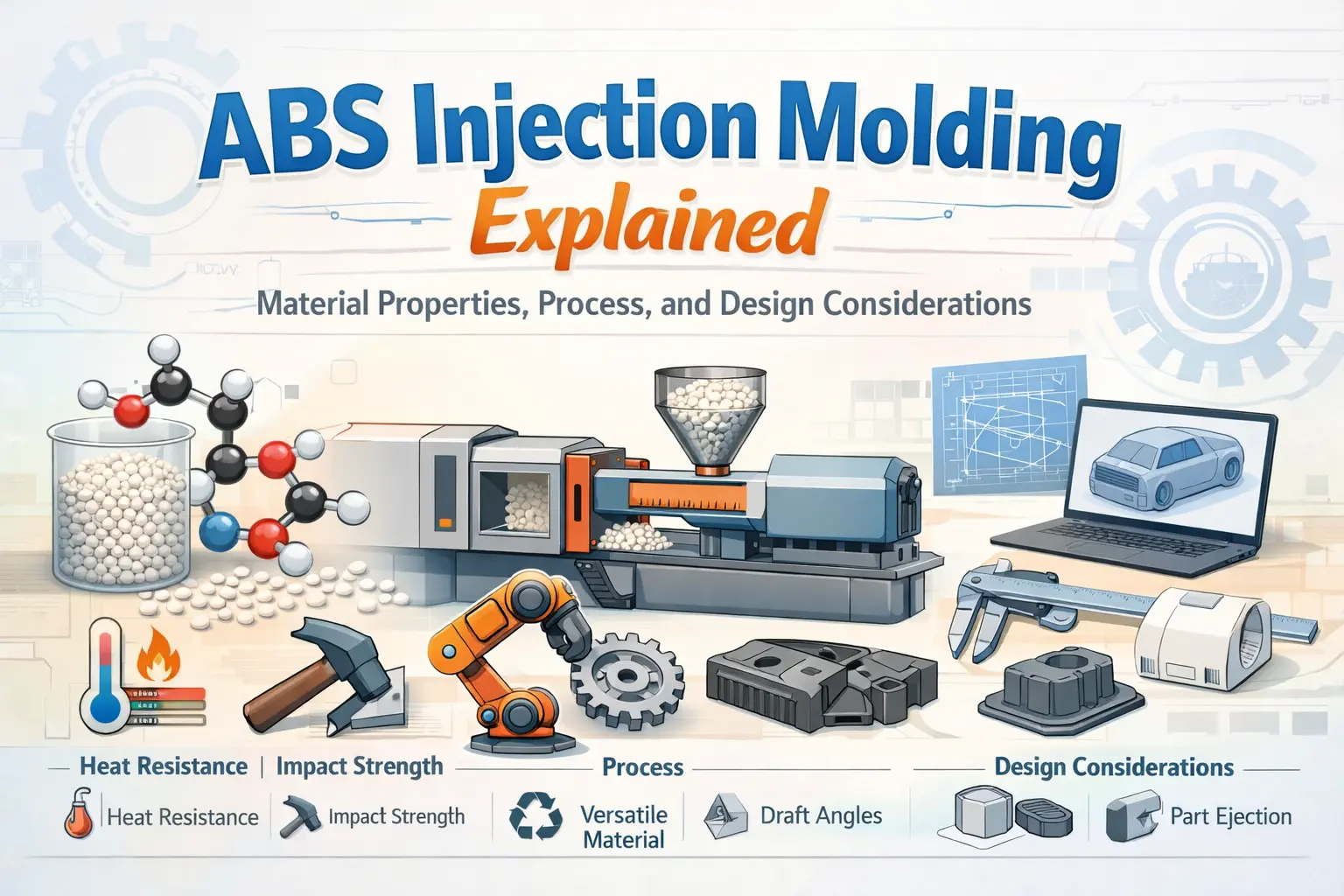
ABS Injection Molding Explained: Material Properties, Process, and Design Considerations

ABS injection molding is a versatile and widely used manufacturing process that transforms molten ABS plastic into durable, high-quality parts with precise dimensions and smooth finishes. Known for its excellent impact resistance, strength, and aesthetic versatility, ABS is a preferred material across industries ranging from consumer electronics to automotive components. This guide will walk you through the essential aspects of ABS injection molding, including material properties, the molding process, design considerations, and practical applications, helping you make informed decisions for your next project.

Introduction to ABS Injection Molding

Injection molding with ABS plastic is a highly versatile manufacturing process that allows the creation of complex, high-quality parts efficiently. From consumer electronics to automotive components, ABS injection molding is valued for its ability to produce durable, precise, and aesthetically appealing products at scale. Understanding the properties of ABS and the process of injection molding is essential for engineers, designers, and manufacturers aiming to optimize their products for performance and manufacturability.

What Is ABS Plastic

Acrylonitrile Butadiene Styrene (ABS) is a thermoplastic polymer that combines three monomers: acrylonitrile, butadiene, and styrene. Each component contributes specific properties:

  • Acrylonitrile – Provides chemical resistance and heat stability.
  • Butadiene – Adds toughness and impact resistance.
  • Styrene – Gives rigidity and a smooth surface finish.

The result is a plastic that is strong, durable, and relatively easy to process, making it one of the most widely used materials for injection molding. ABS also supports a variety of surface finishes, including painting, coating, and plating, which enhances its versatility for both functional and decorative applications.

What Is ABS Injection Molding

ABS injection molding is a manufacturing method in which molten ABS plastic is injected into a pre-designed mold cavity under high pressure. The plastic then cools and solidifies to form the desired shape. Key stages of the process include:

  1. Material preparation and drying – Ensures ABS pellets are moisture-free for consistent molding.
  2. Injection – Molten ABS is injected into the mold at precise pressure and temperature.
  3. Cooling – The material solidifies and takes the shape of the mold cavity.
  4. Ejection – The finished part is removed from the mold for post-processing if needed.

This process allows for high-volume production of complex parts with excellent dimensional accuracy and surface quality.

Why ABS Is Popular in Injection Molding

ABS is a favorite material for injection molding due to several advantages:

  • High impact resistance and toughness – Parts can withstand daily wear and tear.
  • Good thermal stability – Can tolerate moderate heat, suitable for many applications.
  • Excellent surface finish – Supports painting, plating, and other finishing processes.
  • Ease of processing – Melts uniformly and fills molds efficiently, reducing defects.
  • Cost-effectiveness – Provides a balance of performance and affordability for mass production.

These properties make ABS ideal for applications ranging from electronics housings and automotive parts to industrial components and household appliances. Its combination of strength, appearance, and manufacturability makes it one of the most practical choices for injection-molded products.

Properties of ABS Plastic

ABS (Acrylonitrile Butadiene Styrene) is a thermoplastic polymer known for its balanced combination of strength, toughness, and appearance, making it ideal for injection molding. Key properties include:

  • Mechanical Strength and Impact Resistance – ABS provides excellent durability and can withstand daily wear, making it suitable for consumer and industrial products.
  • Thermal Stability – ABS can tolerate moderate heat, allowing parts to maintain shape and performance under typical operating conditions.
  • Chemical Resistance – Resistant to acids, alkalis, and oils, ABS parts maintain integrity in various environments.
  • Surface Finish and Appearance – The smooth surface of ABS can be painted, plated, or textured, making it versatile for both functional and decorative components.
  • Dimensional Stability – ABS maintains consistent dimensions during molding, reducing defects like warpage or shrinkage.

The ABS Injection Molding Process

ABS injection molding is a precise, high-efficiency manufacturing process. The main steps include:

  1. Material Preparation and Drying – ABS pellets are dried to remove moisture, ensuring uniform melting and reducing defects.
  2. Injection and Mold Filling – Molten ABS is injected into a mold cavity under controlled temperature and pressure to form the desired shape.
  3. Cooling and Solidification – The molded part cools inside the mold, solidifying into its final shape while maintaining dimensional accuracy.
  4. Ejection and Post-Processing – Once cooled, the part is ejected from the mold and may undergo secondary processes such as trimming, painting, or assembly.

This process allows manufacturers to produce complex shapes with high repeatability, making it ideal for both prototyping and mass production.

Advantages of ABS Injection Molding

Using ABS for injection-molded parts offers several advantages:

  • High Strength and Durability – Parts can endure impact, stress, and daily wear without breaking.
  • Excellent Surface Quality – ABS supports smooth finishes and post-processing treatments, enhancing product aesthetics.
  • Dimensional Accuracy – Parts maintain tight tolerances, reducing the need for secondary machining.
  • Cost-Effectiveness – Ideal for high-volume production due to fast cycle times and low material costs.
  • Design Flexibility – ABS can be molded into complex geometries, including intricate ribs, bosses, and thin walls.

These advantages make ABS injection molding a top choice for manufacturers seeking a balance between performance, appearance, and production efficiency.

Common Grades of ABS for Injection Molding

ABS comes in several grades, each tailored for specific performance requirements:

  • General Purpose ABS – Balanced strength and surface finish, suitable for most standard applications.
  • High Impact ABS – Enhanced toughness and impact resistance, ideal for parts subject to frequent stress or drop loads.
  • Flame Retardant ABS – Meets fire safety standards, used in electronics, appliances, and automotive applications.
  • Heat Resistant ABS – Can withstand higher temperatures without deformation, suitable for components exposed to heat.

Choosing the right grade is essential to ensure the molded part meets performance, safety, and durability requirements for its intended application.

Applications of ABS Injection Molded Parts

ABS injection molding is widely used across industries due to its strength, finish quality, and versatility. Common applications include:

  • Consumer Electronics – Housings for smartphones, remote controls, keyboards, and computer components.
  • Automotive Components – Interior panels, trims, dashboard parts, and protective covers.
  • Household Appliances – Vacuum cleaners, kitchen appliances, and other durable plastic housings.
  • Industrial Equipment – Protective casings, machine components, and structural parts.
  • Medical and Electrical Housings – Durable and chemically resistant enclosures for devices.

The combination of durability, aesthetic quality, and manufacturability makes ABS a preferred choice for both functional and decorative components.

Design Considerations for ABS Injection Molding

Proper design ensures that ABS parts are manufacturable, durable, and cost-effective. Key considerations include:

  • Wall Thickness – Maintain uniform thickness to prevent warping, sink marks, and uneven cooling.
  • Draft Angles – Include slight angles on vertical walls to facilitate easy ejection from the mold.
  • Rib and Boss Design – Reinforce parts without creating stress concentration; avoid overly thick ribs.
  • Shrinkage and Tolerance Control – Account for material shrinkage to maintain dimensional accuracy.
  • Avoiding Warpage and Sink Marks – Use proper gating, cooling channels, and balanced design to minimize defects.
  • Assembly Considerations – Design for snap-fits, screws, or ultrasonic welding if multiple parts will be joined.

By carefully considering these factors, designers can maximize the performance, appearance, and manufacturability of ABS injection-molded components.

Surface Finishing Options for ABS Parts

ABS parts offer versatility not only in performance but also in surface appearance. Common finishing options include:

  • Mold Texturing – Adding textures in the mold itself for matte, gloss, or patterned surfaces.
  • Painting and Coating – ABS surfaces accept paints, powder coatings, or protective layers for aesthetics and durability.
  • Electroplating – Provides a metallic finish for decorative or functional purposes, often used in automotive or electronics housings.
  • Laser Marking and Printing – Precise, permanent markings for logos, serial numbers, or functional indicators.

Choosing the right finishing method depends on application, aesthetics, and environmental exposure. Proper finishing enhances product value and user experience.

ABS vs Other Injection Molding Plastics

ABS is one of many plastics used in injection molding, and comparing it to others helps select the right material:

  • ABS vs Polycarbonate (PC) – ABS is easier to process and more cost-effective, while PC offers higher impact resistance and heat tolerance.
  • ABS vs Nylon (PA) – Nylon has better wear resistance and chemical resistance, but ABS offers superior surface finish and dimensional stability.
  • ABS vs Polypropylene (PP) – PP is lighter and more flexible, suitable for low-cost, flexible applications, whereas ABS is stronger and more rigid.

Selecting the right plastic depends on mechanical requirements, environmental conditions, and design goals. ABS often provides the best balance of strength, aesthetics, and cost for many consumer and industrial products.

Why Choose WinsunProto for ABS Injection Molding

WinsunProto specializes in precision ABS injection molding services, offering:

  • Rapid Tooling and Production – Quick turnaround for prototypes and production parts.
  • Precision Manufacturing – Tight tolerances and consistent quality across batches.
  • Wide Range of Plastic Materials – Including multiple ABS grades to meet your design needs.
  • Custom Finishing Options – From texturing to painting and plating, ensuring your parts look and perform as required.
  • Expert Design Support – Guidance on wall thickness, ribs, shrinkage, and other key considerations for manufacturability.

Partnering with WinsunProto ensures your ABS injection-molded parts are high-quality, cost-effective, and ready for market.

FAQ About ABS Injection Molding

Q: Is ABS good for injection molding?
A: Yes, ABS is strong, impact-resistant, and provides excellent surface finish, making it ideal for injection-molded parts.

Q: What temperature is used for ABS injection molding?
A: ABS is typically molded at temperatures between 200°C to 250°C, depending on the grade and part geometry.

Q: What are the disadvantages of ABS plastic?
A: ABS can be prone to UV degradation and may not be suitable for high-temperature applications without additives.

Q: Can ABS parts be recycled?
A: Yes, ABS is recyclable, and many manufacturers incorporate recycled ABS into new parts, supporting sustainability.


Conclusion

ABS injection molding is a versatile and cost-effective manufacturing process for producing high-quality plastic parts. Its strength, impact resistance, thermal stability, and excellent surface finish make it suitable for a wide range of applications, from consumer electronics to automotive components. By understanding ABS properties, the injection molding process, design considerations, and finishing options, engineers and designers can optimize their products for performance, aesthetics, and manufacturability.

Partnering with experienced manufacturers like WinsunProto ensures precision, reliability, and efficiency in every part, helping bring your ABS injection-molded designs from concept to production with confidence.

Leave a Reply

Your email address will not be published. Required fields are marked *