Our Location
304 North Cardinal St.
Dorchester Center, MA 02124

304 North Cardinal St.
Dorchester Center, MA 02124

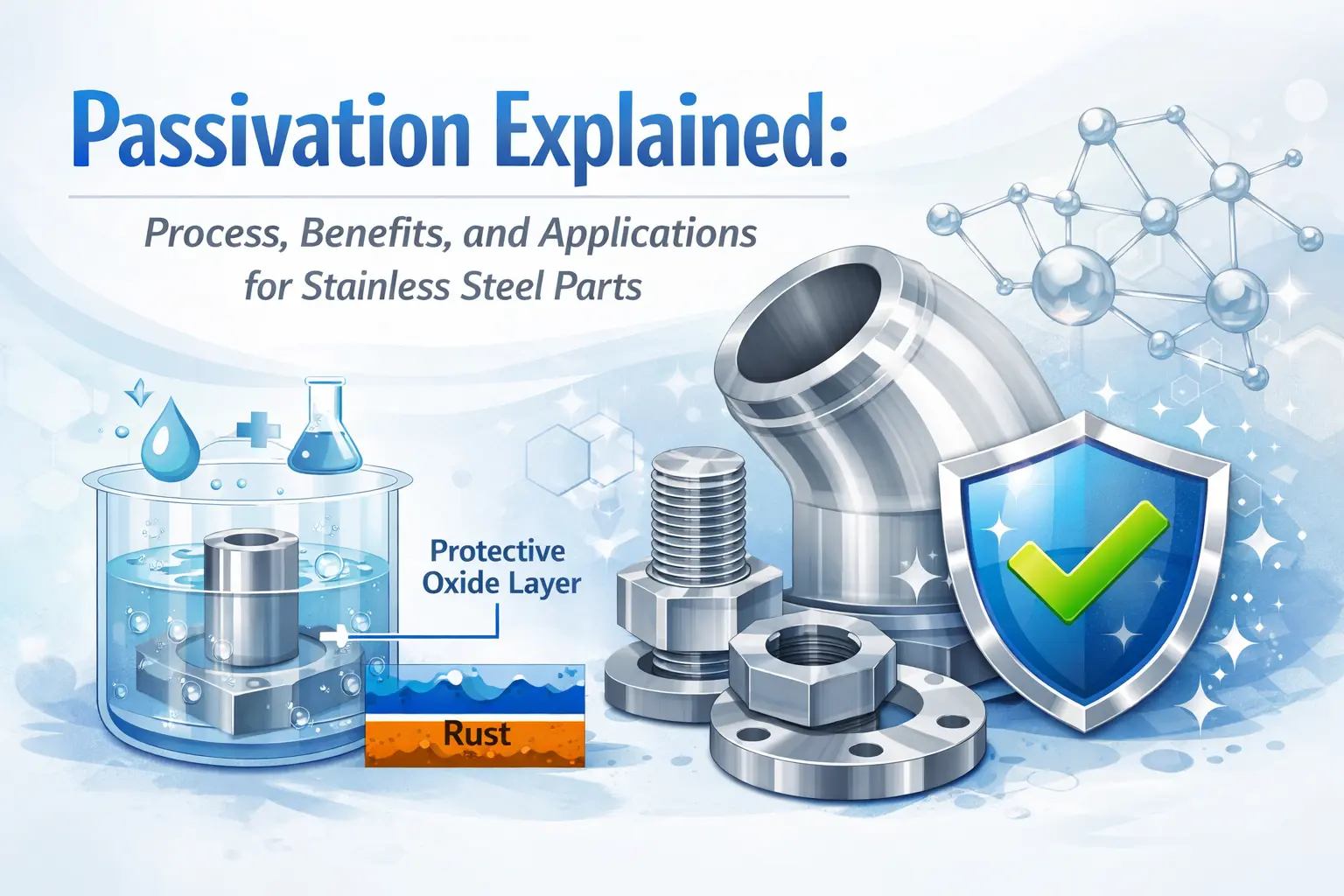
Passivation is a widely used surface treatment process designed to enhance the corrosion resistance of metal components, particularly stainless steel. During machining, fabrication, or handling, metal surfaces may become contaminated with free iron, oils, or other impurities. These contaminants can weaken the natural corrosion resistance of the material and increase the risk of rust or surface degradation over time.
The passivation process removes these contaminants and promotes the formation of a thin, protective oxide layer on the metal surface. This protective layer acts as a barrier between the material and the surrounding environment, helping the part maintain its durability and performance even in demanding conditions.
Because of its effectiveness and relatively simple process, passivation has become an essential finishing step for many precision components used in industries where reliability, cleanliness, and corrosion resistance are critical.
Passivation is a chemical surface treatment that removes free iron and other contaminants from the surface of metal parts. The process typically involves immersing the component in a mild acid solution, such as nitric acid or citric acid, which dissolves surface impurities without affecting the base material.
Once these contaminants are removed, the metal surface reacts with oxygen in the air to form a thin, stable oxide layer. This layer is known as a passive film and is responsible for protecting the metal from corrosion. Unlike coatings or plating, passivation does not add any additional material to the surface, making it ideal for precision components where dimensional accuracy is important.
Metal parts are often exposed to environments that can lead to corrosion, including moisture, chemicals, salt, and temperature changes. Even stainless steel, which is naturally corrosion resistant, can develop rust if its surface becomes contaminated during manufacturing or handling.
Passivation helps restore and enhance the natural protective properties of the metal by eliminating surface contaminants that may trigger corrosion. As a result, parts become more resistant to oxidation and chemical attack.
This treatment is particularly important for components used in critical industries such as aerospace, medical devices, food processing, and semiconductor manufacturing, where both cleanliness and long-term reliability are essential.
The key benefit of passivation is the formation of a stable oxide layer on the metal surface. After contaminants are removed during the chemical treatment, oxygen in the air reacts with elements such as chromium in stainless steel to form a thin chromium oxide film.
This oxide layer acts as a protective barrier that prevents moisture, oxygen, and corrosive substances from penetrating the metal surface. If the layer is lightly damaged, it can often reform naturally when exposed to oxygen, allowing the metal to maintain its protective properties.
By strengthening this natural protective layer, passivation significantly reduces the likelihood of rust formation and helps metal components maintain their performance and appearance over time.
Passivation is a controlled chemical treatment designed to remove contaminants and enhance the natural corrosion resistance of metal surfaces. Although the process itself is relatively straightforward, it requires careful preparation and quality control to ensure consistent results. The following steps outline how passivation is typically performed in manufacturing.
Before the passivation process begins, metal parts must be thoroughly cleaned to remove oils, machining fluids, grease, and other surface contaminants. This step is critical because any remaining residues can interfere with the chemical reaction during passivation.
Cleaning methods may include alkaline washing, ultrasonic cleaning, or solvent degreasing. Once the parts are clean, they are rinsed with water to ensure the surface is ready for the acid treatment stage.
After cleaning, the parts are immersed in a passivation solution, which is typically made from nitric acid or citric acid. The acid dissolves free iron and other contaminants that may have become embedded in the metal surface during machining or handling.
By removing these impurities, the treatment allows the underlying alloy—especially the chromium in stainless steel—to react with oxygen and form a thin, stable oxide layer. This passive layer is responsible for improving the corrosion resistance of the material.
Once the chemical treatment is complete, the parts are thoroughly rinsed with clean water to remove any remaining acid. Proper rinsing is essential to prevent chemical residues from remaining on the surface.
After rinsing, the parts are dried and inspected to ensure the passivation process was successful. In some cases, additional testing may be performed to verify corrosion resistance and surface cleanliness before the components are approved for use.
Passivation is most commonly applied to stainless steel, but it can also be used on other corrosion-resistant alloys. The effectiveness of the process depends on the composition of the material and its ability to form a stable oxide layer.
Stainless steel is the most widely passivated material because it contains chromium, which naturally forms a protective oxide film. However, machining operations can introduce free iron or other contaminants that compromise this protection.
Passivation restores the integrity of the stainless steel surface by removing these impurities and allowing the chromium oxide layer to develop properly. This is why passivation is often specified for precision stainless steel components used in demanding environments.
In addition to stainless steel, certain nickel-based alloys and other corrosion-resistant metals can also benefit from passivation. These materials are often used in industries where components must withstand aggressive chemicals or extreme operating conditions.
While the specific chemical solutions and process parameters may vary depending on the alloy, the goal remains the same: removing contaminants and enhancing the natural protective layer on the metal surface.
Passivation is typically recommended after machining, welding, grinding, or other manufacturing processes that may leave iron particles or surface contamination. It is also commonly specified when parts will be used in environments where corrosion resistance and cleanliness are critical.
Components used in aerospace systems, medical equipment, food processing machinery, and electronic devices often require passivation as part of their finishing process.
Passivation offers several important advantages for manufacturers and product designers, especially when working with stainless steel and other corrosion-resistant alloys.
The most significant benefit of passivation is enhanced resistance to corrosion. By removing free iron and allowing a stable oxide layer to form, the process greatly reduces the likelihood of rust and surface degradation.
This improvement helps metal parts perform reliably even in environments where moisture, chemicals, or salt exposure could otherwise cause corrosion.
Because passivated surfaces are more resistant to environmental damage, components often have a longer operational lifespan. This reduces the need for frequent maintenance, replacement, or repairs.
For industries that rely on high-performance components, extended service life can significantly lower overall operating costs.
Passivation also helps produce a cleaner metal surface by removing contaminants that may remain after machining or fabrication. This is particularly important in industries that require high levels of cleanliness, such as medical manufacturing, food processing, and electronics.
A clean and stable surface not only improves corrosion resistance but also ensures that the final product meets strict quality and safety standards.
Passivation is often compared with other surface finishing methods used to improve corrosion resistance or surface performance. While these treatments may serve similar purposes, they work in different ways and are suited for different applications.
Electroplating involves depositing a thin layer of metal, such as nickel, chromium, or zinc, onto the surface of a component using an electrochemical process. This coating provides additional protection and can also improve appearance, wear resistance, or electrical properties.
Passivation, on the other hand, does not add any material to the surface. Instead, it removes contaminants and enhances the natural oxide layer already present in the metal. Because of this, passivation is ideal for precision parts where maintaining tight tolerances and original dimensions is important.
Anodizing is primarily used for aluminum and works by creating a thick oxide layer on the surface through an electrochemical process. This oxide layer improves corrosion resistance and can also allow for color finishing.
Passivation is most commonly used for stainless steel and focuses on cleaning the surface and strengthening its natural protective film rather than building a thick coating. As a result, passivation maintains the original appearance and surface texture of the material.
Passivation is the preferred treatment when corrosion resistance is required without altering the dimensions, mechanical properties, or appearance of the part. It is especially suitable for stainless steel components that require high cleanliness and long-term durability.
For parts that require additional decorative finishes, wear resistance, or conductive coatings, other treatments such as plating or anodizing may be more appropriate.
Passivation is widely used in industries where corrosion resistance, cleanliness, and long-term reliability are essential. Because the process does not affect the geometry of a component, it is particularly suitable for precision machined parts.
In the aerospace industry, components must withstand extreme environments, including humidity, temperature changes, and exposure to corrosive elements. Passivation helps protect stainless steel fasteners, structural components, and precision parts from corrosion while maintaining strict dimensional tolerances.
Medical instruments and surgical equipment often require highly clean and corrosion-resistant surfaces. Passivation helps remove surface contaminants and ensures that stainless steel instruments maintain their integrity and hygiene during repeated sterilization cycles.
Automotive and industrial equipment frequently operate in environments where moisture, chemicals, and vibration can accelerate corrosion. Passivated stainless steel components offer improved durability and reliability, helping equipment maintain performance over time.
Food processing systems require materials that are both corrosion resistant and easy to clean. Passivation helps ensure stainless steel equipment maintains a smooth, contamination-free surface, making it suitable for environments that must meet strict hygiene standards.
When designing parts that will undergo passivation, several factors should be considered to ensure the process delivers optimal results.
Not all metals respond equally to passivation. Stainless steel alloys that contain sufficient chromium are the most suitable candidates because they naturally form a protective oxide layer. Selecting the correct alloy early in the design stage helps ensure the effectiveness of the treatment.
The quality of passivation largely depends on how clean the surface is before the chemical treatment begins. Oils, machining fluids, or heavy contamination can reduce the effectiveness of the process.
Proper cleaning and preparation during manufacturing help ensure that the passivation treatment can fully remove contaminants and allow the protective oxide layer to form.
Part geometry can also influence the effectiveness of passivation. Deep holes, narrow channels, and complex internal features may require additional cleaning or rinsing steps to ensure the treatment solution reaches all surfaces.
Designing parts with accessible surfaces and proper drainage can help improve the consistency and effectiveness of the passivation process.
