Our Location
304 North Cardinal St.
Dorchester Center, MA 02124

304 North Cardinal St.
Dorchester Center, MA 02124

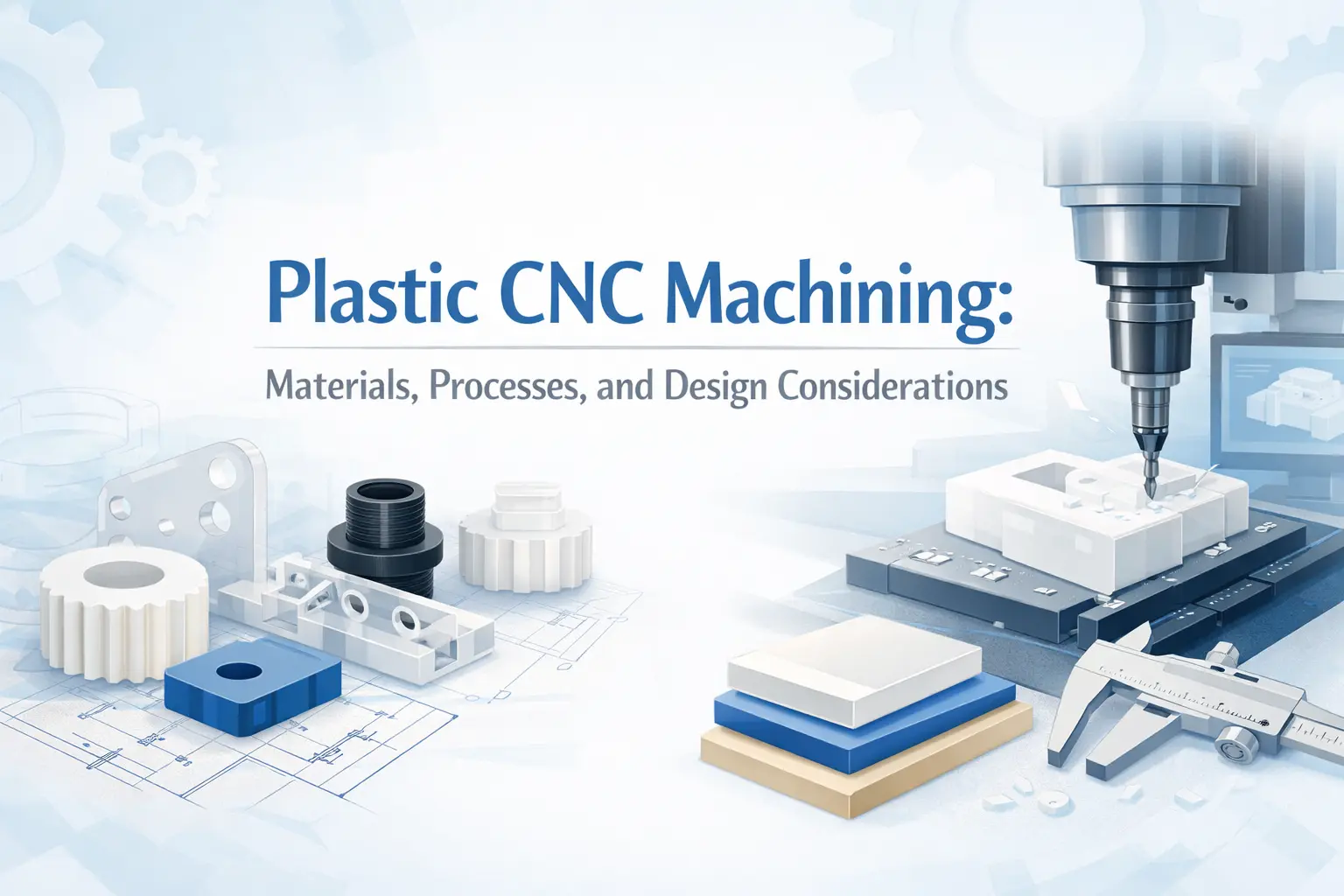
Plastic CNC machining has become an essential manufacturing solution for producing high-precision plastic components across a wide range of industries. From rapid prototypes to functional end-use parts, CNC machining allows engineers and manufacturers to create complex plastic parts with excellent dimensional accuracy and consistent quality. Compared with traditional plastic forming methods, CNC machining offers greater flexibility, making it ideal for low-volume production, custom components, and parts that require tight tolerances.
A variety of engineering plastics can be machined using CNC technology, including materials known for their strength, chemical resistance, electrical insulation, and lightweight properties. These characteristics make plastic CNC machining a preferred choice for industries such as aerospace, medical devices, electronics, automotive, and industrial equipment. By selecting the right material and machining strategy, manufacturers can achieve parts that meet demanding performance requirements while maintaining cost efficiency.
In this guide, we will explore the fundamentals of plastic CNC machining, including commonly used materials, machining processes, surface finishing options, and key design considerations. Whether you are developing a prototype or planning production for custom plastic components, understanding these factors can help you choose the most suitable manufacturing approach for your project.
Plastic CNC machining is a widely used manufacturing method for producing precise plastic components with complex geometries and consistent quality. Using computer-controlled machines, materials are cut, milled, drilled, or turned into finished parts according to digital design files. This process allows manufacturers to achieve high dimensional accuracy while maintaining excellent repeatability, which is especially important for industries that require reliable performance and tight tolerances.
Compared with traditional plastic manufacturing methods such as injection molding, CNC machining offers greater flexibility for low-volume production and rapid prototyping. Since it does not require expensive molds or tooling, engineers can quickly modify designs and test different materials during the development stage. This makes plastic CNC machining particularly suitable for customized components, functional prototypes, and small-batch production runs.
Plastic materials also provide several advantages in engineering applications. Many plastics are lightweight, corrosion-resistant, electrically insulating, and chemically stable, making them ideal for environments where metal parts may not be suitable. With the right material selection and machining strategy, plastic CNC machining can deliver parts that combine durability, performance, and cost efficiency.
At WinsunProto, plastic CNC machining services are used to manufacture high-quality prototypes and production components for a wide range of industries. With advanced CNC equipment and extensive machining experience, the team can help customers select the most suitable plastic materials and achieve reliable results for demanding applications.
A wide variety of engineering plastics can be used in CNC machining, each offering unique mechanical, thermal, and chemical properties. Selecting the right material is essential to ensure that the final part meets the required performance, durability, and environmental conditions.
ABS is one of the most commonly machined plastics due to its excellent balance of strength, toughness, and machinability. It is lightweight and easy to process, making it a popular choice for functional prototypes, housings, and mechanical components. ABS also provides good impact resistance and can be easily painted or finished for improved appearance.
Nylon is widely used for CNC machining because of its high strength, wear resistance, and low friction properties. It performs well in applications involving moving parts, such as gears, bushings, and bearings. Nylon also offers good chemical resistance and durability, although it can absorb moisture in humid environments.
POM, often known by the brand name Delrin, is a high-performance engineering plastic known for its excellent dimensional stability and low friction. It machines very well and produces smooth surfaces with tight tolerances. POM is commonly used for precision components such as gears, sliding parts, and mechanical assemblies.
PTFE is known for its outstanding chemical resistance and extremely low friction. It is often used in applications that require non-stick surfaces, high temperature resistance, or strong chemical stability. While PTFE is softer than many other plastics and can be more challenging to machine, it remains an important material for specialized industrial and medical components.
Polycarbonate is valued for its high impact strength and transparency. It is much stronger than acrylic and is often used in applications where durability and optical clarity are required. CNC machined polycarbonate parts are commonly found in protective covers, electronic housings, and optical components.
PEEK is a high-performance engineering plastic designed for demanding environments. It offers exceptional strength, heat resistance, and chemical stability. Due to its superior mechanical properties, PEEK is often used in aerospace, medical, and high-end industrial applications where performance and reliability are critical.
Acrylic, also known as PMMA, is widely used for parts that require optical clarity and a smooth surface finish. It is commonly machined into display components, lighting covers, and transparent enclosures. Acrylic can also be polished to achieve a glass-like appearance, making it a popular material for aesthetic applications.
Plastic components can be produced using several CNC machining processes, each suited to different part geometries and design requirements. By selecting the appropriate machining method, manufacturers can achieve precise dimensions, smooth surfaces, and reliable performance for a wide variety of plastic materials.
CNC milling is one of the most commonly used processes for machining plastic parts. In this process, rotating cutting tools remove material from a plastic block to create the desired shape. CNC milling is ideal for producing parts with complex geometries, slots, pockets, and intricate surface features.
Plastic milling requires careful control of cutting speeds and temperatures to prevent melting or deformation of the material. With proper tooling and machining parameters, manufacturers can achieve high precision and excellent surface finishes on a wide range of engineering plastics.
CNC turning is used to produce cylindrical or round plastic components. During the turning process, the plastic workpiece rotates while a cutting tool moves along its surface to remove material. This method is highly effective for manufacturing parts such as bushings, spacers, shafts, and threaded components.
Turning operations allow for tight dimensional control and smooth finishes, making them suitable for both prototype and production parts.
Drilling and tapping are commonly used to create holes and threaded features in plastic parts. CNC drilling machines ensure accurate hole placement and consistent depth, which is essential for assemblies that require precise alignment.
Threaded holes can also be created through tapping operations. Because plastics can behave differently from metals during machining, proper tool selection and cutting conditions are important to prevent cracking or deformation.
Multi-axis CNC machining allows parts to be processed from multiple angles in a single setup. This capability is particularly useful for producing complex plastic components with detailed geometries and tight tolerances.
By reducing the need for multiple setups, multi-axis machining improves accuracy and efficiency while maintaining consistent quality throughout the production process.
Plastic CNC machining offers numerous advantages for manufacturers looking to produce high-quality components with precision and flexibility. It is widely used for prototyping, custom parts, and low-volume production across many industries.
One of the main advantages of CNC machining is its ability to produce parts with very high accuracy. Computer-controlled equipment ensures that each component is manufactured according to precise design specifications. This level of precision is essential for applications where dimensional consistency and proper fit are critical.
CNC machining can produce smooth surfaces and clean edges on plastic parts. With the right machining parameters and finishing techniques, parts can achieve a high-quality appearance without requiring extensive post-processing.
Because CNC machining does not require molds or complex tooling, it allows manufacturers to produce parts quickly. This makes it an ideal solution for rapid prototyping and design validation. Engineers can quickly test different materials or design modifications before moving to large-scale production.
Another key benefit of plastic CNC machining is the ability to work with many different materials. Engineering plastics such as ABS, nylon, POM, polycarbonate, and PEEK each offer unique properties that make them suitable for specific applications. This material flexibility allows manufacturers to select the best option based on strength, temperature resistance, chemical stability, or other performance requirements.
For small production runs or custom components, CNC machining can be more cost-effective than processes that require dedicated molds. Manufacturers can produce high-quality plastic parts without the upfront tooling costs associated with injection molding, making CNC machining a practical choice for specialized projects.
After CNC machining, plastic parts can undergo various surface finishing processes to improve appearance, enhance performance, or meet specific functional requirements. The right finishing method depends on the type of plastic material, the intended application, and the desired visual or mechanical properties.
Polishing is commonly used to create a smooth and glossy surface on plastic components. This finishing method is especially popular for transparent plastics such as acrylic and polycarbonate, where optical clarity is important. Polishing can significantly improve the visual quality of a part and is often used for display components, lenses, and decorative parts.
Sandblasting produces a uniform matte texture on the surface of plastic parts. This process removes minor machining marks and creates a consistent appearance across the component. Sandblasting is often used for housings, enclosures, and industrial parts where a non-glossy finish is preferred.
Vapor polishing is typically used for plastics like acrylic. During this process, controlled chemical vapors slightly melt the surface of the material, resulting in a very smooth and transparent finish. Vapor polishing is widely used for optical components and clear display parts.
Painting can improve both the appearance and durability of plastic components. It allows manufacturers to apply different colors, textures, or protective coatings to the surface. Painted finishes are commonly used for consumer products, electronic housings, and aesthetic components.
Laser engraving is used to add logos, serial numbers, or markings to plastic parts. The process provides precise and permanent markings without affecting the structural integrity of the component. It is commonly used for branding, identification, and traceability in manufactured parts.
Plastic CNC machining is widely used in many industries due to the versatility and performance of engineering plastics. With the ability to produce precise and complex parts, CNC machining enables manufacturers to create components that meet strict functional and dimensional requirements.
In the aerospace industry, lightweight materials are critical for improving fuel efficiency and overall system performance. CNC machined plastic parts are often used for interior components, insulation parts, and specialized structural elements where weight reduction and durability are important.
Engineering plastics are frequently used in medical equipment due to their chemical resistance, sterilization compatibility, and biocompatibility. CNC machining allows manufacturers to produce precise medical components such as instrument housings, diagnostic equipment parts, and surgical device components.
Plastic components are widely used in automotive systems to reduce weight while maintaining durability. CNC machined plastic parts can be found in interior panels, sensor housings, connectors, and various functional components within modern vehicles.
Many plastics offer excellent electrical insulation properties, making them ideal for electronic and electrical applications. CNC machined plastic parts are commonly used for connectors, insulating components, protective housings, and other electronic assemblies.
Plastic CNC machining is also widely used in industrial machinery and equipment. Components such as gears, guides, bushings, and wear-resistant parts are often produced from engineering plastics to improve performance and reduce maintenance requirements.
Designing parts for plastic CNC machining requires careful attention to material behavior, structural strength, and machining characteristics. Proper design practices help ensure that the final component performs reliably while maintaining manufacturing efficiency.
Choosing the right plastic material is one of the most important design decisions. Different plastics offer varying levels of strength, flexibility, chemical resistance, and temperature stability. Engineers must evaluate the functional requirements of the part to determine the most suitable material.
Maintaining appropriate wall thickness is essential for ensuring structural integrity and preventing deformation during machining or use. Walls that are too thin may lead to weak structures, while overly thick sections may cause internal stress or unnecessary material costs.
Many plastics are sensitive to heat generated during machining. Excessive heat can cause melting, warping, or dimensional instability. Designers and machinists must consider cutting parameters and cooling strategies to maintain part accuracy.
Although CNC machining can achieve high precision, plastics may expand or contract due to temperature changes or environmental conditions. Designers should account for these factors when specifying tolerances to ensure proper fit and functionality.
Selecting the right manufacturing partner is essential for achieving high-quality plastic components. With extensive experience in precision machining and a strong focus on quality, WinsunProto provides reliable plastic CNC machining services for both prototyping and production needs.
WinsunProto operates modern CNC machining centers capable of producing complex plastic components with high precision. Advanced equipment allows the team to handle a wide range of materials and part geometries while maintaining consistent accuracy and efficiency throughout the production process.
Different plastic materials require specific machining strategies to achieve the best results. The engineering team at WinsunProto has extensive experience working with a variety of engineering plastics, including ABS, nylon, POM, polycarbonate, PTFE, and PEEK. This expertise ensures that each material is processed with the appropriate tooling, cutting parameters, and finishing techniques.
Whether customers need a single prototype or a small batch of production parts, WinsunProto offers flexible manufacturing solutions. CNC machining allows for quick design adjustments and efficient production without the need for expensive molds or tooling, making it ideal for product development and custom components.
Quality is a key priority throughout the entire manufacturing process. WinsunProto follows strict quality control procedures, including dimensional inspections and surface quality checks, to ensure that every part meets the required specifications. This commitment to quality helps customers receive reliable components for their applications.
Many engineering plastics can be machined using CNC technology. Common materials include ABS, nylon, POM, polycarbonate, acrylic, PTFE, and PEEK. Each material offers unique properties such as strength, chemical resistance, electrical insulation, or heat resistance.
Yes, CNC machining is widely used for prototyping because it does not require molds or specialized tooling. Engineers can quickly produce functional prototypes, test different materials, and make design modifications before moving to larger production volumes.
CNC machining can achieve tight tolerances for plastic components, depending on the material and part geometry. With proper machining techniques and quality control, high levels of dimensional accuracy can be maintained.
Selecting the right plastic depends on several factors, including mechanical strength, temperature resistance, chemical exposure, and electrical properties. Working with an experienced machining supplier can help ensure that the most suitable material is chosen for the intended application.
Plastic CNC machining is a versatile and efficient manufacturing method for producing precise plastic components with complex geometries. With the ability to work with a wide range of engineering plastics, CNC machining provides an ideal solution for prototypes, custom parts, and low-volume production.
By understanding the different materials, machining processes, surface finishing options, and design considerations, engineers and manufacturers can make better decisions when developing plastic components. Choosing the right machining partner also plays a critical role in ensuring consistent quality and reliable performance.
With advanced CNC equipment, extensive material expertise, and strict quality control standards, WinsunProto is committed to delivering high-quality plastic CNC machined parts that meet the needs of various industries. Whether for product development or specialized applications, plastic CNC machining remains an important solution for modern manufacturing.
