Our Location
304 North Cardinal St.
Dorchester Center, MA 02124

304 North Cardinal St.
Dorchester Center, MA 02124

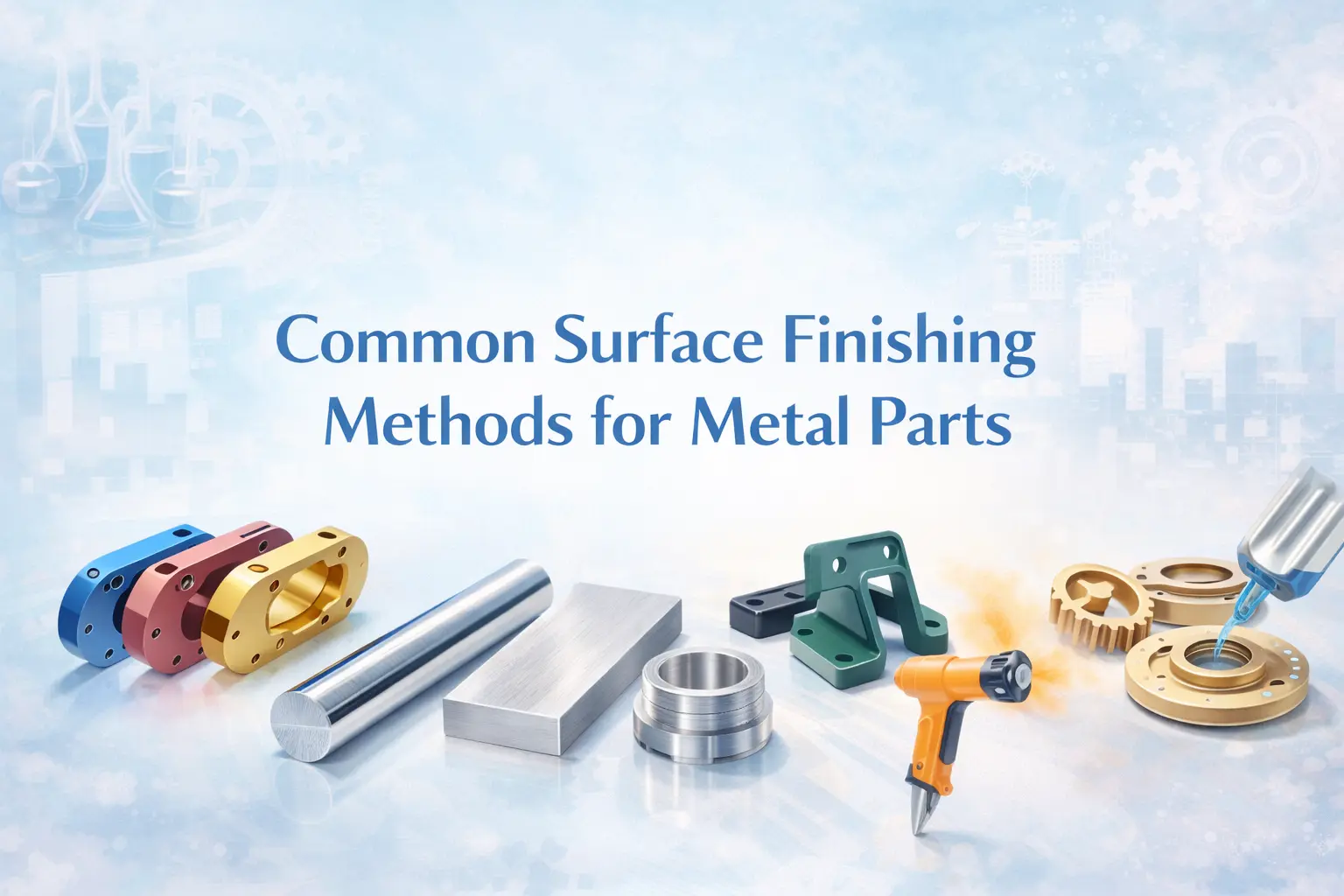
Surface finishing plays a critical role in modern manufacturing. It not only improves the appearance of metal components but also enhances durability, corrosion resistance, and functional performance. From CNC machined parts to sheet metal components, selecting the right finishing method can significantly affect product quality and lifespan.
Surface finishing refers to processes applied to the surface of a manufactured part to improve appearance, durability, or functionality. These treatments modify the outer layer of a material through mechanical, chemical, or electrochemical methods.
Surface finishing enhances part performance, protects materials from environmental damage, and prepares components for assembly or additional processing.
Surface finishes create protective layers that shield metal from moisture, chemicals, and oxidation.
Finishing methods provide matte, glossy, textured, or colored surfaces to improve visual appeal.
Certain finishes increase hardness and reduce friction, extending component lifespan.
Finishing processes remove machining marks, burrs, and rough textures to create smoother surfaces.
An electrochemical process that thickens the oxide layer on aluminum, improving corrosion resistance, wear resistance, and allowing coloring.
A dry powder is electrostatically applied and cured under heat, producing a durable, uniform coating resistant to impact, scratches, and weather.
Deposits a thin metal layer such as nickel, chrome, zinc, or copper to enhance corrosion resistance, electrical conductivity, and aesthetics.
A chemical conversion coating for steel that provides mild corrosion protection while maintaining tight dimensional tolerances.
Abrasive media is propelled at high speed to clean or texture surfaces, creating a uniform matte finish and removing machining marks.
Uses abrasive belts or brushes to create a linear texture, often used on stainless steel for aesthetic finishes.
Gradually smooths the surface with fine abrasives, producing mirror-like finishes for medical, decorative, or precision parts.
Chemical treatment, mainly for stainless steel, that removes free iron and improves corrosion resistance.
Also called chromate conversion coating, applied to aluminum to provide corrosion protection while maintaining electrical conductivity.
Common finishes for aluminum include anodizing, chemical film coating, powder coating, polishing, and sandblasting, providing both corrosion resistance and aesthetic appeal.
Steel parts are often treated with black oxide, electroplating, powder coating, or polishing to improve durability, wear resistance, and appearance.
Stainless steel typically undergoes passivation, brushing, polishing, or bead blasting to enhance corrosion resistance and surface quality.
Polishing, electroplating, and protective coatings are commonly used for brass and copper to maintain shine and prevent oxidation.
Different metals respond best to specific finishing methods, which can affect performance and longevity.
Evaluate exposure to moisture, chemicals, temperature, and wear when selecting a finish.
Consider factors such as hardness, friction, conductivity, and corrosion resistance.
Surface texture, color, and gloss level may be important for consumer-facing or visible parts.
WinsunProto offers a wide range of surface finishing options suitable for prototypes and production parts.
Strict inspection ensures consistent finishes, dimensional accuracy, and reliable performance.
Professional finishing services help deliver parts that meet both functional and visual requirements, from small prototypes to larger production runs.
Anodizing and bead blasting are among the most commonly used finishing methods for aluminum CNC parts.
Yes, many finishing processes create protective layers that significantly reduce corrosion.
Polishing and anodizing are commonly chosen when aesthetics are a priority.
The optimal finishing method depends on material, application, environment, and desired appearance.
