Our Location
304 North Cardinal St.
Dorchester Center, MA 02124

304 North Cardinal St.
Dorchester Center, MA 02124

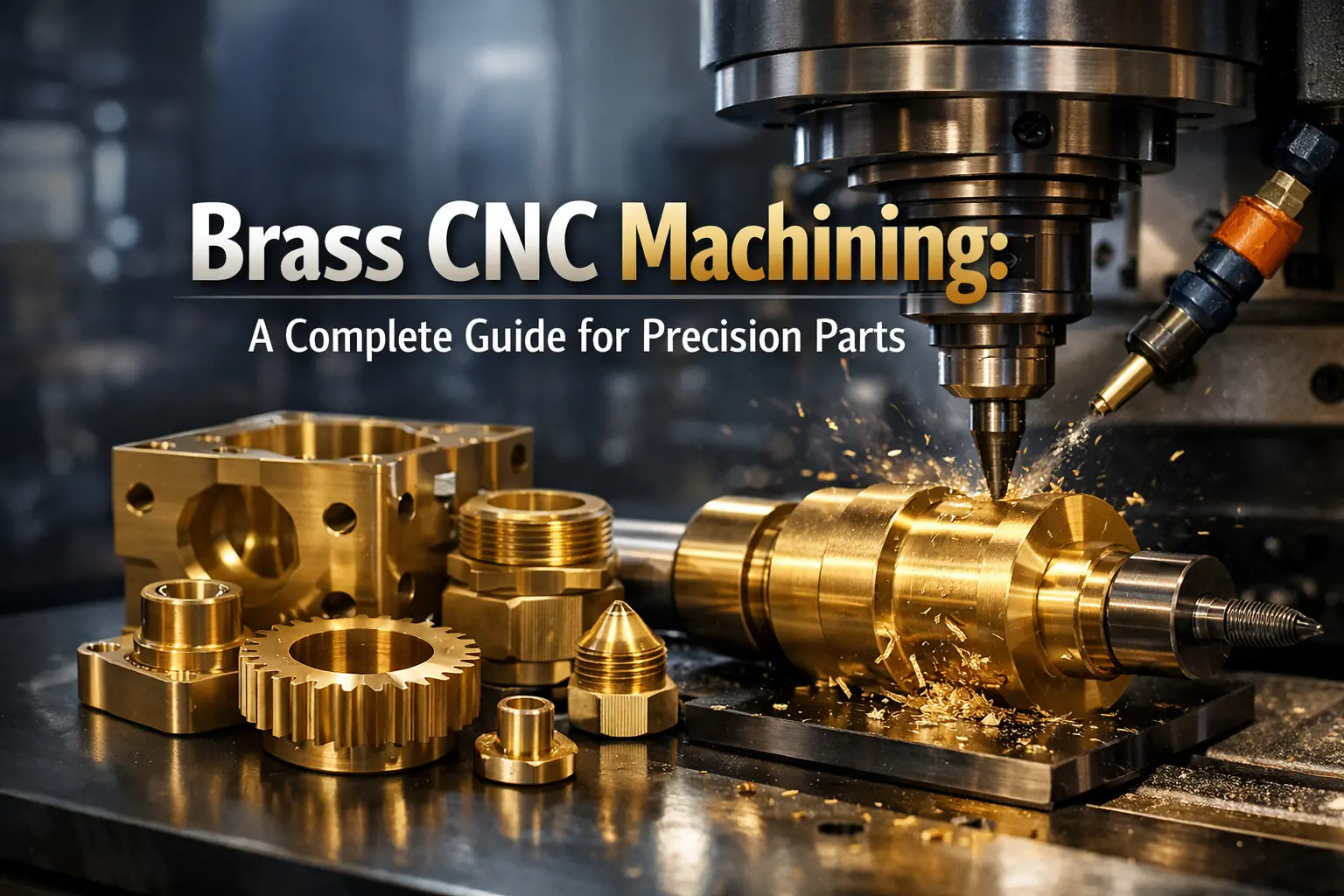
Brass CNC machining is a critical process in modern manufacturing, allowing for the production of high-precision components used in electronics, automotive, and aerospace industries. With its excellent machinability, corrosion resistance, and electrical conductivity, brass is a popular material choice for CNC machined parts. Understanding the key techniques, tooling considerations, and finishing processes can help engineers and manufacturers achieve consistent quality and tight tolerances. Whether you are producing prototypes or large-scale production runs, mastering brass CNC machining ensures reliable, high-performance components.
Brass CNC machining is a precise and versatile process widely used to create high-quality components for electronics, automotive, aerospace, and industrial applications. This section explores the basics of brass machining, its advantages, and why it’s a preferred choice for precision manufacturing.
Brass CNC machining is the process of using computer numerical control (CNC) machines to precisely cut, shape, and finish brass components. This technique allows manufacturers to produce complex geometries, tight tolerances, and high-quality finishes that are difficult to achieve with manual machining. CNC machining of brass is widely used in industries that demand precision and consistency, including electronics, automotive, and aerospace.
Brass is an alloy of copper and zinc known for its excellent machinability, corrosion resistance, and thermal and electrical conductivity. These properties make it ideal for components such as connectors, valves, and decorative hardware. Additionally, brass’s low friction characteristics reduce tool wear during CNC machining, resulting in faster production times and higher-quality parts. Its versatility and reliability make it one of the most popular materials for precision CNC machining projects.
Brass CNC machined parts are used across a wide range of industries thanks to their durability, corrosion resistance, and excellent machinability. From electronics to automotive and industrial applications, these components play a crucial role in ensuring precision and reliable performance.
Brass is widely used in the electronics industry for components like connectors, terminals, and switches due to its excellent electrical conductivity and corrosion resistance. CNC machining ensures precise dimensions and consistent performance, which is critical for high-quality electronic assemblies.
In automotive and aerospace industries, brass CNC machined parts are used for valves, fittings, and precision hardware. The material’s durability, low friction, and machinability make it suitable for components that require high reliability under demanding conditions. CNC machining allows for tight tolerances, complex shapes, and smooth finishes, ensuring optimal performance.
Brass components produced via CNC machining are also common in industrial machinery, plumbing, and mechanical systems. Its corrosion resistance and strength make it ideal for gears, bushings, and precision mechanical parts. CNC machining ensures uniformity and efficiency, whether for prototype development or mass production.
When machining brass, several key factors must be considered to achieve precision, durability, and high-quality finishes. Understanding tool selection, cutting parameters, and tolerance requirements is essential for successful CNC brass machining projects.
Brass is known for its excellent machinability, but selecting the right cutting tools is crucial to maintain precision and surface quality. High-speed steel (HSS) or carbide tools are commonly used, depending on the part complexity and production volume. Proper tool selection reduces wear, prevents material deformation, and ensures consistent results in both prototyping and mass production.
Optimizing cutting speeds and feed rates is essential when machining brass to avoid excessive heat and ensure smooth finishes. Lubrication or coolant is often used to reduce friction, improve tool life, and prevent surface discoloration. By carefully controlling these parameters, manufacturers can achieve tight tolerances and minimize defects.
Brass components often require precise tolerances and high-quality surface finishes, especially for electronics, automotive, and aerospace applications. CNC machines offer the accuracy needed to meet strict dimensional requirements. Post-machining processes like polishing or deburring can further enhance the part’s appearance and functionality.
CNC machining of brass involves a variety of techniques to produce precise and complex components. From turning and milling to drilling and multi-axis operations, choosing the right method ensures high accuracy, smooth finishes, and consistent performance.
Turning and milling are the most common CNC machining processes used for brass. Turning is ideal for cylindrical parts like rods, bushings, and shafts, while milling is used for flat surfaces, slots, and complex geometries. CNC machines ensure precise dimensions and repeatability, making them perfect for both prototypes and large-scale production.
Drilling, threading, and boring are essential techniques for creating functional features in brass components. CNC drilling allows for accurate holes of varying sizes, while threading can produce internal and external threads for mechanical assembly. Boring ensures precise diameters and smooth internal surfaces, which is especially important for fittings and valves.
Multi-axis CNC machining enables the production of complex brass parts with intricate geometries that would be difficult or impossible with traditional methods. Using 3-axis, 4-axis, or 5-axis machines, manufacturers can achieve tight tolerances, smooth contours, and precise angles in a single setup, reducing production time and increasing consistency.
Finishing and post-processing are essential steps in brass CNC machining to ensure optimal performance, durability, and aesthetic appeal. These processes enhance surface quality, improve corrosion resistance, and prepare components for assembly or final use. Depending on the application, manufacturers may choose polishing, plating, coating, or rigorous quality inspection to meet precise standards.
Polishing and buffing are commonly used to improve the surface finish of brass parts, removing minor scratches or tool marks. This process not only enhances appearance but also reduces friction in mechanical components, contributing to smoother operation and longer service life.
Brass components can be plated or coated to enhance corrosion resistance, improve wear properties, or achieve a specific visual effect. Popular options include nickel plating, gold plating, and clear protective coatings. CNC machining ensures precise dimensions are maintained even after the finishing process.
Rigorous quality inspection is critical for brass components, especially for electronics, automotive, and aerospace applications. Dimensional checks, surface roughness measurements, and visual inspections help ensure that parts meet tolerance requirements and functional specifications. This step guarantees that every component performs reliably in its intended application.
Choosing the right partner for brass CNC machining can make a significant difference in product quality, lead time, and overall project success. WinsunProto combines advanced machining technology, experienced engineers, and a customer-focused approach to deliver precision brass components that meet both functional and aesthetic requirements. Our comprehensive services ensure that every project, from prototype to large-scale production, is handled efficiently and to the highest standards.
WinsunProto has years of experience in producing high-precision brass components for industries such as electronics, automotive, aerospace, and industrial machinery. Our skilled engineers and advanced CNC equipment ensure that every part meets strict dimensional and quality requirements.
Whether you need a single prototype or large-scale production, WinsunProto can accommodate your requirements. Our flexible manufacturing process allows rapid prototyping while maintaining the same high standards for mass production, ensuring consistency and reliability across all orders.
With extensive experience exporting to North America, Europe, and other international markets, WinsunProto handles all customs, duties, and logistics, making global delivery seamless for our clients. Our quality assurance processes, including inspection reports and certifications, ensure that every brass component meets the highest industry standards.
Yes, brass is considered one of the easiest metals to machine. Its excellent machinability, low friction, and minimal tool wear make it ideal for CNC turning, milling, and drilling, allowing for precise and consistent components.
While brass is easy to machine, challenges can arise with thin-walled parts, tight tolerances, or complex geometries. Proper tool selection, optimized cutting parameters, and careful handling during finishing are essential to avoid deformation, burrs, or surface defects.
Absolutely. Winsun Proto specializes in both rapid prototyping and large-scale production runs. Our advanced CNC machines and flexible workflow ensure high-quality results regardless of order size.
Brass CNC components are widely used in electronics, automotive, aerospace, industrial machinery, plumbing, and decorative hardware due to their excellent conductivity, corrosion resistance, and durability.
Yes. Winsun Proto has extensive experience exporting to North America, Europe, and other global markets. We handle customs, duties, and logistics, ensuring smooth and timely delivery for all clients.
Brass CNC machining plays a vital role in producing high-precision, durable, and versatile components for industries ranging from electronics to aerospace. From turning and milling to finishing and post-processing, every step ensures tight tolerances, superior surface quality, and reliable performance.
At Winsun Proto, we combine advanced CNC technology, skilled engineers, and years of industry experience to deliver brass components that meet both prototyping and large-scale production needs. With comprehensive quality control and global shipping capabilities, Winsun Proto ensures that every part reaches our clients efficiently and to the highest standards. Whether you need a single prototype or thousands of precision parts, partnering with Winsun Proto guarantees professional, reliable, and high-quality brass CNC machining solutions.

CNC Machining & Rapid Prototyping Expert
Freja focuses on CNC machining, rapid prototyping, and metal finishing solutions, helping global customers bring precision parts from design to production.

